

• HOME
  • NEWS
  • EXPLORE
    • CAREER
      • Companies
      • Jobs
    • EVENTS
    • iGEM
      • News
      • Team
    • PHOTOS
    • VIDEO
    • WIKI
  • BLOG
  • COMMUNITY
    • FACEBOOK
    • INSTAGRAM
    • TWITTER
Saturday, July 4, 2026
BIOENGINEER.ORG
No Result
View All Result
  • Login
  • HOME
  • NEWS
  • EXPLORE
    • CAREER
      • Companies
      • Jobs
        • Lecturer
        • PhD Studentship
        • Postdoc
        • Research Assistant
    • EVENTS
    • iGEM
      • News
      • Team
    • PHOTOS
    • VIDEO
    • WIKI
  • BLOG
  • COMMUNITY
    • FACEBOOK
    • INSTAGRAM
    • TWITTER
  • HOME
  • NEWS
  • EXPLORE
    • CAREER
      • Companies
      • Jobs
        • Lecturer
        • PhD Studentship
        • Postdoc
        • Research Assistant
    • EVENTS
    • iGEM
      • News
      • Team
    • PHOTOS
    • VIDEO
    • WIKI
  • BLOG
  • COMMUNITY
    • FACEBOOK
    • INSTAGRAM
    • TWITTER
No Result
View All Result
Bioengineer.org
No Result
View All Result
Home Headlines

Dental implants frequently lead to complications

Bioengineer.org by Bioengineer.org
January 25, 2018
in Headlines, Health, Science News
Reading Time: 2 mins read
0
Share on FacebookShare on TwitterShare on LinkedinShare on RedditShare on Telegram
IMAGE

Almost 8 percent of patients experience loss of at least one implant within ten years. Even more develop peri-implantitis. Patients with periodontitis run a greater risk of both implant loss and peri-implantitis. A doctoral thesis at Sahlgrenska Academy has explored the various issues.

Approximately 30,000 Swedes receive dental implant therapy every year. The method is common in connection with partial or full edentulism (toothlessness), and Sweden is among the countries with the most dental implants per capita.

Biological complications

Previous evaluations have frequently been limited to observational studies of patient populations in specialist dental care. Few attempts have been made to analyze biological complications such as peri-implantitis, which is characterized by inflammation in adjacent tissues and loss of supporting jawbone.

A national project evaluated the therapy in terms of patient-reported outcomes, implant loss and prevalence of peri-implantitis.

High degree of satisfaction

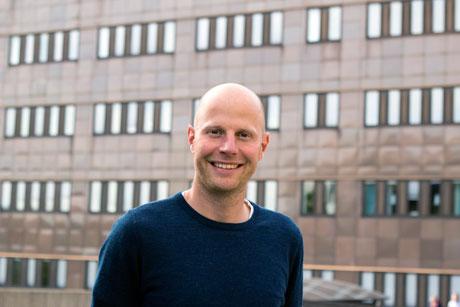
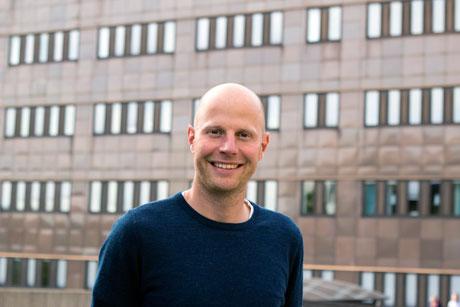
"The results of the initial questionnaire survey, which included 4,716 randomly selected patients, indicated a high degree of satisfaction, particularly among men and older respondents," says Jan Derks, researcher at Sahlgrenska Academy.

Developed peri-implantitis

A total of 596 patients at 37 Swedish clinics were examined at a 9-year follow-up.

"Altogether, 7.6 % of patients had lost at least one implant and 14.5 % had developed peri-implantitis with pronounced bone loss," Dr. Derks says.

Patients suffering from periodontitis exhibited an increased risk of severe peri-implantitis, while both periodontitis and smoking were associated with early implant loss.

Progresses quickly

"Peri-implantitis appears to develop within a few years and then progresses quickly and at an accelerating pace," Dr. Derks says.

The results of the study provide crucial input to both patients and dental practitioners in the effort to minimize the risk of implant loss and peri-implantitis.

###

For additional information, feel free to contact:
Jan Derks, Researcher, Sahlgrenska Academy, University of Gothenburg
[email protected]

To full thesis: https://gupea.ub.gu.se/handle/2077/39544

Facts about the study:
The national project was conducted as a population-based cross-sectional study of 4,716 subjects randomly selected from the Social Insurance Agency register. All patients had received dental implant therapy in 2003-2004. In an initial survey, a questionnaire was sent to analyze patient-reported outcomes. Charts and radiographic data for 2,765 patients were obtained from approximately 800 dentists. A total of 596 patients at 37 Swedish clinics were examined at a 9-year follow-up.

Share12Tweet8Share2ShareShareShare2

Related Posts

Quasi-Bound States Boost Quantum Well Photoresponse — Technology and Engineering

Quasi-Bound States Boost Quantum Well Photoresponse

July 4, 2026

Lysine Pyruvylation Links Glycolysis to Epigenetics

July 4, 2026

Multiphysics Coupling: Single vs. Multiple DeepONet Branches

July 4, 2026

Personalized Neoantigen Dendritic Cell Vaccine in Glioblastoma

July 4, 2026
Please login to join discussion

POPULAR NEWS

  • Detection of EDCs in Breast Milk and Infant Urine Up to Six Months Highlights Early Exposure Risks

    77 shares
    Share 31 Tweet 19
  • Saying Goodbye to PGY-6: Pediatric Fellowship Realities

    103 shares
    Share 41 Tweet 26
  • New Drug Candidate Developed at McMaster Shows Potential for Treating Brain Cancer

    58 shares
    Share 23 Tweet 15
  • KTU Researchers Explore Ultrasound’s Role in Enhancing Blood Flow Beyond Diagnostics

    53 shares
    Share 21 Tweet 13

About

We bring you the latest biotechnology news from best research centers and universities around the world. Check our website.

Follow us

Recent News

Quasi-Bound States Boost Quantum Well Photoresponse

Lysine Pyruvylation Links Glycolysis to Epigenetics

Multiphysics Coupling: Single vs. Multiple DeepONet Branches

Subscribe to Blog via Email

Success! An email was just sent to confirm your subscription. Please find the email now and click 'Confirm' to start subscribing.

Join 83 other subscribers
  • Contact Us

Bioengineer.org © Copyright 2023 All Rights Reserved.

Welcome Back!

Login to your account below

Forgotten Password?

Retrieve your password

Please enter your username or email address to reset your password.

Log In
No Result
View All Result
  • Homepages
    • Home Page 1
    • Home Page 2
  • News
  • National
  • Business
  • Health
  • Lifestyle
  • Science

Bioengineer.org © Copyright 2023 All Rights Reserved.
