

• HOME
  • NEWS
  • EXPLORE
    • CAREER
      • Companies
      • Jobs
    • EVENTS
    • iGEM
      • News
      • Team
    • PHOTOS
    • VIDEO
    • WIKI
  • BLOG
  • COMMUNITY
    • FACEBOOK
    • INSTAGRAM
    • TWITTER
Tuesday, July 28, 2026
BIOENGINEER.ORG
No Result
View All Result
  • Login
  • HOME
  • NEWS
  • EXPLORE
    • CAREER
      • Companies
      • Jobs
        • Lecturer
        • PhD Studentship
        • Postdoc
        • Research Assistant
    • EVENTS
    • iGEM
      • News
      • Team
    • PHOTOS
    • VIDEO
    • WIKI
  • BLOG
  • COMMUNITY
    • FACEBOOK
    • INSTAGRAM
    • TWITTER
  • HOME
  • NEWS
  • EXPLORE
    • CAREER
      • Companies
      • Jobs
        • Lecturer
        • PhD Studentship
        • Postdoc
        • Research Assistant
    • EVENTS
    • iGEM
      • News
      • Team
    • PHOTOS
    • VIDEO
    • WIKI
  • BLOG
  • COMMUNITY
    • FACEBOOK
    • INSTAGRAM
    • TWITTER
No Result
View All Result
Bioengineer.org
No Result
View All Result
Home NEWS Science News Biology

Microbes leave ‘fingerprints’ on Martian rocks

Bioengineer by Bioengineer
January 25, 2018
in Biology, Science News
Reading Time: 2 mins read
0
Share on FacebookShare on TwitterShare on LinkedinShare on RedditShare on Telegram
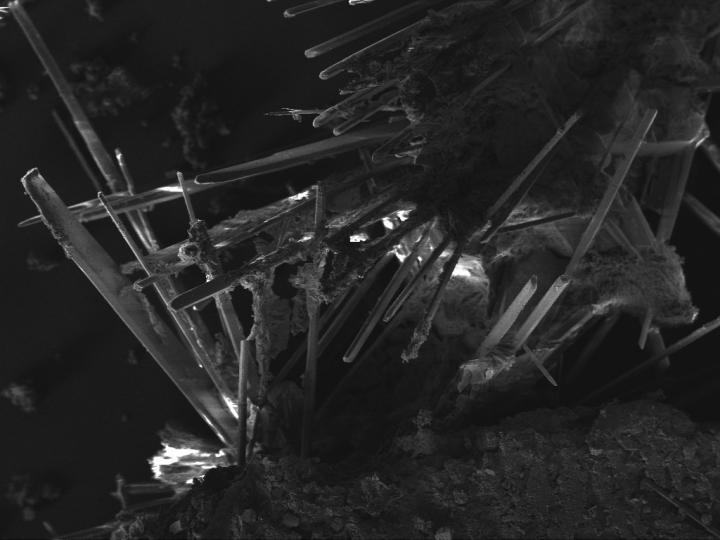
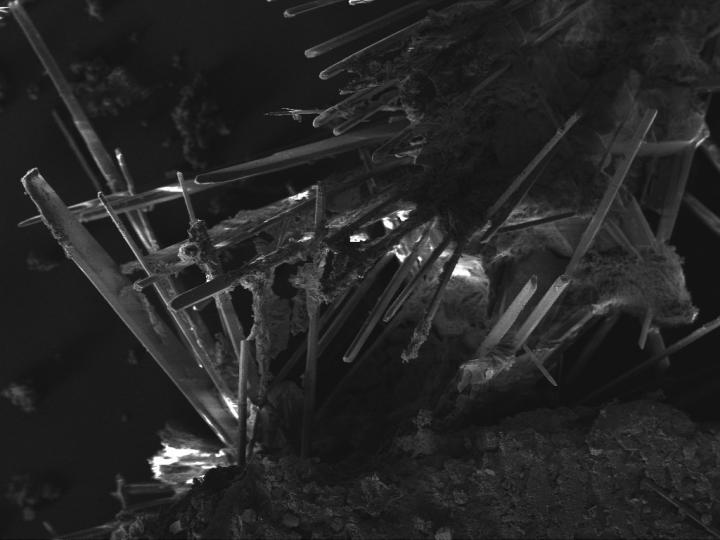
IMAGE

Credit: Copyright: Tetyana Milojevic

At the Department of Biophysical Chemistry at the University of Vienna, Tetyana Milojevic and her team have been operating a miniaturized "Mars farm" in order to simulate ancient and probably extinct microbial life – based on gases and synthetically produced Martian regolith of diverse composition. The team investigates interactions between Metallosphaera sedula, a microbe that inhabits extreme environments, and different minerals which contain nutrients in form of metals. Metallosphaera sedula is a chemolithotroph, means being capable of metabolizing inorganic substances like iron, sulphur and uranium as well.

To satisfy microbial nutritional fitness, the research team uses mineral mixtures that mimic the Martian regolith composition from different locations and historical periods of Mars: "JSC 1A" is mainly composed of palagonite – a rock that was created by lava; "P-MRS" is rich in hydrated phyllosilicates; the sulfate containing "S-MRS", emerging from acidic times on Mars and the highly porous "MRS07/52" that consists of silicate and iron compounds and simulates sediments of the Martian surface.

"We were able to show that due to its metal oxidizing metabolic activity, when given an access to these Martian regolith simulants, M. sedula actively colonizes them, releases soluble metal ions into the leachate solution and alters their mineral surface leaving behind specific signatures of life, a 'fingerprint', so to say", explains Milojevic. The observed metabolic activity of M. sedula coupled to the release of free soluble metals can certainly pave the way to extraterrestrial biomining, a technique which extracts metals from ores, launching the biologically assisted exploitation of raw materials from asteroids, meteors and other celestial bodies.

Using electron microscopy tools combined with analytical spectroscopy techniques, the researchers were able to examine the surface of bioprocessed Martian regolith simulants in detail. Cooperation with the workgroup of chemist Veronika Somoza from the Department of Physiological Chemistry was valuable to achieve these results. "The obtained results expand our knowledge of biogeochemical processes of possible life beyond earth, and provide specific indications for detection of biosignatures on extraterrestrial material – a step further to prove potential extra-terrestrial life", says Tetyana Milojevic.

###

Publication in Frontiers in Microbiology, Research Topic "Habitability Beyond Earth":

Kölbl D, Pignitter M, Somoza V, Schimak MP, Strbak O, Blazevic A and Milojevic T (2017) Exploring Fingerprints of the Extreme Thermoacidophile Metallosphaera sedula Grown on Synthetic Martian Regolith Materials as the Sole Energy Sources. Front. Microbiol. 8:1918. doi: 10.3389/fmicb.2017.01918

Media Contact

Tetyana Milojevic
[email protected]
43-142-775-2541
@univienna

http://www.univie.ac.at/en/

Original Source

http://medienportal.univie.ac.at/presse/aktuelle-pressemeldungen/detailansicht/artikel/microbes-leave-fingerprints-on-martian-rocks/ http://dx.doi.org/10.3389/fmicb.2017.01918

Share12Tweet8Share2ShareShareShare2

Related Posts

Low-Fat Diet and Advanced Glycation End-Products in Women’s Health Initiative Trial

July 28, 2026
Graz Researchers’ Brain-Inspired AI Achieves Flexible Planning and Problem Solving

Graz Researchers’ Brain-Inspired AI Achieves Flexible Planning and Problem Solving

July 28, 2026

CUDC-907 boosts temozolomide response in glioblastoma by dual PI3K/HDAC inhibition

July 28, 2026

Michael Hurlston and TRUMPF to Receive 2026 Optica i4 Prize

July 28, 2026
Please login to join discussion

POPULAR NEWS

  • Low-Fat Diet and Advanced Glycation End-Products in Women’s Health Initiative Trial

    29 shares
    Share 12 Tweet 7
  • Graz Researchers’ Brain-Inspired AI Achieves Flexible Planning and Problem Solving

    29 shares
    Share 12 Tweet 7
  • CUDC-907 boosts temozolomide response in glioblastoma by dual PI3K/HDAC inhibition

    29 shares
    Share 12 Tweet 7
  • Michael Hurlston and TRUMPF to Receive 2026 Optica i4 Prize

    29 shares
    Share 12 Tweet 7

About

We bring you the latest biotechnology news from best research centers and universities around the world. Check our website.

Follow us

Recent News

Low-Fat Diet and Advanced Glycation End-Products in Women’s Health Initiative Trial

Graz Researchers’ Brain-Inspired AI Achieves Flexible Planning and Problem Solving

CUDC-907 boosts temozolomide response in glioblastoma by dual PI3K/HDAC inhibition

Subscribe to Blog via Email

Enter your email address to subscribe to this blog and receive notifications of new posts by email.

Join 85 other subscribers
  • Contact Us

Bioengineer.org © Copyright 2023 All Rights Reserved.

Welcome Back!

Login to your account below

Forgotten Password?

Retrieve your password

Please enter your username or email address to reset your password.

Log In
No Result
View All Result
  • Homepages
    • Home Page 1
    • Home Page 2
  • News
  • National
  • Business
  • Health
  • Lifestyle
  • Science

Bioengineer.org © Copyright 2023 All Rights Reserved.