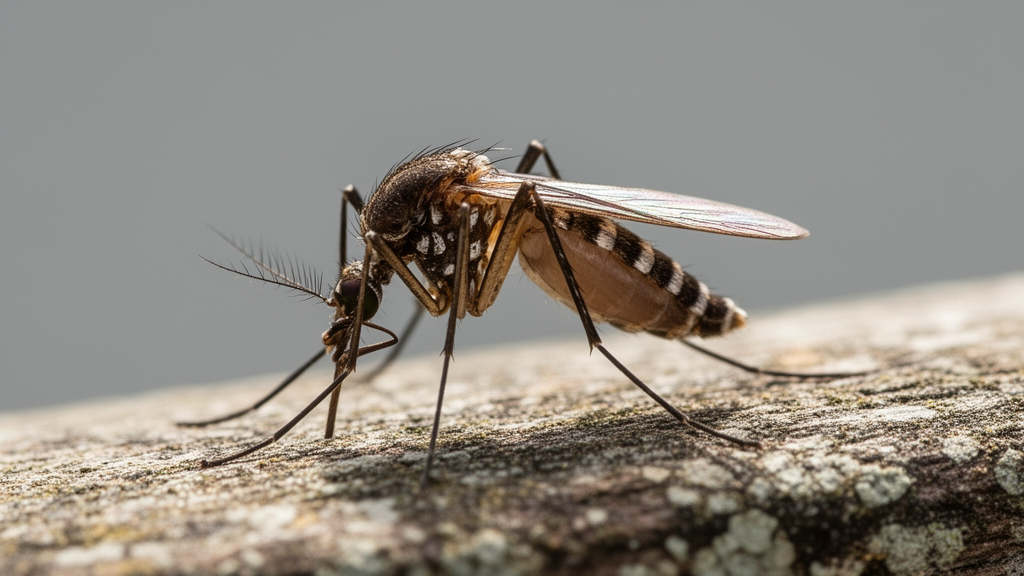
A comprehensive narrative review evaluating vector management across the Democratic Republic of Congo indicates that escalating insecticide resistance, pervasive urban breeding sites, and structural supply dependencies are severely impeding control efforts against disease-carrying Aedes mosquitoes. Synthesizing literature retrieved from major databases including PubMed, Google Scholar, and Web of Science alongside institutional reports from the World Health Organization, Doctors Without Borders, and the Institute of Tropical Medicine Antwerp through April 2025, the review details how rapid urbanization, ecological shifts, and human mobility are expanding the transmission zones for arboviruses such as dengue, chikungunya, yellow fever, and Zika. The investigators emphasize that while the World Health Organization expanded direct technical support in 2024 to curb surging yellow fever and dengue outbreaks, the country’s front-line entomological defenses require comprehensive operational and structural realignment.
Traditional vector suppression in Congolese municipalities continues to rely upon physical and chemical barriers, including long-lasting insecticide-treated nets, household door and window screening, topical repellents, protective clothing, and the manual clearance of stagnant water reservoirs. Community-level mobilization initiatives coordinated by Doctors Without Borders have sought to educate urban residents on eliminating domestic habitats created by everyday human activity, specifically discarded vehicle tires, open storage pots, and obstructed roadside drainage channels. However, the operational effectiveness of widely distributed chemical tools is undergoing sustained erosion due to physiological resistance mechanisms among local mosquito vectors, directly replicating broader international patterns of pyrethroid failure.
Entomological surveillance coordinated by the University of Kinshasa’s Bioecology and Vector Control Research Unit, known as BIOLAV, has officially confirmed pyrethroid resistance in local Aedes aegypti populations across at least eighteen surveillance sites throughout the country. Laboratory analyses demonstrate that this resistance is driven by target-site genetic mutations and the significant upregulation of metabolic detoxification enzymes within the insects. These domestic findings parallel wider international vulnerabilities, such as documented resistance rates reaching ninety percent in Cambodia and the 2023 detection of Asian super-resistant strains capable of surviving chemical concentrations ten times higher than baseline thresholds. In response to these resistant phenotypes, global health guidance recommends transitioning toward rotational insecticide frameworks that alternate chemical classes, while deploying piperonyl butoxide synergist combination nets to temporarily neutralize metabolic enzyme defenses.
Environmental surveys in the capital city of Kinshasa, home to an estimated twelve million people, show that approximately seventy percent of active larval breeding sites are entirely man-made, comprising discarded plastic waste, scrap tires, domestic water containers, and blocked drainage infrastructure. Rapid municipal sprawl and severe municipal solid waste management deficits generate widespread larval habitats that easily outstrip municipal vector control capacity. Reports from the Institute of Tropical Medicine in Antwerp underscore that conventional mechanical destruction of breeding sites remains chronically under-resourced, making long-term suppression unfeasible without sustained, organized neighborhood participation in regular site identification and source reduction.
Coordinating the national response, the National Malaria Control Programme has increasingly integrated Aedes monitoring and control operations into its broader vector framework, which historically focused almost entirely on malaria. International organizations, including UNICEF, the World Health Organization, and the United States President’s Malaria Initiative, provide external financing and technical expertise for entomological surveillance, vector control worker training, and large-scale net distributions. Nevertheless, severe logistical and economic bottlenecks persist because the country remains almost entirely dependent upon foreign imports for its vector control chemicals and treated netting materials, leaving public health programs vulnerable to international supply chain disruptions and procurement delays.
To mitigate this systemic reliance on imported supplies, official Congolese government planning in 2025 announced the approved construction of a domestic insecticide-treated net production facility backed by the Ministries of Health, Industry, and Social Security. Projected to attain an annual output of thirty million nets, the industrial site is anticipated to account for roughly fifteen percent of total global net production. Public health authorities project that domestic manufacturing will not only secure supply autonomy and tailor textile specifications to domestic environmental realities, but also stimulate economic expansion by generating thousands of specialized manufacturing jobs across the nation’s textile, chemical, and plastics sectors.
Beyond conventional chemical tools, Congolese research units and regional partners are evaluating innovative biological and genetic control technologies to suppress mosquito populations without escalating chemical pressure. Investigations led by the BIOLAV unit include pilot studies on introducing Wolbachia bacterial strains, which impede viral replication within Aedes vectors, alongside assessments of poisoned biocides transported on mosquito legs to contaminate cryptic larval sites, an auto-dissemination technique previously field-tested in neighboring Angola. More advanced biotechnological approaches, including the release of genetically modified mosquitoes and the sterile insect technique, remain under formal scientific consideration, though their implementation is stalled by substantial capital costs and the absence of a comprehensive national biosafety regulatory framework.
Community mobilization remains the cornerstone of day-to-day municipal vector suppression, utilizing localized health brigades, poster distributions, regional radio programming, and interactive street theater to encourage domestic water hygiene. In Matadi, a structured neighborhood involvement framework established by Doctors Without Borders has demonstrated that sustained community-led intervention can achieve significant and lasting reductions in urban larval site density. These local initiatives empower neighborhood residents to systematically clear container habitats, bridging the persistent gap between national vector policy and frontline municipal sanitation.
Regional comparisons underscore that while pyrethroid resistance is an emerging threat across sub-Saharan Africa, neighboring nations manage vector pressures under differing structural constraints. In Uganda, national programs deploy indoor residual spraying and community health workers alongside nets, though cross-border population movements challenge containment. Angola has deployed pilot biocide dissemination projects to target breeding sites, whereas the Republic of Congo faces entomological data shortages and relies primarily on technical support from United Nations agencies. Rwanda demonstrates superior vector monitoring through climate-informed surveillance systems and extensive community health networks, while Cameroon utilizes regional research coalitions through the Organisation de Coordination pour la lutte contre les Endémies en Afrique Centrale to advance Wolbachia studies despite high urban pyrethroid resistance.
Ecological forecasting models highlight climate change as an accelerating catalyst for arboviral transmission throughout central Africa. Rising ambient temperatures and altered precipitation regimes are steadily broadening the geographic distribution of Aedes aegypti into higher-altitude zones previously free of transmission, while prolonged rainy periods and extreme weather events exacerbate municipal drainage failures. Climate projections warn that without aggressive, ecologically adaptive vector suppression, a substantial proportion of the Congolese population will face intensified epidemic exposure to yellow fever and dengue by the year 2050.
The authors emphasize several structural limitations inherent to their narrative assessment, pointing out that existing epidemiological and entomological datasets across the Democratic Republic of Congo remain highly uneven in quality and heavily skewed toward localized urban studies that cannot be generalized nationwide. Furthermore, cross-country comparative evaluations are constrained by variable reporting standards, differing surveillance metrics, and potential publication biases. Because vector management technologies evolve rapidly, the review concludes that securing sustainable arboviral containment will require Congolese health authorities to formalize integrated multi-sectoral policies that bridge climate-informed monitoring, local industrial manufacturing, and rigorous regulatory oversight.
The search protocol developed by the investigators encompassed both published peer-reviewed studies and institutional grey literature without formal historical date restrictions, giving preference to research published after 2015 to capture contemporary entomological trends. Investigators queried PubMed/MEDLINE, Google Scholar, and Web of Science using specific terms such as “Aedes mosquito,” “vector control,” “Democratic Republic of Congo,” “arboviral disease,” “insecticide resistance,” “Wolbachia,” “sterile insect technique,” “dengue DRC,” and “yellow fever Africa.” To supplement indexed academic literature, grey literature was compiled from the Pan American Health Organization, the World Health Organization, Doctors Without Borders, the Institute of Tropical Medicine Antwerp, and official Congolese governmental records. Each candidate publication underwent appraisal for methodological rigor and direct relevance to vector control interventions, surveillance frameworks, insecticide resistance, or arboviral epidemiology across the Democratic Republic of Congo and broader sub-Saharan Africa.
Synthesizing the operational categories and implementation profiles of vector tools, the review classifies physical, chemical, biological, biotechnological, and educational interventions by their distinct trade-offs. Environmental larval source management operates at low financial cost and avoids synthetic chemical usage, but demands intensive physical labor that is frequently undermined by urban sprawl and municipal waste management deficits. Chemical interventions such as indoor residual spraying and treated nets offer documented efficacy against multiple disease vectors, yet remain constrained by growing resistance and high import costs. Biological strategies, including the release of Wolbachia-carrying mosquitoes and poisoned biocides, provide sustainable transmission suppression without widespread insecticide dispersion, though both require substantial technical expertise and formal regulatory authorization that currently restrict them to pilot evaluations. Similarly, while genetic approaches like the sterile insect technique present high biological specificity to suppress female mosquito populations, their implementation in the Democratic Republic of Congo remains entirely pre-deployment due to steep financial investments and an underdeveloped legal framework.
Regional cross-comparisons demonstrate important entomological distinctions among neighboring Central and East African nations, particularly regarding dominant vector species and institutional capacity. While public health authorities in Uganda, Angola, and the Republic of Congo focus primarily on managing Aedes aegypti, both Aedes aegypti and Aedes albopictus circulate across the Democratic Republic of Congo, Rwanda, and Cameroon. In Rwanda, vector surveillance coordinated by the Rwanda Biomedical Centre maintains a comparatively lower resistance burden despite hilly terrain that impedes spray operations. In Cameroon, vector control programs confront intense urban pyrethroid resistance alongside the simultaneous circulation of multiple arboviruses, prompting research partnerships with IRD. By contrast, the Democratic Republic of Congo faces unique compounding obstacles, including vast geographical expanse, fragile administrative governance in conflict-affected areas, and sporadic distribution logistics that leave remote communities vulnerable to epidemic resurgence.
Subject of Research: Vector control strategies, insecticide resistance, and management challenges for Aedes mosquitoes in the Democratic Republic of Congo
Article Title: Vector control and management of Aedes mosquitoes: State of practices and perspectives in the democratic Republic of Congo
Article References: Ekouo, J., Tague, C., Djom, L., Bahoya, E., & Akilimali, A. (2026). Vector control and management of Aedes mosquitoes: State of practices and perspectives in the democratic Republic of Congo. New Microbes and New Infections, 74, Article 101885. https://doi.org/10.1016/j.nmni.2026.101885
Image Credits: AI Generated
DOI: 10.1016/j.nmni.2026.101885
Keywords: Aedes aegypti, Democratic Republic of Congo, vector control, insecticide resistance, pyrethroids, BIOLAV, long-lasting insecticidal nets, dengue, yellow fever, chikungunya, Zika, Kinshasa, larval source management, Wolbachia, sterile insect technique, climate change, National Malaria Control Programme, community mobilization
News Source: Ophelia Keating. (November 17, 2026). Review Documents Insecticide Resistance and Operational Barriers Limiting Congo Aedes Control. Scienmag.