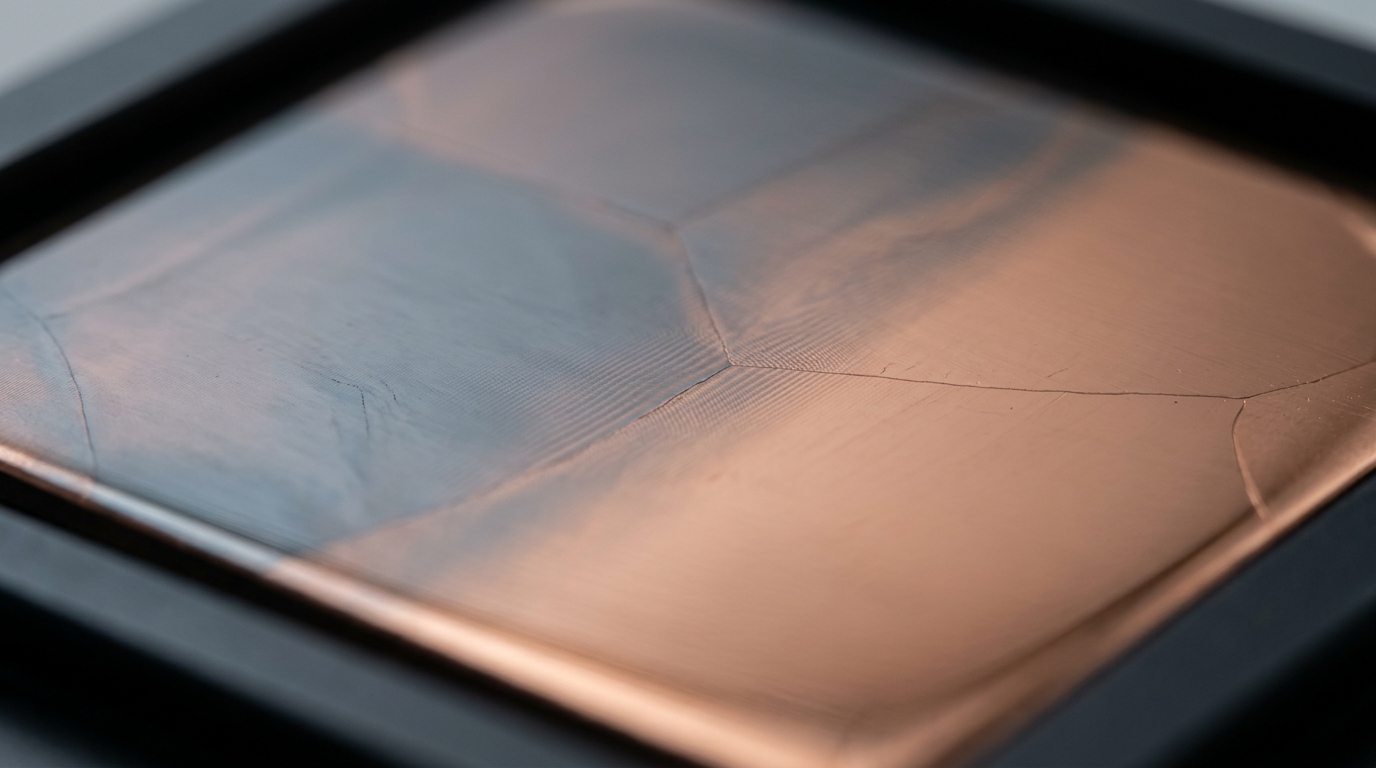
A comprehensive theoretical review led by researchers at the Universidad Nacional de Córdoba and the Universidade de São Paulo shows that underlying substrate supports fundamentally transform the chemical reactivity of graphene from an inert carbon sheet into a tunable catalytic platform. While pristine, free-standing graphene is widely regarded as chemically unreactive because of its delocalized pi-electron network and lack of dangling bonds, placing the two-dimensional lattice onto metallic, oxide, or semiconductor supports significantly modifies its interfacial behavior. By compiling static density functional theory calculations and dynamical simulations, the review establishes that substrate-mediated charge redistribution, interfacial orbital hybridization, and local structural deformations lower kinetic barriers for elementary reactions and open reaction channels that are entirely inaccessible on unsupported graphene. However, the authors emphasize that substrate-promoted bond activation or irreversible covalent functionalization must be distinguished from catalytic turnover, as sustained catalytic activity requires complete cyclic regeneration of the active surface without permanent catalyst deactivation.
Graphene-metal interfaces fall into distinct physical regimes that dictate the nature and extent of chemical activation. Physisorbed systems on weakly interacting metals, including copper, silver, gold, platinum, and iridium, maintain relatively large interfacial separations exceeding 3.2 angstroms and low adsorption energies typically below 90 millielectronvolts per carbon atom. In these weakly coupled systems, the linear dispersion of graphene’s Dirac cone remains largely intact, undergoing rigid shifts relative to the Fermi level driven by work-function differences and electrostatic potential alignment. Strong hybridization between carbon pi states and metal d orbitals perturbs or eliminates the Dirac cone, creating hybrid interface states at the Fermi level. For lattice-mismatched metals like ruthenium and rhodium, corrugated moiré supercells develop where strongly bound atop regions alternate with elevated humps, producing spatially varying local densities of states that modulate chemical reactivity across the surface.
Substrate-induced changes directly influence the dissociation pathways of diatomic molecules, beginning with oxygen activation. On free-standing graphene, molecular oxygen dissociation requires overcoming high activation barriers, calculated as 2.64 electronvolts using dispersion-corrected functionals and 2.00 electronvolts under local density approximations. The reaction follows a two-step mechanism that begins with the rate-limiting cycloaddition of an oxygen molecule onto the graphene basal plane, followed by oxygen-oxygen bond cleavage to yield two epoxy groups. Deposition of graphene onto metal supports progressively stabilizes transition states and dissociated intermediates, lowering the activation energy in a sequence corresponding to interaction strength. On gold-supported graphene, the barrier drops moderately to 2.12 electronvolts, while copper reduces it to 1.36 electronvolts, and nickel drives the barrier down to 0.89 electronvolts. On copper surfaces, the underlying substrate donates electrons to create n-type graphene, enhancing oxygen affinity while facilitating oxygen intercalation beneath the carbon sheet over extended timeframes.
Hydrogen and water activation follow analogous substrate-dependent trajectories, confirming that interaction strength governs elementary bond-cleavage kinetics. Density functional theory calculations indicate that the activation barrier for molecular hydrogen dissociation drops from 4.13 electronvolts on unsupported graphene to 3.58 electronvolts on gold, 2.80 electronvolts on copper, and 2.22 electronvolts on nickel, where near-ambient-pressure photoelectron spectroscopy confirms the presence of hydrogenated carbon species. Water dissociation, which is endothermic by 2.55 electronvolts and hindered by a 3.19 electronvolt barrier on isolated graphene, sees its activation energy systematically decline to 2.83 electronvolts on gold, 2.44 electronvolts on copper, and 1.95 electronvolts on nickel. Vacancies introduce further complexity: free-standing monovacancies favor water dissociation exothermically by 2.01 electronvolts, and this reaction remains favorable on copper supports with an exothermic energy of 0.38 electronvolts. On platinum supports, however, strong carbon-metal covalent bonds passivate undercoordinated carbon dangling bonds, suppressing water dissociation and rendering the reaction endothermic by 0.69 electronvolts.
The influence of nickel substrates on carbon monoxide interactions illustrates how interfacial coupling facilitates unconventional reaction pathways. Although an isolated carbon monoxide molecule physisorbs weakly on both unsupported graphene and pristine graphene supported on nickel, with adsorption energies between minus 0.08 and minus 0.34 electronvolts, the nickel support enables adjacent molecules to undergo carbon-carbon coupling. Two neighboring carbon monoxide molecules can couple on graphene on nickel to generate a chemisorbed ethylene dione complex with an adsorption energy of minus 2.62 electronvolts, accompanied by local rehybridization and out-of-plane carbon displacement. Similarly, the formation of an OCCO intermediate proceeds with an activation barrier of 0.85 electronvolts and an exothermic reaction energy of minus 1.45 electronvolts. Structural defects modulate this behavior considerably: monovacancies on nickel-supported graphene dramatically stabilize the chemisorbed ethylene dione complex to minus 4.51 electronvolts, whereas nickel atom intrusion into divacancies passivates reactive carbon centers, keeping adsorption energies at minus 0.27 electronvolts and preventing spontaneous coupling.
Beyond nickel, epitaxial graphene on ruthenium surfaces promotes the catalytic decomposition of hydrogen sulfide, demonstrating that transition metals can activate stable molecules without pre-existing structural defects. While hydrogen sulfide dissociation on free-standing graphene requires an activation barrier of 4.83 electronvolts and is endothermic by 1.26 electronvolts, coupling with ruthenium reduces the barrier to 0.39 electronvolts and makes the reaction exothermic by 0.60 electronvolts. Experimental measurements show identical hydrogen production on low-defect and defect-free graphene samples, proving that substrate electronic interactions alone drive reactivity. Spatial modeling on supported nanoparticles and finite nanoflakes demonstrates that activation is geographically concentrated rather than uniform. Across gold, copper, and nickel thirteen-atom clusters, barrier reductions occur primarily on carbon atoms located directly above the metallic particles. Across multiple dissociation reactions involving oxygen, hydrogen, and water, calculated activation energies exhibit linear Brønsted-Evans-Polanyi correlations with reaction energies, showing that transition-state stabilization closely tracks the thermodynamic stability of dissociated products.
Substrate effects also govern organic functionalization, determining cycloaddition regioselectivity, nitrene insertion pathways, and aromatic adsorption strengths. In the cycloaddition of iron porphine, graphene supported on iridium displays the highest reactivity, whereas copper remains largely inactive and rhenium shows intermediate behavior, demonstrating that maximum metal-carbon bonding strength does not guarantee optimal reactivity because pre-existing covalent bonds can impose high energetic penalties during local carbon rehybridization. On iridium supports, moiré superstructures create periodic top-fcc registry regions where localized carbon-metal hybridization allows phthalocyanine molecules to undergo selective Diels-Alder-like cycloaddition without requiring lattice defects. In nitrene functionalization using perfluorophenyl azide precursors, charge transfer from nickel supports stabilizes singlet nitrene intermediates and favors open adduct configurations over closed aziridines. On ruthenium, thiophene dissociation barriers decrease from 8.69 electronvolts on free-standing graphene to 1.20 electronvolts on the supported interface. Non-covalent adsorption of aromatic rings, including benzene and 1,3,5-benzenetribenzoic acid on copper, is enhanced through substrate polarization that depletes electron density above the sheet.
Non-metallic supports introduce distinct activation mechanisms based on support reducibility, interfacial dipoles, and confinement effects. On hematite, graphene remains largely inert on iron-terminated surfaces, but ferryl-terminated interfaces induce positive doping in graphene and shift the Dirac point by 0.7 electronvolts through an electron transfer of 0.15 to 0.16 electrons per unit cell. Upon hydrogen adsorption, the carbon-oxygen interface distance contracts from 3.08 to 1.39 angstroms, forming a covalent bond that lowers the hydrogen dissociation barrier from 3.14 to 1.62 electronvolts. Conversely, silicon dioxide interacts purely through weak dispersion forces, rendering graphene inert toward hydrogen sulfide and sulfur dioxide. However, on silicon(111) supports, growth-induced grain boundaries and interfacial silicon-carbon bonds activate sulfur dioxide and hydrogen sulfide dissociation while leaving nitrous oxide unreacted, establishing metal-free catalytic activity.
Integrating single-atom catalysts into supported graphene platforms creates hierarchical active sites where the metal atom, the defective carbon host, and the underlying substrate jointly dictate catalytic performance. In this architecture, defective graphene acts as a giant macrocyclic ligand analogous to porphyrin systems, with divacancies providing stable pseudo-square-planar coordination environments that prevent isolated metal agglomeration. Substrates alter the ligand field and tune the d-band center of embedded transition metals. On nickel(111) supports, coupling to embedded cobalt centers reduces the overpotential for the oxygen reduction reaction from 0.98 to 0.33 volts. Substrate interactions similarly dictate molecular selectivity: in cobalt single-atom catalysts supported on nickel, dxz and dyz orbitals remain positioned close to the Fermi level, promoting pi-backdonation and strengthening carbon monoxide chemisorption, whereas in nickel single-atom catalysts, the corresponding orbitals reside deeper in energy, resulting in weaker binding despite identical coordination geometries.
Despite substantial progress in static modeling, the authors emphasize significant methodological and operational limitations that must be addressed to design practical supported catalysts. Conventional generalized gradient approximations and local density functionals often fail to capture the subtle balance between long-range dispersion forces and localized electronic hybridization, necessitating systematic benchmarking against random phase approximations and experimental surface spectroscopy. Furthermore, static models do not account for operando reconstruction, finite-temperature fluctuations, solvent organization, or electric field effects. Extending ab initio molecular dynamics, reactive force fields such as ReaxFF, and active-learning machine-learned interatomic potentials to supported interfaces will be essential to track dynamic active sites and kinetic transformations. Ultimately, translating theoretical barrier reductions into verifiable catalytic applications requires evaluating complete catalytic cycles under ambient conditions, balancing intermediate activation against potential catalyst poisoning and irreversible carbon functionalization.
Subject of Research: Theoretical analysis of substrate- and defect-induced chemical reactivity in supported graphene systems
Article Title: Substrate-and defect-induced reactivity of graphene: a theoretical review
Article References: Farigliano, L. M., Paredes-Olivera, P. A., Patrito, E. M., & Soria, F. A. (2026). Substrate-and defect-induced reactivity of graphene: a theoretical review. Frontiers in Chemistry, 14, Article 2017601. https://doi.org/10.3389/fchem.2026.2017601
Image Credits: AI Generated
DOI: 10.3389/fchem.2026.2017601
Keywords: graphene reactivity, density functional theory, surface chemistry, substrate engineering, single-atom catalysts, interfacial hybridization, heterogeneous catalysis, charge redistribution, molecular dissociation, transition metal supports, oxide interfaces, semiconductor supports, Brønsted Evans Polanyi relationship, ab initio molecular dynamics, reactive force fields, machine learned potentials
News Source: Neil Sanderson. (November 17, 2026). Substrate Coupling Lowers Graphene Reaction Barriers Across Dissociation and Catalysis Pathways. Scienmag.