Credit: Brian W. van Wilgen
Along with urban and agricultural encroachment and pollution mitigation, managing invasive alien species is a key intervention needed to protect biodiversity. Unfortunately, on a global scale there are not enough funds to meet the requirements for effective conservation everywhere, which means that scarce funds need to be allocated where they can be used most efficiently.
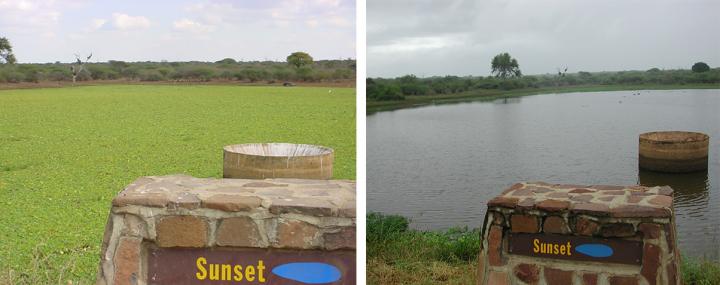
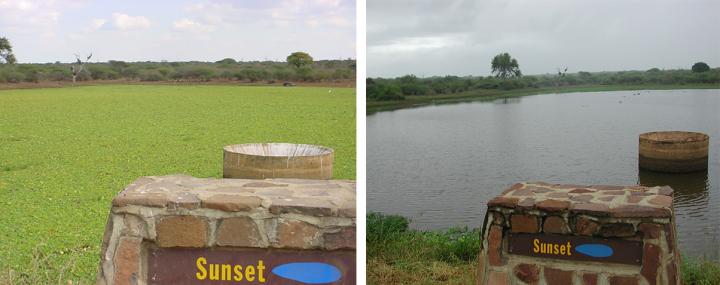
In order to find out whether the historical measures undertaken at the Kruger National Park in South Africa have been effective and optimised, researchers led by Prof. Brian W. van Wilgen of Stellenbosch University assessed the invasive alien plant control operations in the protected area over several decades. Their findings and recommendations are published in the open access journal Neobiota.
While the first invasive alien plants in the national park, which stretches over two million hectares, were recorded back in 1937, it was not until the mid-1950s that attempts at controlling them began. By the end of the century, the invasive alien plant control program had expanded substantially.
However, the scientists found out that despite several invasive alien species having been effectively managed, the overall control effort was characterised by several shortcomings, including inadequate goal-setting and planning, the lack of a sound basis on which to apportion funds, and the absence of any monitoring of control effectiveness.
Furthermore, the researchers report that over one third (40%) of the funding has been spent on species of lower concern. Some of these funds have been allocated so that additional employment could be created onsite, or because of a lack of clear evidence about the impact of certain species.
As a result of their observations, the team concludes three major strategies when navigating invasive alien species control operations.
Firstly, a thorough assessment of the impact of individual species needs to be carried out prior to allocating substantial funds. On the other hand, in case of a new invasion, management needs to be undertaken immediately before any further spread of the population and the subsequent rise in control costs. Monitoring and assessments have to be performed regularly in order to identify any new threats that could potentially be in need of prioritisation over others.
Secondly, the scientists suggest that the criteria used to assign priorities to invasive alien species should be formally documented, so that management can focus on defensible priorities. They propose using a framework employing mechanisms of assessments used in the International Union for Conservation of Nature's Global Invasive Species Database.
The authors also point out that re-allocating current funds to species of greater concern is needed for species that cannot be managed via less expensive solutions such as biological control. Taking care of alien plant populations living outside of the park, but in close proximity, is also crucial for the prevention of re-invasions of already cleared areas.
###
Original source:
van Wilgen BW, Fill JM, Govender N, Foxcroft LC (2017) An assessment of the evolution, costs and effectiveness of alien plant control operations in Kruger National Park, South Africa. NeoBiota 35: 35-59. https://doi.org/10.3897/neobiota.35.12391
Media Contact
Brian W. van Wilgen
[email protected]
@Pensoft
http://www.pensoft.net
Related Journal Article
http://dx.doi.org/10.3897/neobiota.35.12391