• HOME
  • NEWS
  • EXPLORE
    • CAREER
      • Companies
      • Jobs
    • EVENTS
    • iGEM
      • News
      • Team
    • PHOTOS
    • VIDEO
    • WIKI
  • BLOG
  • COMMUNITY
    • FACEBOOK
    • INSTAGRAM
    • TWITTER
Monday, February 9, 2026
BIOENGINEER.ORG
No Result
View All Result
  • Login
  • HOME
  • NEWS
  • EXPLORE
    • CAREER
      • Companies
      • Jobs
        • Lecturer
        • PhD Studentship
        • Postdoc
        • Research Assistant
    • EVENTS
    • iGEM
      • News
      • Team
    • PHOTOS
    • VIDEO
    • WIKI
  • BLOG
  • COMMUNITY
    • FACEBOOK
    • INSTAGRAM
    • TWITTER
  • HOME
  • NEWS
  • EXPLORE
    • CAREER
      • Companies
      • Jobs
        • Lecturer
        • PhD Studentship
        • Postdoc
        • Research Assistant
    • EVENTS
    • iGEM
      • News
      • Team
    • PHOTOS
    • VIDEO
    • WIKI
  • BLOG
  • COMMUNITY
    • FACEBOOK
    • INSTAGRAM
    • TWITTER
No Result
View All Result
Bioengineer.org
No Result
View All Result
Home NEWS Science News Biology

No time to get fit? Think again. Just 1 minute of intense exercise produces health…

Bioengineer by Bioengineer
January 25, 2018
in Biology, Science News
Reading Time: 2 mins read
0
Share on FacebookShare on TwitterShare on LinkedinShare on RedditShare on Telegram
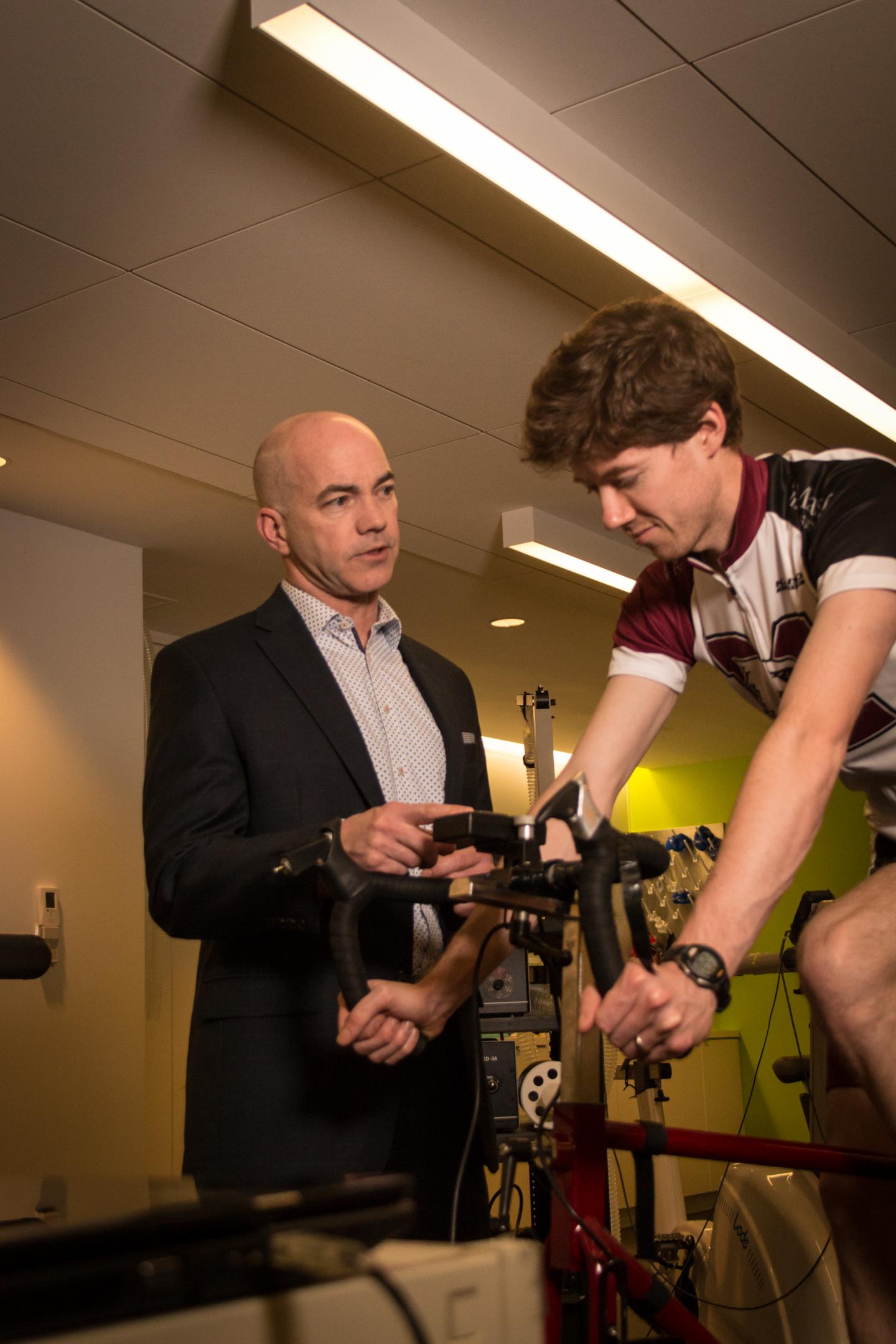
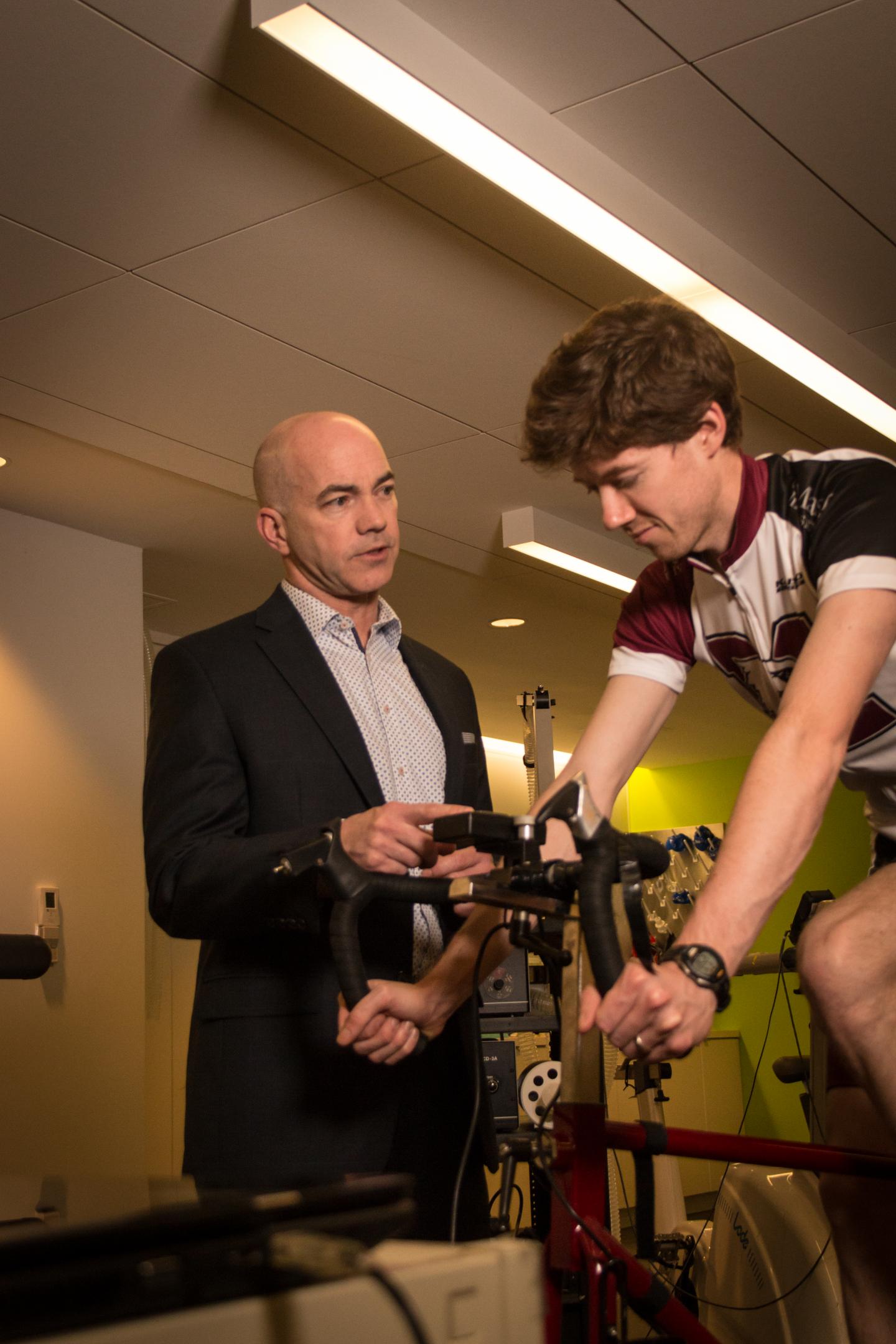
IMAGE

Researchers at McMaster University have found that a single minute of very intense exercise produces health benefits similar to longer, traditional endurance training.

The findings put to rest the common excuse for not getting in shape: there is not enough time.

"This is a very time-efficient workout strategy," says Martin Gibala, a professor of kinesiology at McMaster and lead author on the study. "Brief bursts of intense exercise are remarkably effective."

Scientists set out to determine how sprint interval training (SIT) compared to moderate-intensity continuous training (MICT), as recommended in public health guidelines. They examined key health indicators including cardiorespiratory fitness and insulin sensitivity, a measure of how the body regulates blood sugar.

A total of 27 sedentary men were recruited and assigned to perform three weekly sessions of either intense or moderate training for 12 weeks, or to a control group that did not exercise).

The McMaster team has previously shown that the SIT protocol, which involved three 20-second 'all-out' cycle sprints, was effective for boosting fitness. The workout totaled just 10 minutes, including a 2-minute warm-up and 3-minute cool down, and two minutes of easy cycling for recovery between the hard sprints.

The new study compared the SIT protocol with a group who performed 45 minutes of continuous cycling at a moderate pace, plus the same warm-up and cool down. After 12 weeks of training, the results were remarkably similar, even though the MICT protocol involved five times as much exercise and a five-fold greater time commitment.

"Most people cite 'lack of time' as the main reason for not being active", according to Gibala. "Our study shows that an interval-based approach can be more efficient — you can get health and fitness benefits comparable to the traditional approach, in less time."

Gibala, who has studied has been studying interval training for more than a decade. O, was the first researcher to show that a few minutes per week of intense exercise produced benefits similar to longer, continouous workouts. Over time, his team has experimented with different protocols in an effort to identify the most time-efficient exercise strategies.

"The basic principles apply to many forms of exercise," he says. "Climbing a few flights of stairs on your lunch hour can provide a quick and effective workout. The health benefits are significant."

The findings are published online in the journal PLOS ONE.

###

Attention editors: A complete copy of the study can be found at http://dx.plos.org/10.1371/journal.pone.0154075

A high resolution photo of researcher Martin Gibala is available to download http://adobe.ly/1Sxs7iG Please credit McMaster University

A clip of Martin Gibala discussing high intensity workouts can be found at: https://www.youtube.com/watch?v=K6v9AEccTvU

For additional information or to book McMaster's television studio please contact:

Michelle Donovan
Manager, Media Relations
McMaster University
905-525-9140, ext. 22869
[email protected]

Wade Hemsworth
Manager, Media Relations
McMaster University
905-525-9140, ext. 27988
[email protected]

Media Contact

Michelle Donovan
[email protected]
905-525-9140
@mcmasteru
Home

Share12Tweet8Share2ShareShareShare2

Related Posts

Intensive Short-Duration Exercise Outperforms Standard Care in Treating Panic Disorder

Intensive Short-Duration Exercise Outperforms Standard Care in Treating Panic Disorder

February 9, 2026

Exercise’s Impact on SASP Biomarkers in Seniors Unexplored

February 9, 2026

UK’s Rising Synthetic Opioid Crisis: Nitazene-Linked Deaths May Be Underreported by Up to 33%

February 9, 2026

Mapping NYC Foot Traffic: Insights for Urban Planning

February 8, 2026
Please login to join discussion

POPULAR NEWS

  • Robotic Ureteral Reconstruction: A Novel Approach

    Robotic Ureteral Reconstruction: A Novel Approach

    82 shares
    Share 33 Tweet 21
  • Digital Privacy: Health Data Control in Incarceration

    63 shares
    Share 25 Tweet 16
  • Mapping Tertiary Lymphoid Structures for Kidney Cancer Biomarkers

    50 shares
    Share 20 Tweet 13
  • Breakthrough in RNA Research Accelerates Medical Innovations Timeline

    53 shares
    Share 21 Tweet 13

About

We bring you the latest biotechnology news from best research centers and universities around the world. Check our website.

Follow us

Recent News

Intensive Short-Duration Exercise Outperforms Standard Care in Treating Panic Disorder

Exercise’s Impact on SASP Biomarkers in Seniors Unexplored

UK’s Rising Synthetic Opioid Crisis: Nitazene-Linked Deaths May Be Underreported by Up to 33%

Subscribe to Blog via Email

Enter your email address to subscribe to this blog and receive notifications of new posts by email.

Join 74 other subscribers
  • Contact Us

Bioengineer.org © Copyright 2023 All Rights Reserved.

Welcome Back!

Login to your account below

Forgotten Password?

Retrieve your password

Please enter your username or email address to reset your password.

Log In
No Result
View All Result
  • Homepages
    • Home Page 1
    • Home Page 2
  • News
  • National
  • Business
  • Health
  • Lifestyle
  • Science

Bioengineer.org © Copyright 2023 All Rights Reserved.