Researchers have engineered pure silicone elastomer nonwoven coatings featuring interconnected pores by precisely controlling the rheological evolution of polymer dilutions during pre-curing prior to electrospinning. Reported by Jan F. Drexler and colleagues, the methodology addresses a persistent bioengineering dilemma regarding cochlear implant electrodes, where the foreign body response and insertion trauma prompt the formation of a dense fibrotic capsule around the neuroprosthetic array. This fibrotic sheath elevates electrical impedance, perturbs predictable stimulus propagation, and escalates device energy consumption during clinical operation. While poly(dimethyl siloxane) and microstructured surfaces attenuate fibroblast proliferation compared to bare platinum electrode contacts, electrospinning pure silicone formulations to generate protective fibrous meshes has long remained technically unfeasible. By modulating addition-curing kinetics in polydimethylsiloxane dilutions without sacrificial carrier polymers, chemical blending, or coaxial spinnerets, the investigators established a stable electrospinning window that preserves defined fiber geometry and interconnected pores.
The clinical motivation for developing porous silicone nonwovens originates from performance limitations observed in cochlear prostheses, which restore functional hearing to more than one million recipients worldwide. When surgeon-guided electrode arrays enter the delicate cochlea, insertion trauma and chronic foreign body reactions stimulate localized fibroblast proliferation and connective tissue deposition. Studies examining cellular interactions on electrode materials establish that fibroblasts exhibit diminished adherence and growth on poly(dimethyl siloxane) compared to conventional platinum contacts. Furthermore, physical surface microstructuring significantly reduces connective tissue accumulation. Applying a microstructured, highly porous elastomer coating over cochlear implant electrode arrays strategically combines surface chemistry and topographical suppression mechanisms. Crucially, nonwovens synthesized via electrospinning possess high surface-to-volume ratios and interconnected cellular voids, characteristics expected to facilitate wetting by perilymph fluid, thereby preserving the electrical conductivity required for reliable neural excitation without unacceptable increases in impedance.
Despite the recognized benefits of silicone coatings, electrospinning elastomeric siloxanes presents severe physical obstacles that distinguish them from thermoplastic polymers. Uncured poly(dimethyl siloxane) prepolymers possess very low glass transition temperatures and remain fluid at room temperature, causing electrospun liquid jets to collapse and coalesce into featureless films upon the collector. Conversely, fully cured silicone elastomers crosslink into insoluble networks possessing zero flowability, precluding electrospinning extrusion altogether. Earlier synthetic attempts relied primarily on electrospinning highly branched methyl silicone resins, such as polymethylsilsesquioxane or Silres MK, or deploying sol-gel formulations containing tetraethyl orthosilicate and nitric acid in tetrahydrofuran. However, both approaches demand secondary post-process thermal curing steps at temperatures reaching 200 degrees Celsius, which compromise fiber geometry while risking contamination from chemical residues, condensation by-products, and material brittleness. Subsequent efforts processing medical-grade silicone elastomers like Silpuran 2430 on heated collectors formed dense sheets because uncured silicone spread rapidly, completely occluding pore interspaces.
To overcome these structural limitations, the authors developed a pre-curing formulation framework using Sylgard 184, a two-component addition-curing poly(dimethyl siloxane) elastomer. The base oligomer and platinum-catalyzed curing agent were maintained at a standardized ten-to-one weight ratio throughout all experiments. The investigators diluted the reactive mixture using two distinct organic solvents, acetone and tetrahydrofuran, both evaluated at 99.5 percent purity without further purification. The preparation protocol involved an initial stage where the curing agent was blended with solvent at 100 revolutions per minute for 10 minutes at room temperature, facilitating mixing between polar diluents and the non-polar silicone base. Following base prepolymer addition, mixtures underwent thermal curing inside a heating cabinet at 40 degrees Celsius under magnetic agitation. Stirring proceeded at 400 revolutions per minute during the first 30 minutes to achieve complete homogenization before being reduced to 100 revolutions per minute across concentrations of 2, 2.5, 3, and 4 grams per milliliter.
The electrospinning fabrication platform relied on a custom vertical top-down configuration engineered specifically to preserve the transient geometry of depositing silicone filaments. Polymer dilutions were dispensed through a 21-gauge cannula at a continuous flow rate of 1 milliliter per hour via a syringe pump. A high-voltage direct current power supply applied an electrical potential of negative 25 kilovolts across an operational distance of 250 millimeters separating the cannula from a grounded collecting plate. To accelerate crosslinking upon deposition and prevent liquid coalescence, the team constructed an in situ curing assembly comprising an electrically heated collector plate paired with two 150-watt infrared radiant lamps focused along the polymer jet. The collector plate incorporated dual heating foils monitored by a thermocouple linked to a controller operating at 140 degrees Celsius. Thermal radiation shielding consisting of a perforated metallic plate and conical funnel protected the cannula and supply tubing from premature thermal crosslinking.
Elucidating the underlying fluid mechanics required rigorous rheological characterization of sampled dilutions extracted at calibrated curing intervals prior to macroscopic gelation and stored at negative 24 degrees Celsius. Rotational and oscillatory rheometry was conducted at 20 degrees Celsius using a rheometer fitted with a 40-millimeter one-degree cone-plate geometry alongside an active vapor hood and solvent trap. Steady-state shear viscosity across shear rates ranging from 0.1 to 1000 reciprocal seconds was modeled utilizing the empirical Cross constitutive equation. To quantitatively assess non-Newtonian progression, the authors introduced a dimensionless shear-thinning index derived from zero-shear and minimum observed viscosity values. Dynamic mechanical spectra were recorded across amplitude sweeps spanning 0.1 to 100 percent shear strain at 10 hertz and frequency sweeps from 10 to 0.1 hertz at 1 percent strain. Normal force measurements yielded first normal stress differences, while pendant drop shape analysis captured surface tension profiles, which remained stable between 18 and 21 millinewtons per meter.
Rheological measurements unveiled a dramatic evolution in viscoelastic parameters as crosslinking progressed toward the critical gelation boundary. Freshly prepared dilutions initially displayed near-Newtonian flow behavior with negligible elastic response, reflecting the absence of physical chain entanglements in the linear prepolymers. As platinum-catalyzed hydrosilylation generated branched macromolecular architectures, both shear viscosity and non-Newtonian shear thinning intensified markedly, accelerating abruptly moments before flowability ceased. In 4 grams per milliliter formulations, zero-shear viscosity escalated from 0.26 to 6.02 Pascal-seconds over 190 minutes in acetone, whereas tetrahydrofuran dilutions surged from 0.08 to 18.98 Pascal-seconds after 210 minutes. Concurrently, the shear-thinning index rose from zero to 0.73 in acetone and to 3.35 in tetrahydrofuran. Furthermore, nonlinear elasticity emerged past critical shear thresholds: maximum first normal stress differences reached 3228 Pascals in acetone and 6722 Pascals in tetrahydrofuran. Oscillatory rheology corroborated this, as storage moduli climbed substantially while phase angles decreased toward 71 degrees.
Visual observation of the electrospinning process revealed that fluid jet stability and spatial trajectory correlated directly with the development of these measurable viscoelastic thresholds. At early pre-curing stages, low-viscosity solutions failed to sustain a continuous filament, yielding erratic Taylor cones that underwent rapid capillary breakup characteristic of pure electrospraying. As incubation time approached the gel transition, a well-defined processing window emerged, marked by continuous, stable electrospinning above specific viscoelastic criteria: 1.27 Pascal-seconds and 1016 Pascals of normal stress in acetone, and 3.5 Pascal-seconds and 2083 Pascals in tetrahydrofuran. Acetone formulations exhibited frequent jet breakage and pronounced bending instabilities driven by lateral electrostatic whipping motions, eventually losing flowability after 180 minutes. Conversely, tetrahydrofuran systems demonstrated substantially broader operational processing windows, maintaining unbroken jets that exhibited suppressed or entirely absent bending instabilities. Higher zero-shear viscosity, elevated storage moduli, and substantial normal stress differences in tetrahydrofuran effectively damped lateral jet oscillations, imparting greater trajectory predictability.
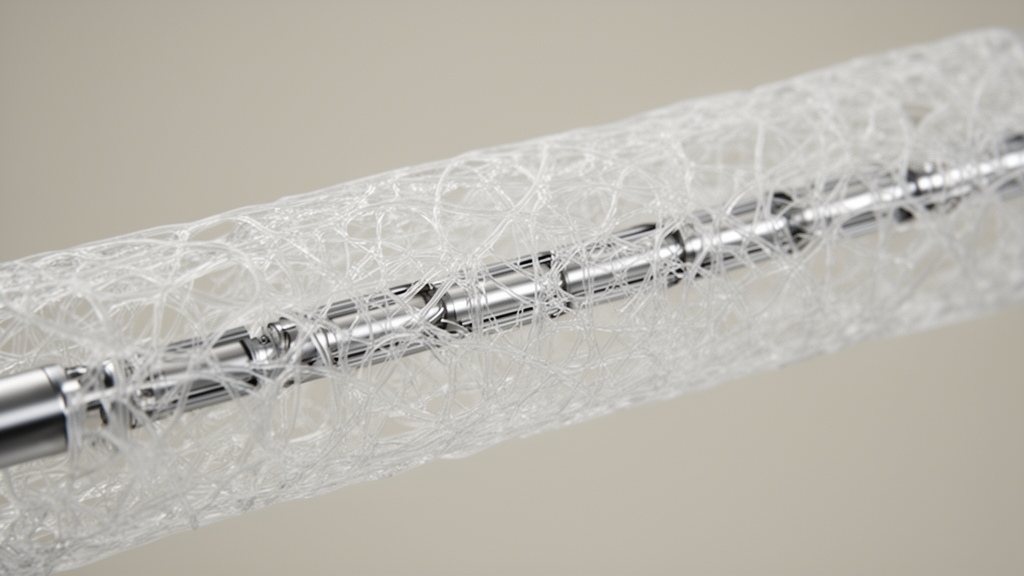
Scanning electron microscopy of deposited nonwovens demonstrated that diluent selection and curing duration profoundly altered microstructural fiber architecture and geometric retention. Acetone-based formulations transitioned from discrete spherical droplets at 160 minutes to fragmented filaments at 170 minutes, eventually generating continuous fibers at 180 minutes. However, these acetone-derived fibers exhibited pronounced cross-sectional sagging and ribbon-like flattening, with successive deposition layers collapsing into dense, poorly interconnected matrices. Fragmented acetone fibers occasionally exhibited corkscrew-like helical morphologies attributed to elastic recoil following sudden jet breakage in flight. In striking contrast, tetrahydrofuran solutions processed beyond 200 minutes of pre-curing produced cylindrical, structurally robust fibers that resisted sagging, yielding nonwovens with interconnected pore networks. Morphometric analysis revealed that fiber diameters ranged between 21 and 136 micrometers. Tetrahydrofuran produced much larger fibers (49 to 136 micrometers) than acetone (22 to 37 micrometers), even at matched zero-shear viscosities, an effect directly attributed to acetone’s higher electrical conductivity accelerating electrostatic charge accumulation and jet thinning.
Synthesizing their physical and morphological data, the authors concluded that pre-curing rheological modulation provides a viable mechanism to electrospin addition-curing silicone elastomers into porous nonwoven coatings without sacrificial additives. The transition from electrospraying to stable fiber formation is governed primarily by the emergence of nonlinear elastic restoring forces that resist capillary Rayleigh-Plateau instabilities, rather than by surface tension, which remained invariant throughout curing. Enhanced solvent quality in tetrahydrofuran fosters extended polymer coil conformations and denser physical entanglements, widening the operational window and suppressing fiber collapse. Nonetheless, the resulting fiber diameters of 21 to 136 micrometers remain considerably thicker than conventional submicron thermoplastic nanofibers, which may influence cochlear implant coating dimensions and cellular responses. The research team noted that future work must incorporate extensional rheological characterization beneath the Taylor cone, accompanied by systematic in vitro cellular assays to identify optimal fiber diameter regimes that inhibit fibroblast encapsulation while preserving perilymph permeability and long-term electrical stimulation fidelity.
Subject of Research: Rheological control of silicone elastomer electrospinning for cochlear implant coatings
Article Title: Curing-state-dependent rheology governs electrospinning of silicone elastomers for hydrophobic surface coatings
Article References: Drexler, J. F., Zhang, Y., Rummel, F., Hentschel, G., Bode, T., Mueller, M., Paasche, G., & Glasmacher, B. (2026). Curing-state-dependent rheology governs electrospinning of silicone elastomers for hydrophobic surface coatings. Journal of Materials Science: Materials in Medicine, 37(1), Article 136. https://doi.org/10.1007/s10856-026-07125-z
Image Credits: AI Generated
DOI: 10.1007/s10856-026-07125-z
Keywords: silicone elastomers, electrospinning, cochlear implants, viscoelasticity, pre-curing rheology, Sylgard 184, poly(dimethyl siloxane), first normal stress difference, zero-shear viscosity, shear-thinning behavior, hydrophobic coatings, fibrotic encapsulation, in situ thermal curing, tetrahydrofuran, electrospraying transition, porous nonwovens, electrode impedance
News Source: Ophelia Keating. (November 17, 2026). Pre-Curing Rheology Enables Electrospun Silicone Elastomer Coatings for Cochlear Implants. Scienmag.