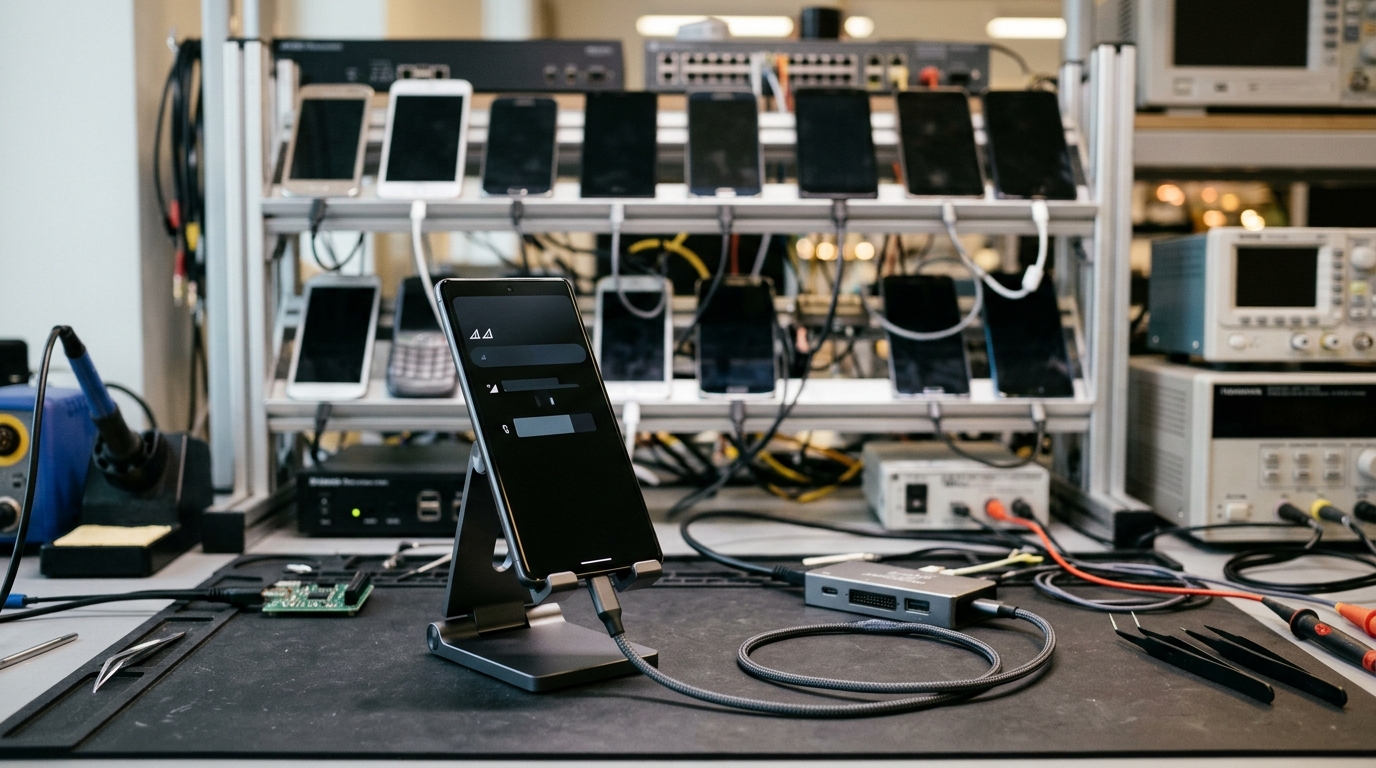
A collaborative machine learning framework that models chronological cohorts of Android applications as independent federated clients can substantially mitigate temporal concept drift in malware classification while avoiding the centralized pooling of sensitive application packages. According to a research investigation published in Discover Computing by researchers Amit Patel and colleagues, treating distinct historical and contemporary application periods as separate clients under Federated Averaging enables decentralized systems to sustain reliable malware identification over ten years of ecosystem evolution. Evaluating 20,000 real-world mobile applications from the AndroZoo repository across five random seeds, the researchers demonstrated that their proposed Era-as-Client architecture achieves a detection accuracy of 96.2 percent, operating within 0.4 percentage points of a centralized pooled control model that reached 96.6 percent. By converting raw Dalvik bytecode streams into compact 32×32 grayscale images processed by a convolutional neural network containing fewer than 49,000 parameters, the system enables security providers to adapt to evolving mobile threats without transmitting proprietary binaries across institutional boundaries.
The operational necessity for temporal resilience stems directly from the rapid expansion of mobile threats and the shortcomings of conventional detection architectures. Android commands more than 71 percent of the global smartphone operating system market as of 2024, making it the prime target for cybercriminals. Monitoring by the AV-TEST Institute identifies over 450,000 new malicious programs daily, with Android-specific threats exhibiting 33 percent year-over-year growth in 2024, while threat analysts documented hundreds of malicious store apps with tens of millions of installations. Dynamic analysis provides behavioral evidence but introduces prohibitive overhead for on-device deployment. Deep learning models achieve high accuracy under static benchmarks, but conventional pipelines assume contemporaneous training and test distributions, causing detection performance to deteriorate sharply as malware authoring techniques transform over successive years.
To quantify temporal degradation and construct a robust defensive framework, the investigators curated two temporally disjoint cohorts comprising 20,000 applications from the AndroZoo repository. The historical cohort, Era-OLD, contains 10,000 applications spanning 2013 through 2017, capturing earlier threat categories including SMS fraud, adware, and banking trojans. The contemporary cohort, Era-NEW, contains 10,000 applications spanning 2019 through 2023, reflecting contemporary threats such as complex spyware, ransomware variants, and obfuscated families. The authors deliberately excluded the year 2018 to establish a clear temporal buffer between the two five-year observation periods, preventing leakage across eras. Exact duplicate applications were eliminated via SHA-256 hashes, ensuring no identical binaries crossed temporal partitions. Both cohorts maintained an even split of 5,000 benign and 5,000 malicious applications, where malware ground truth required four or more VirusTotal detections. Sensitivity tests using thresholds of six and ten detections confirmed consistent temporal accuracy drops of 4.3 and 4.2 percentage points, demonstrating that observed declines were not artifacts of the labeling threshold.
The data processing pipeline converts application binaries into standardized visual representations without requiring disassembly or hand-crafted feature engineering. Each application package is treated as an archive to extract classes.dex as an unmodified byte stream. The raw byte sequence is mapped into a two-dimensional matrix of fixed width 256, padded with zeros, and bilinearly resized to a 32×32 grayscale image normalized to values between zero and one. The resulting representations are processed by a compact convolutional neural network inspired by the IMCLNet architecture. This network incorporates depthwise separable convolutions that factorize spatial filtering from pointwise channel mixing, achieving an 8.9-fold computational reduction over standard 3×3 convolutions. To preserve structural information efficiently, the design integrates Coordinate Attention modules that decompose channel attention into horizontal and vertical 1D pooling streams, alongside Global Context blocks capturing long-range dependencies. In total, the model contains 48,662 trainable parameters and occupies 0.186 megabytes in 32-bit floating-point format.
Physical measurements of the bytecode images revealed that Android software evolution produces measurable statistical shifts at the pixel level. Comparing Era-OLD and Era-NEW bytecode images, the mean normalized pixel intensity rose from 0.292 to 0.326, while the standard deviation increased from 0.231 to 0.248. The active-pixel ratio climbed from 0.735 to 0.794, indicating broader byte occupancy within compiled binaries. In addition, image entropy increased from 6.18 bits to 6.44 bits across eras, reflecting greater structural complexity in newer applications. Evaluating the aggregate pixel-intensity distributions yielded a Jensen-Shannon divergence of 0.052 and a normalized Wasserstein distance of 0.034. A two-sample Kolmogorov-Smirnov test confirmed this temporal distribution difference with a test statistic of D equals 0.20 and a significance value of p less than 10 to the power of negative ten.
Evaluating an Era-OLD trained detector directly on the held-out Era-NEW test set of 1,500 applications reduced classification accuracy from the within-era level of 96.5 percent to 91.9 percent. Crucially, the false-negative rate reached 14.9 percent, causing malware recall to drop to 85.1 percent. When evaluating the proposed Federated Era-as-Client model across five random seeds, detection performance rebounded substantially. The federated model achieved 96.2 percent accuracy, 97.8 percent precision, 94.5 percent recall, an F1-score of 96.1 percent, and an AUC of 0.990 on the same test set. In matched controls, Centralized Pooled training reached 96.6 percent accuracy and 95.0 percent recall, while Sequential Adaptation achieved 96.1 percent accuracy and 94.5 percent recall.
Evaluating federated convergence across 20 communication rounds with five local epochs per round using Adam optimization and cosine annealing schedules, model accuracy advanced from 78.8 percent at round one to 90.7 percent by round five. The federated model surpassed the static 91.9 percent cross-era baseline at round six, with accuracy gains flattening around round 14 and stabilizing at 96.2 percent at round 20. Crucially, matched controls reveal that performance recovery is driven by access to contemporary labeled training samples rather than federated optimization itself. Under identical access to both historical and contemporary data, centralized pooling attained 96.6 percent accuracy, slightly exceeding the federated model’s 96.2 percent. Thus, the principal advantage of the Era-as-Client approach is not superior predictive performance over centralized learning, but rather raw-data locality, enabling collaborative model updates while keeping application files within their local environments.
To evaluate prospective generalization to truly unseen future software, the authors conducted a strict forward-in-time evaluation. In this protocol, 4,000 applications from 2022 and 2023 were reserved exclusively as a hold-out test set. Training, validation, and adaptation data were restricted to applications available through 2021, combining Era-OLD with a 2019–2021 cohort of 5,000 training and 1,000 validation samples. On the unseen 2022–2023 test set, a historical model trained solely on data through 2017 achieved only 90.4 percent accuracy and an 82.6 percent malware recall. In contrast, the Federated Era-as-Client model reached 94.4 percent accuracy, 97.4 percent precision, 91.2 percent recall, a 94.2 percent F1-score, and an AUC of 0.981. This compared closely with Centralized Pooled training at 94.9 percent accuracy and Sequential Adaptation at 94.2 percent accuracy. These results confirm that incorporating pre-2022 adaptation data provides lasting predictive benefits on later unseen periods, while federated training retains performance close to centralized pooling without centralizing raw application data.
The framework was further tested across multi-client scaling, statistical heterogeneity, client availability, and deployment efficiency. Under fixed-global scaling with 14,000 total training samples, accuracy decreased from 96.2 percent with two clients to 95.3 percent with five and 94.4 percent with ten clients as local data per client diminished. Conversely, under fixed-local allocation maintaining 1,400 samples per client, accuracy remained at 95.7 percent with ten clients. Under Dirichlet-controlled non-IID partitioning with ten clients, accuracy shifted from 96.1 percent at alpha equals 10 to 95.5 percent at alpha equals one and 94.2 percent at alpha equals 0.1, remaining above the 91.9 percent cross-era baseline. Simulating partial participation, accuracy remained at 95.8 percent with 60 percent active clients and 95.1 percent with 30 percent participation. In efficiency benchmarks, using 32×32 images provided 2.6-fold lower CPU inference latency (5.6 ms versus 14.7 ms for 128×128 images) while sacrificing only 1.0 percentage point of accuracy. The model achieved P95 and P99 CPU latencies of 6.1 ms and 6.8 ms, processed 1,800 samples per second at batch size 32, and required 0.372m megabytes of bidirectional model transfer per round for m participating clients.
Despite these positive experimental findings, the researchers outline several critical limitations and privacy considerations that define the operational scope of their framework. The authors emphasize that data locality under standard FedAvg does not constitute a formal privacy guarantee. Transmitted model parameter updates could potentially leak training information unless coupled with cryptographic mechanisms such as differential privacy or secure aggregation, which were not implemented in this evaluation. Furthermore, the experiments did not test resistance against adversarial poisoning attacks, such as label-flipping or malicious updates, nor were gradient-inversion or membership-inference attacks formally evaluated. In addition, because all partitions were sampled from the single AndroZoo repository, the study represents a controlled simulation of cross-silo heterogeneity rather than an evaluation across independently operated organizations with physical network variations, asynchronous dropouts, and hardware differences. The authors identify multi-class malware family attribution and client-side drift detection as promising directions for future research.
Subject of Research: Federated learning and lightweight bytecode imaging for drift-resilient Android malware detection
Article Title: Federated drift-resilient android malware detection through lightweight bytecode imaging
Article References: Patel, A., Tomar, D. S., Pateriya, R. K., & Beg, R. (2026). Federated drift-resilient android malware detection through lightweight bytecode imaging. Discover Computing, 29(1), Article 895. https://doi.org/10.1007/s10791-026-10818-2
Image Credits: AI Generated
DOI: 10.1007/s10791-026-10818-2
Keywords: Android malware detection, Federated learning, Bytecode imaging, Concept drift, Temporal generalisation, Convolutional neural networks, FedAvg, AndroZoo, Depthwise separable convolutions, Coordinate Attention, Global Context modeling, Data locality, Model drift adaptation, Mobile security, Forward-in-time evaluation, Non-IID data distributions, Edge deployment, Dalvik executable bytecode
News Source: Denise Maddox. (November 17, 2026). Federated Bytecode Imaging Restores Android Malware Detection Under Severe Temporal Drift. Scienmag.