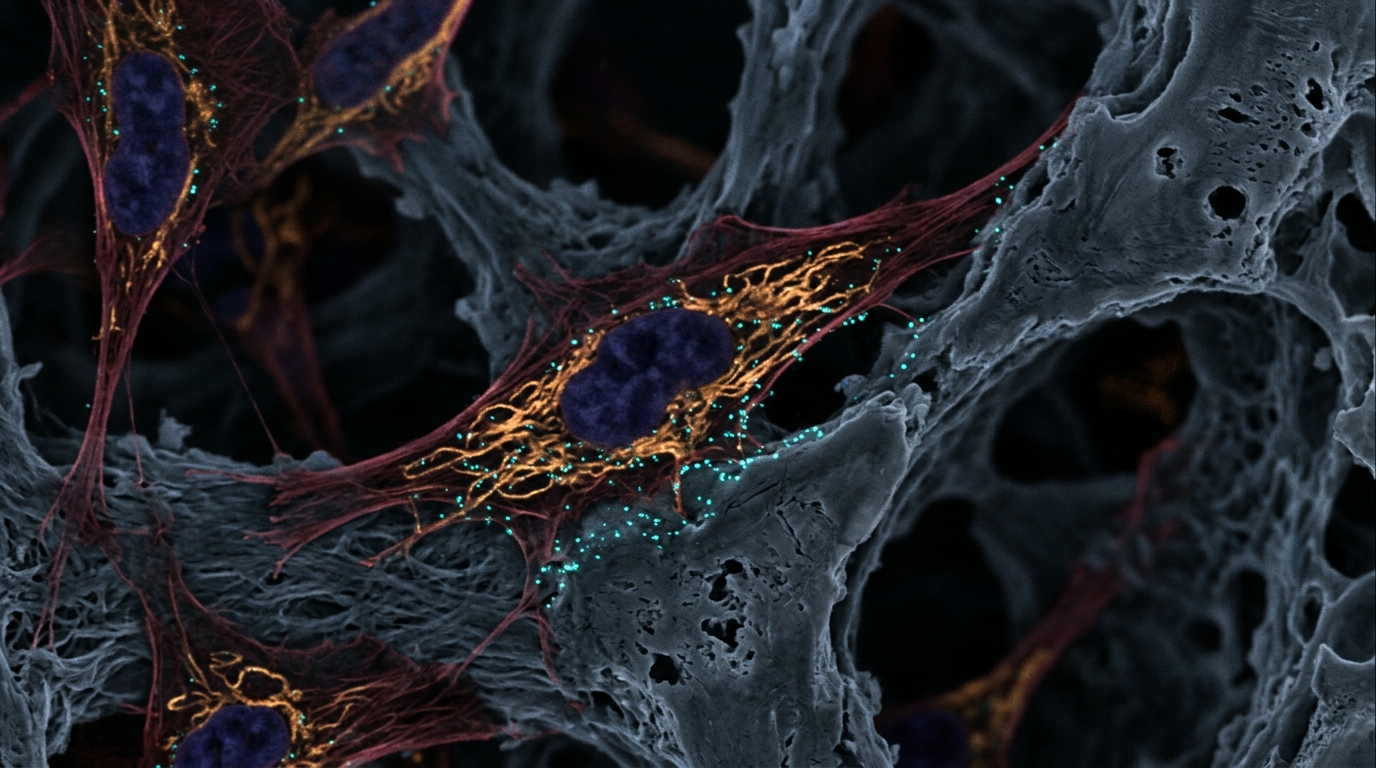
A nanotherapeutic based on atomic-level coordination-engineered quantum dots can orchestrate mitochondrial energy rescue to repair impaired diabetic bone regeneration, according to research published in Nature Communications. In diabetes mellitus, bone regeneration is critically impaired by a cellular energy crisis that disrupts vital osteoimmunological processes. Although intercellular mitochondrial transfer has emerged as a potential metabolic rescue mechanism, this biological pathway can become hijacked in the diabetic state, propagating persistent tissue inflammation instead of supporting tissue repair.
Existing therapeutic strategies designed to protect mitochondria have remained inadequate because they fail to account for the complex spatiotemporal dynamics of intercellular mitochondrial transfer within regenerative tissues. To address these shortcomings, the study identified a key population of mitochondrial donor cells that can be therapeutically targeted. This specific cellular population is functionally coupled to osteoimmunological outcomes through the process of intercellular mitochondrial transfer.
To restore functional mitochondrial transfer and re-establish cellular energy homeostasis, the researchers engineered a specialized nanotherapeutic platform utilizing atomic-level coordination-engineered quantum dots. These engineered nanomaterials target the underlying metabolic disruption by markedly reducing the catalytic reaction energy barrier for reactive oxygen species. By lowering this barrier, the quantum dots protect fragile mitochondria from oxidative stress within the hostile diabetic environment.
In addition to mitigating oxidative stress, the quantum dots produce manganese-coordinated degradation fragments that play a critical biochemical role. These manganese-coordinated fragments actively stimulate the CaMKKβ-AMPK signaling axis under diabetic conditions. Activation of this specific regulatory pathway works in tandem with reduced reactive oxygen species activity to improve overall mitochondrial quality control and substantially enhance intercellular mitochondrial transfer efficiency.
Together, these coordinated actions render macrophages competent as functional mitochondrial donors rather than propagators of inflammatory damage. By correcting pathological intercellular mitochondrial transfer and sustaining local energy homeostasis, the coordination-engineered quantum dot strategy provides a targeted approach to resolve the cellular energy crisis and rescue diabetic bone repair.
Subject of Research: Quantum dot nanotherapy for diabetic bone regeneration
Article Title: Atomic-level coordination-engineered quantum dots orchestrate mitochondrial energy rescue for diabetic bone regeneration
Article References: Jiang, M., Qin, H., Zhao, H., Ma, W., Tang, P., Wei, H., Jian, G., Chen, D., Cheng, Z., Cannon, R. D., Ji, P., Li, D., & Chen, T. (2026). Atomic-level coordination-engineered quantum dots orchestrate mitochondrial energy rescue for diabetic bone regeneration. Nature Communications. https://doi.org/10.1038/s41467-026-79398-5
Image Credits: AI Generated
DOI: 10.1038/s41467-026-79398-5
Keywords: quantum dots, mitochondrial energy rescue, diabetic bone regeneration, osteoimmunological processes, mitochondrial transfer, diabetes mellitus, macrophages, reactive oxygen species, CaMKKβ-AMPK signaling, nanotherapeutics, energy homeostasis, mitochondrial quality control, manganese-coordinated fragments, bone repair, regenerative tissues, coordination engineering, Nature Communications
News Source: Katie Riggs. (November 17, 2026). Engineered Quantum Dots Rescue Mitochondrial Energy for Diabetic Bone Repair. Scienmag.