• HOME
  • NEWS
  • EXPLORE
    • CAREER
      • Companies
      • Jobs
    • EVENTS
    • iGEM
      • News
      • Team
    • PHOTOS
    • VIDEO
    • WIKI
  • BLOG
  • COMMUNITY
    • FACEBOOK
    • INSTAGRAM
    • TWITTER
Wednesday, April 1, 2026
BIOENGINEER.ORG
No Result
View All Result
  • Login
  • HOME
  • NEWS
  • EXPLORE
    • CAREER
      • Companies
      • Jobs
        • Lecturer
        • PhD Studentship
        • Postdoc
        • Research Assistant
    • EVENTS
    • iGEM
      • News
      • Team
    • PHOTOS
    • VIDEO
    • WIKI
  • BLOG
  • COMMUNITY
    • FACEBOOK
    • INSTAGRAM
    • TWITTER
  • HOME
  • NEWS
  • EXPLORE
    • CAREER
      • Companies
      • Jobs
        • Lecturer
        • PhD Studentship
        • Postdoc
        • Research Assistant
    • EVENTS
    • iGEM
      • News
      • Team
    • PHOTOS
    • VIDEO
    • WIKI
  • BLOG
  • COMMUNITY
    • FACEBOOK
    • INSTAGRAM
    • TWITTER
No Result
View All Result
Bioengineer.org
No Result
View All Result
Home NEWS Science News Biology

Male bees have more than a one-track mind

Bioengineer by Bioengineer
January 25, 2018
in Biology, Science News
Reading Time: 2 mins read
0
Share on FacebookShare on TwitterShare on LinkedinShare on RedditShare on Telegram
IMAGE

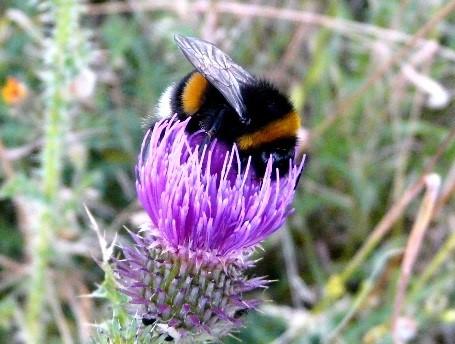
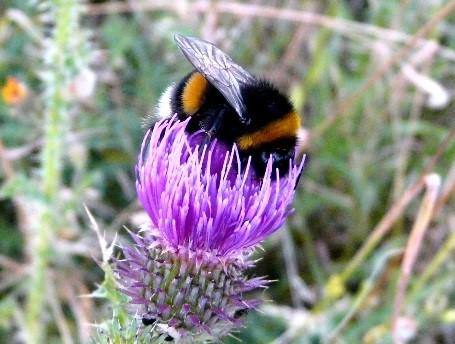
Male bumblebees are just as smart as female worker bees despite their dim-witted reputation, according to new research from Queen Mary University of London (QMUL).

Researchers from QMUL's School of Biological and Chemical Sciences trained male and female bumblebees to distinguish between artificial flowers that contained food and another that did not.

The new study published today (Friday 13 Nov.) in the journal Animal Behaviour found male bumblebees equal the female or worker bee's excellence in learning which flowers reward with food.

Roles within a bee colony are tightly regulated with the sterile female (also known as worker) bees performing all the labour such as, cleaning the hive, defending the colony, collecting and storing food, and feeding the young. Male bumblebees are believed to have few aptitudes beyond mating and thought to be not just lazy but simple. In comparison, for example, worker bees are well known to learn the location of their hive, the colours and scents of rewarding flowers.

Dr Stephan Wolf, lead author of the research, said: "Despite fundamental differences in the daily habits between male and female bees, this work illustrates that male bees can be clever shoppers in the flower supermarket even when their main interest is in mating."

The study tested the bees' ability to associate the flower colour with the reward of food. Flower colours where changed after some time, and bees had to forget the previously learned cue and learn a new colour as indicator for nectar or food. Over four sequential colour changes, the researchers demonstrated that male and worker bees are equally good at learning floral colours to guide them to those flower types that provide them with nectar even when the colours of the rewarding flowers will change over time.

Professor Lars Chittka, co-author of the study, suggests that: "Since bumblebee males can't sting, they are a useful model to study insect learning behaviour without the constant risk of painful encounters."

###
Share12Tweet8Share2ShareShareShare2

Related Posts

FGFR2b Links to Biomarkers, Tumor Diversity, Survival

April 1, 2026

Frailty, Malnutrition Link Falls to Daily Functioning

April 1, 2026

Dactylides D, E: Novel 22-Membered Polyol Macrolides

April 1, 2026

Longer Leukocyte Telomeres Linked to Premature Membrane Rupture

April 1, 2026
Please login to join discussion

POPULAR NEWS

  • blank

    Revolutionary AI Model Enhances Precision in Detecting Food Contamination

    96 shares
    Share 38 Tweet 24
  • Imagine a Social Media Feed That Challenges Your Views Instead of Reinforcing Them

    1006 shares
    Share 398 Tweet 249
  • Promising Outcomes from First Clinical Trials of Gene Regulation in Epilepsy

    51 shares
    Share 20 Tweet 13
  • Popular Anti-Aging Compound Linked to Damage in Corpus Callosum, Study Finds

    43 shares
    Share 17 Tweet 11

About

We bring you the latest biotechnology news from best research centers and universities around the world. Check our website.

Follow us

Recent News

FGFR2b Links to Biomarkers, Tumor Diversity, Survival

Frailty, Malnutrition Link Falls to Daily Functioning

Dactylides D, E: Novel 22-Membered Polyol Macrolides

Subscribe to Blog via Email

Enter your email address to subscribe to this blog and receive notifications of new posts by email.

Join 78 other subscribers
  • Contact Us

Bioengineer.org © Copyright 2023 All Rights Reserved.

Welcome Back!

Login to your account below

Forgotten Password?

Retrieve your password

Please enter your username or email address to reset your password.

Log In
No Result
View All Result
  • Homepages
    • Home Page 1
    • Home Page 2
  • News
  • National
  • Business
  • Health
  • Lifestyle
  • Science

Bioengineer.org © Copyright 2023 All Rights Reserved.