• HOME
  • NEWS
  • EXPLORE
    • CAREER
      • Companies
      • Jobs
    • EVENTS
    • iGEM
      • News
      • Team
    • PHOTOS
    • VIDEO
    • WIKI
  • BLOG
  • COMMUNITY
    • FACEBOOK
    • INSTAGRAM
    • TWITTER
Tuesday, November 17, 2026
BIOENGINEER.ORG
No Result
View All Result
  • Login
  • HOME
  • NEWS
  • EXPLORE
    • CAREER
      • Companies
      • Jobs
        • Lecturer
        • PhD Studentship
        • Postdoc
        • Research Assistant
    • EVENTS
    • iGEM
      • News
      • Team
    • PHOTOS
    • VIDEO
    • WIKI
  • BLOG
  • COMMUNITY
    • FACEBOOK
    • INSTAGRAM
    • TWITTER
No Result
View All Result
Bioengineer.org
No Result
View All Result
Home NEWS Science News Biology

Review Finds African Ethnobiological Knowledge Has Measurable Conservation Value

by
November 17, 2026
in Biology
Reading Time: 2 mins read
0
Review Finds African Ethnobiological Knowledge Has Measurable Conservation Value

Review Finds African Ethnobiological Knowledge Has Measurable Conservation Value

Share on FacebookShare on TwitterShare on LinkedinShare on RedditShare on Telegram

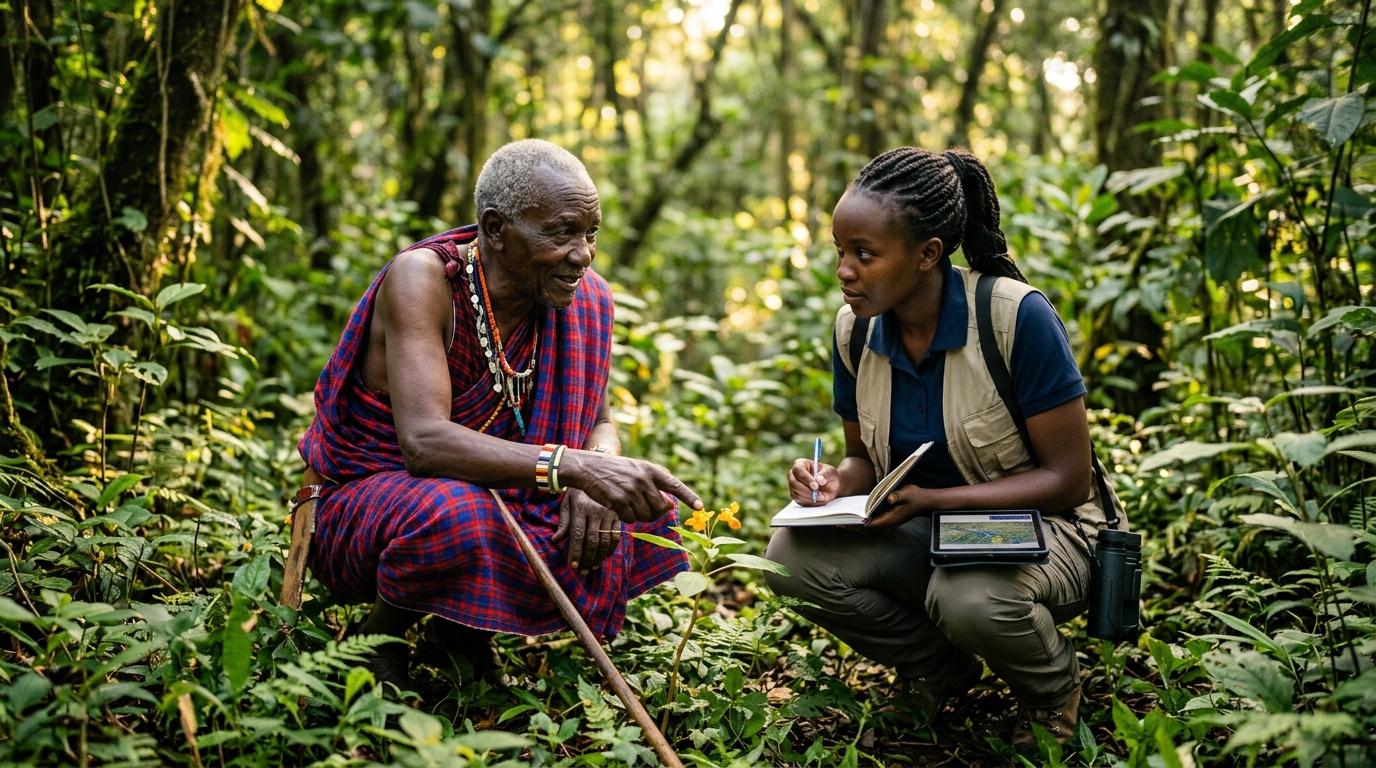
A continental systematic review has found that African ethnobiological knowledge has measurable conservation value. Analyzing 81 eligible peer-reviewed studies across 32 African countries, the synthesis found that this knowledge links to conservation, biodiversity, and sustainable resource management, although it is being lost and is rarely integrated into formal policies.

The research adhered to the PRISMA 2020 guidelines and applied Critical Appraisal Skills Programme checklists to evaluate eligible literature. The investigation concentrated on studies connecting ethnobotanical, ethnozoological, and traditional ecological knowledge to sustainable resource management, biodiversity, and conservation. Geographically, East and West African nations represented more than half of the evidence base, contributing 41 combined studies.

Ten interrelated thematic categories emerged from the synthesized literature, documenting varied roles of community-held knowledge. These core themes encompassed traditional ecological knowledge serving as a baseline for conservation, sacred natural sites functioning as refugia for biodiversity, quantitative prioritization strategies for useful wild species, food and animal-health security, alongside patterns of knowledge decline and policy integration challenges.

National inventories compiled within the synthesis highlighted extensive local biodiversity utilization across individual African nations. In Nigeria, country syntheses recorded 963 useful plant species, while Ethiopian records documented 651 wild edible plant species. Furthermore, informant consensus factor values reached 0.91.

Sacred natural sites were identified as biodiversity refugia. One Nigerian sacred grove held more than 400 plant species and about 300 primates.

The study concludes that while African ethnobiological knowledge has measurable conservation value, it is being lost. A 15-year revisit study conducted in a Maasai community located in Kenya revealed that approximately 40 percent of plant species previously gathered and utilized had fallen out of active community use, demonstrating rapid loss of ethnobotanical heritage over time.

The review concluded that while African ethnobiological traditions offer measurable conservation value, these insights are rarely incorporated into statutory conservation policies. To address these vulnerabilities, the synthesis recommends formally granting legal recognition to sacred and community-managed sites, establishing co-management partnerships with indigenous knowledge holders, undertaking matched-site studies of conservation outcomes, and conducting repeat surveys to monitor knowledge attrition.

Subject of Research: Systematic review of African ethnobiological knowledge in conservation and biodiversity preservation

Article Title: Reviewing the roles of African ethnobiology in environmental conservation and biodiversity preservation: a systematic review

Article References: Lema, M. W. (2026). Reviewing the roles of African ethnobiology in environmental conservation and biodiversity preservation: a systematic review. Journal of Ethnobiology and Ethnomedicine. https://doi.org/10.1186/s13002-026-00985-3

Image Credits: AI Generated

DOI: 10.1186/s13002-026-00985-3

Keywords: African ethnobiology, traditional ecological knowledge, biodiversity preservation, environmental conservation, systematic review, PRISMA guidelines, sacred natural sites, ethnobotany, ethnozoology, informant consensus factor, sacred groves, wild edible plants, knowledge loss, co-management, indigenous knowledge, community resource management, Nigeria ethnobotany, Ethiopia edible plants

News Source: Margaret Porter. (November 17, 2026). Review Finds African Ethnobiological Knowledge Has Measurable Conservation Value. Scienmag.


Tags: African ethnobiologybiodiversity preservationco-managementcommunity resource managementenvironmental conservationEthiopia edible plantsethnobotanyethnozoologyindigenous knowledgeinformant consensus factorknowledge lossNigeria ethnobotanyPRISMA guidelinessacred grovessacred natural sitessystematic reviewtraditional ecological knowledgewild edible plants
Share12Tweet7Share2ShareShareShare1

Related Posts

Laboratory Evolution Boosts Trehalose Production in Cupriavidus necator via Osmotic Stress Adaptation

Laboratory Evolution Boosts Trehalose Production in Cupriavidus necator via Osmotic Stress Adaptation

November 17, 2026
Inherited Mutations in Manganese Transporters Cause Distinct Metabolic Disorders

Inherited Mutations in Manganese Transporters Cause Distinct Metabolic Disorders

November 17, 2026

CT Findings Prompted Empirical Albendazole Treatment Despite Negative Stool Microscopy in Patient

November 17, 2026

Medaka Genomes Reveal Divergent Sex-Determining Chromosomes in DMY-Deficient Lineages

November 17, 2026

POPULAR NEWS

  • Alloplastic Temporomandibular Joint Replacement Offers Uncertain Benefits After Mandibular Neoplasm Resection

    Alloplastic Temporomandibular Joint Replacement Offers Uncertain Benefits After Mandibular Neoplasm Resection

    29 shares
    Share 12 Tweet 7
  • Serum Mass Spectrometry Predicts Treatment Response in HER2-Positive Breast Cancer

    29 shares
    Share 12 Tweet 7
  • Polypharmacy Linked to Higher Odds of Sarcopenia in Older Adults

    29 shares
    Share 12 Tweet 7
  • Adapted Virtual Presence Tool Proves Feasible in Pilot Manikin Simulation Courses

    29 shares
    Share 12 Tweet 7

About

We bring you the latest biotechnology news from best research centers and universities around the world. Check our website.

Follow us

Recent News

Sexual Dysfunction Signals Early Autonomic Involvement in Rare Hereditary Transthyretin Amyloidosis

Laboratory Evolution Boosts Trehalose Production in Cupriavidus necator via Osmotic Stress Adaptation

Inherited Mutations in Manganese Transporters Cause Distinct Metabolic Disorders

Subscribe to Blog via Email

Enter your email address to subscribe to this blog and receive notifications of new posts by email.

Join 88 other subscribers
  • Contact Us

Bioengineer.org © Copyright 2023 All Rights Reserved.

Welcome Back!

Login to your account below

Forgotten Password?

Retrieve your password

Please enter your username or email address to reset your password.

Log In
No Result
View All Result
  • Homepages
    • Home Page 1
    • Home Page 2
  • News
  • National
  • Business
  • Health
  • Lifestyle
  • Science

Bioengineer.org © Copyright 2023 All Rights Reserved.