• HOME
  • NEWS
  • EXPLORE
    • CAREER
      • Companies
      • Jobs
    • EVENTS
    • iGEM
      • News
      • Team
    • PHOTOS
    • VIDEO
    • WIKI
  • BLOG
  • COMMUNITY
    • FACEBOOK
    • INSTAGRAM
    • TWITTER
Saturday, February 7, 2026
BIOENGINEER.ORG
No Result
View All Result
  • Login
  • HOME
  • NEWS
  • EXPLORE
    • CAREER
      • Companies
      • Jobs
        • Lecturer
        • PhD Studentship
        • Postdoc
        • Research Assistant
    • EVENTS
    • iGEM
      • News
      • Team
    • PHOTOS
    • VIDEO
    • WIKI
  • BLOG
  • COMMUNITY
    • FACEBOOK
    • INSTAGRAM
    • TWITTER
  • HOME
  • NEWS
  • EXPLORE
    • CAREER
      • Companies
      • Jobs
        • Lecturer
        • PhD Studentship
        • Postdoc
        • Research Assistant
    • EVENTS
    • iGEM
      • News
      • Team
    • PHOTOS
    • VIDEO
    • WIKI
  • BLOG
  • COMMUNITY
    • FACEBOOK
    • INSTAGRAM
    • TWITTER
No Result
View All Result
Bioengineer.org
No Result
View All Result
Home Headlines

Parkinson’s disease and prion diseases: Discovery of a molecular…

Bioengineer.org by Bioengineer.org
January 25, 2018
in Headlines, Health, Science News
Reading Time: 2 mins read
0
Share on FacebookShare on TwitterShare on LinkedinShare on RedditShare on Telegram
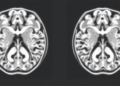
IMAGE

Credit: Denis Scaini

Parkinson's disease and prion diseases are very different from each other as regards both origins and course. Nonetheless, a research group of SISSA's, headed by Professor Giuseppe Legname, has discovered an unexpected and important link between the two pathologies. According to the study recently published in the journal Scientific Reports, the link is given by the complex interaction between two different proteins present in our nerve cells: the so-called α-synuclein, in its aggregated form, and the prion protein PrPC, the molecule which is responsible, in its altered version, for very serious syndromes such as the Creuzfeldt Jacob disease.

The presence of α-synuclein deposits in brain cells is typical of diseases technically called synucleinopathies, among which, for instance, Parkinson's disease, dementia with Lewy bodies and multiple system atrophy. However, the modalities according to which these aggregates form and spread were unknown up until now. This study has discovered that α-synuclein actually makes use of the action of the prion protein to spread and deposit in the brain. This seems to favour the formation of these deposits and their spreading among brain cells.

But that's not all. While the activity of the prion protein seems to support the development of synucleopathies, α-synuclein deposits seem to slacken the course of prion diseases. In fact, this research has proven that α-synuclein fibrils block the deposit of prions in nerve cells, thus preventing their replication. This surprising effect is corroborated by further evidence already found in the pathology: in fact, the course of the disease results to be slower in patients affected by prion diseases presenting α-synuclein deposits in nerve cells.

This study – whose practical implications are already being considered – benefitted from the participation of researchers also from Fondazione Carlo Besta in Milan, ELETTRA Sincrotrone in Trieste and the University of Trieste.

###

Media Contact

Donato Ramani
[email protected]
39-040-378-7513

http://www.sissa.it

Related Journal Article

http://dx.doi.org/10.1038/s41598-017-10236-x
Share12Tweet8Share2ShareShareShare2

Related Posts

Evaluating Pediatric Emergency Care Quality in Ethiopia

February 7, 2026

TPMT Expression Predictions Linked to Azathioprine Side Effects

February 7, 2026

Improving Dementia Care with Enhanced Activity Kits

February 7, 2026

Decoding Prostate Cancer Origins via snFLARE-seq, mxFRIZNGRND

February 7, 2026
Please login to join discussion

POPULAR NEWS

  • Robotic Ureteral Reconstruction: A Novel Approach

    Robotic Ureteral Reconstruction: A Novel Approach

    82 shares
    Share 33 Tweet 21
  • Digital Privacy: Health Data Control in Incarceration

    63 shares
    Share 25 Tweet 16
  • Study Reveals Lipid Accumulation in ME/CFS Cells

    57 shares
    Share 23 Tweet 14
  • Breakthrough in RNA Research Accelerates Medical Innovations Timeline

    53 shares
    Share 21 Tweet 13

About

We bring you the latest biotechnology news from best research centers and universities around the world. Check our website.

Follow us

Recent News

Evaluating Pediatric Emergency Care Quality in Ethiopia

TPMT Expression Predictions Linked to Azathioprine Side Effects

Improving Dementia Care with Enhanced Activity Kits

Subscribe to Blog via Email

Success! An email was just sent to confirm your subscription. Please find the email now and click 'Confirm' to start subscribing.

Join 73 other subscribers
  • Contact Us

Bioengineer.org © Copyright 2023 All Rights Reserved.

Welcome Back!

Login to your account below

Forgotten Password?

Retrieve your password

Please enter your username or email address to reset your password.

Log In
No Result
View All Result
  • Homepages
    • Home Page 1
    • Home Page 2
  • News
  • National
  • Business
  • Health
  • Lifestyle
  • Science

Bioengineer.org © Copyright 2023 All Rights Reserved.