Credit: Image by Yuri Nakamura, Hiroshima University.
How do cells avoid growing topsy-turvy? Growing so your top, front, bottom and back all wind up on the correct side requires a good sense of direction at the cellular level. A Hiroshima University research group has identified a familiar gene with an unexpected role in directing proteins around the cell.
"I really want to figure out how proteins know where to go inside the cell. The 2013 Nobel Prize in Physiology or Medicine was awarded to researchers who laid the groundwork for understanding transportation within cells, but the process of how different proteins are sorted to go to different locations is still unknown," said Akiko K. Satoh, PhD, associate professor in the Hiroshima University Graduate School of Integrated Arts and Sciences.
That sorting process occurs in a part of the cell called the Golgi Body. Failures in any aspect of this fundamental biological process of sorting and sending proteins to specific parts of the cell can cause an enormous variety of diseases, from blindness to kidney failure.
"The Golgi Body is like a logics center of the cell. Proteins move forward through it like a factory until they reach the distribution centers, which are called the Trans Golgi Network and the Recycling Endosome. We discovered a gene called Rab6 is involved in distinguishing between proteins that can go directly to specific sides of the cell from the Trans Golgi Network and proteins that need to move into the Recycling Endosome before being transported," said Takunori Sato, PhD, a collaborator in Akiko K. Sato's laboratory.
Rab6 is familiar to researchers for its role in transporting proteins to and from the surface of cells, but it had not been connected to cell polarity, the scientific name for how cells determine their orientation.
"We usually use cells from fruit fly eyes called photoreceptors because they have four different specialized sides, but we also did experiments in cells from fruit fly ovaries to verify that what we observed about Rab6's role in the Golgi Body is true for multiple types of polarized cells," said Akiko K. Satoh.
Interestingly, the bottom sides of the photoreceptor cells in flies no Rab6 were completely normal. It was only two sides at the top of the cells that were deformed. Researchers suspected Rab6 must be part of the cell polarity system that sends proteins to the top of the cell without affecting the proteins that belong at the bottom of the cell.
"This was a very interesting result. Our lab always investigates the multiple directions proteins can travel around the cells we study, but we weren't expecting Rab6 to be involved with two different directions," said Akiko K. Satoh.
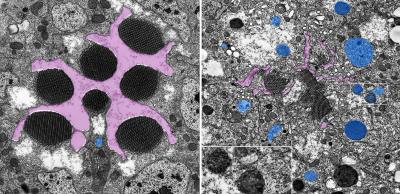
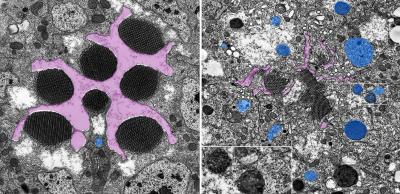
In cells lacking Rab6, proteins that were ready to be sent out from the Golgi Body never went anywhere. They sat in large packages called multi-vesicular bodies and collected on the edge of the Trans Golgi Network.
Currently, Akiko K. Satoh and the other members of her lab are planning more experiments to understand how Rab6 is involved in cell polarity. These experiments have the potential to discover a dynamic process of how the Golgi Body continuously matures to manage polarized transport of proteins around the cell.
###
Media Contact
Norifumi Miyokawa
[email protected]
@Hiroshima_Univ
http://www.hiroshima-u.ac.jp/index.html