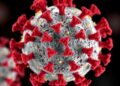
Credit: Kansas State University
MANHATTAN, KANSAS — Kansas State University is helping the fight against Zika virus through mosquito research.
The university's Biosecurity Research Institute is taking a two-part approach: Researchers are studying mosquitoes to understand how they become infected with Zika virus and researchers are providing the virus to collaborative organizations for further study.
The university research is key to fighting Zika virus because it can develop better methods for controlling the mosquitoes that spread the virus, said Stephen Higgs, director of the Biosecurity Research Institute.
"We are hoping to provide some answers and insights into the relationship between Zika virus and the mosquito," Higgs said.
Since Zika virus emerged in Brazil last year, the U.S. has seen more than 700 cases, including the first case in Kansas in March.
The Biosecurity Research Institute has had Zika virus isolates for several years, but has started conducting collaborative research because of the recent outbreak. University scientists have been growing samples of the virus and antibodies and providing them to collaborators for further research into vaccines and diagnostics.
"Countries are spending resources to control the spread of mosquitoes, we want to make sure we are controlling the right mosquitoes in the right way," Higgs said. "This research can help us target the particular species of mosquitoes that we know are carriers of Zika virus."
The Centers for Disease Control and Prevention has identified two mosquito species that transmit Zika virus: Aedes aegypti, or yellow fever mosquito, and Aedes albopictus, or Asian tiger mosquito. Both mosquitoes are widely distributed in the U.S. and are present in Kansas. These two mosquito species live close to people and can breed in houses, said Higgs, who also has studied chikungunya, a mosquito-borne virus that has a similar transmission cycle to that of Zika virus.
At the Biosecurity Research Institute, Higgs and university scientists are gathering details about how Zika virus interacts with different mosquitoes. Researchers are studying how long after a mosquito feeds on a blood meal that it can transmit Zika virus. The amount of time is unknown for Zika virus, but with other viruses it can range from five days to two weeks. Similarly, the research can show how much virus a person needs to have in their blood in order to infect a mosquito. If mosquitoes feed on a relatively low level, they may not become infected.
Only 1 in 5 people infected with Zika virus show symptoms, Higgs said, but it is possible that even people without symptoms may have enough virus in the blood to infect mosquitoes.
"As we learn how much virus is in human blood, knowing how much virus needs to be in the blood in order to infect a mosquito will tell us at what point after infection a person can infect another mosquito and for how long," Higgs said. "It is important to know these details because it can help us develop better controlling measures."
But there are still many unanswered questions relating to Zika virus, Higgs said. It is still unknown exactly what human cells are affected by the virus, if livestock are affected by the virus, what other transmission mechanisms are possible and when a vaccine may be available.
The Biosecurity Research Institute can help answer some of those questions and is equipped to handle any vaccine studies as well as diagnostic studies, Higgs said.
"This research is important to prepare us long-term for the next virus that comes," Higgs said. "We can't predict what that will be, but there will be something else that will be introduced and we need effective surveillance programs to help control them. We need the fundamental research and applied research that we can get here at the Biosecurity Research Institute."
Higgs and collaborators have published their research in the Journal of Medical Entomology.
###
Higgs is the president of the American Society of Tropical Medicine and Hygiene and is an expert in vector biology, arthropod-borne infectious diseases, immune modulation and vaccine evaluation.
Media Contact
Stephen Higgs
[email protected]
785-532-1333
@KStateNews
http://www.k-state.edu