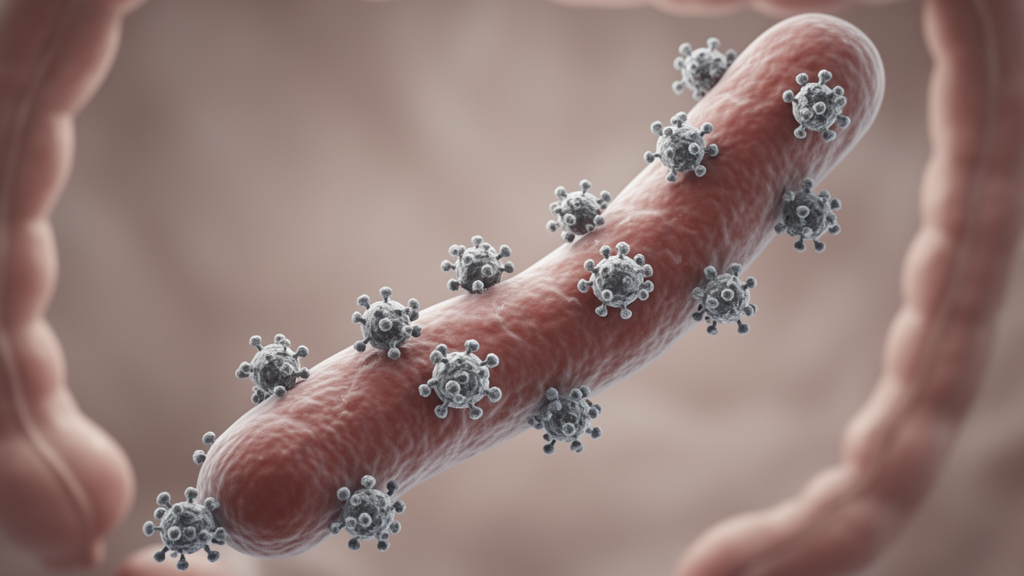
A widespread virus inhabiting the human digestive tract infects gut bacteria rather than human cells, solving a medical mystery that persisted for nearly four decades. In an experimental study published on October 29 in Nature Microbiology, researchers at Washington University School of Medicine in St. Louis and their collaborating institutions demonstrated that picobirnaviruses target bacterial hosts within the gastrointestinal tract. This major milestone in virology redefines picobirnaviruses as only the third known family of bacteria-infecting RNA viruses ever discovered. Since their initial discovery decades ago, scientists had assumed that these abundant denizens of the gut microbiome were human stomach bugs that directly attacked intestinal tissue and contributed to gastrointestinal illness, but the new experimental findings completely rewrite that narrative.
The confusion surrounding the biological role of picobirnaviruses began nearly forty years ago when the viruses were first identified in human stool samples collected from individuals suffering from diarrhea. During these early clinical evaluations, picobirnaviruses frequently appeared alongside well-known gastrointestinal pathogens, including rotavirus and norovirus. Because virologists at the time lacked the necessary experimental tools and methods to cultivate and propagate the newly observed virus in a laboratory setting, researchers formulated an assumption based largely on circumstantial clinical presence. They hypothesized that the newly recognized virus acted like its viral companions by directly invading and damaging human tissue to produce acute gastrointestinal symptoms.
That longstanding scientific assumption stood unchallenged until modern advancements in genetic sequencing technology unexpectedly pointed researchers in an entirely different direction. While investigating the biology of Caenorhabditis elegans—a microscopic roundworm widely utilized in genetics research—the laboratory led by David Wang, PhD, the Robert C. Packman Professor at WashU Medicine, identified unmistakable traces of picobirnavirus genetic material. Although humans and microscopic roundworms share very little anatomical or biological complexity, the two organisms share a fundamental ecological commonality centered on bacteria: roundworms consume bacteria as their food source, while humans carry trillions of bacteria flourishing throughout their digestive tracts. This shared bacterial connection prompted the researchers to reconsider the virus entirely and ask a pivotal question: Do picobirnaviruses infect bacteria?
To investigate whether picobirnaviruses replicate inside bacterial hosts, first author Tianyu Gan, PhD, a postdoctoral research fellow in the Wang laboratory, embarked on a collaborative effort alongside researchers from Cambridge University Hospitals NHS Foundation Trust, Flinders University, and San Diego State University. The research team first introduced human stool samples into microbe-free mice, successfully establishing the very first laboratory animal model in which picobirnaviruses could actively multiply. Once active viral proliferation was achieved within the digestive systems of the mice, Gan and his colleagues harvested the viral population from the mouse gut to conduct controlled in vitro experiments.
The harvested viral population was subsequently transferred into laboratory culture dishes containing gut bacteria and maintained under strict oxygen-free conditions. Because mammalian cells cannot survive in an environment devoid of oxygen, the continuous growth and multiplication of the virus observed over a 20-day monitoring period provided compelling experimental proof that the virus was multiplying within bacterial cells. To further confirm that the viral multiplication depended directly on bacterial hosts, the researchers introduced antibiotics designed to kill off the bacterial population. When the bacteria were eliminated by the antibiotic treatment, viral multiplication ceased entirely, demonstrating that viable bacteria are strictly required for the virus to replicate.
To determine the precise identity of the bacterial organism serving as the viral host, the investigative team deployed advanced molecular imaging and cellular sorting techniques. Through these high-resolution analytical methods, the researchers successfully located and visualized picobirnaviruses residing inside a previously uncharacterized gut bacterium. The team officially named this newly identified bacterial host Candidatus Anaerotignum faecalis. By demonstrating that a human gut-associated picobirnavirus replicates within this bacterium, the study formally established the Picobirnaviridae family as the third known clade of RNA bacteriophages in biological history.
The discovery carries significant implications for human health because the presence of picobirnaviruses in the human gut has been linked to severe clinical conditions, including acute diarrhea, graft-versus-host disease following stem cell transplants, and Type 1 diabetes. Although the virus does not directly infect human cells, the researchers outlined potential mechanisms through which it could still influence disease processes. It remains possible that picobirnaviruses destroy beneficial gut bacteria, and wiping out friendly microbes disrupts the balance of the gut ecosystem, allowing harmful pathogens to bloom while prompting bacteria to release toxins. Furthermore, human intestinal cells can absorb viral particles and trigger inflammatory responses even without the virus actively multiplying inside human tissue.
Despite these notable clinical associations, Wang emphasized that detecting high concentrations of picobirnaviruses in patients suffering from these disorders does not prove that the virus directly causes disease. Even if picobirnavirus is not an active pathogen, it could function as a valuable diagnostic biomarker that signals underlying gut distress. Wang explained that RNA viruses that infect bacteria in the human body were previously thought to be exceptionally rare, yet picobirnaviruses exist in high abundance within the digestive tract. Identifying their true bacterial host shifts scientific attention toward the microbiome, opening promising new avenues to investigate how these viruses shape bacterial communities and whether they might ultimately be harnessed for targeted therapeutic interventions.
Subject of Research: Bacterial host identification of gut-associated picobirnaviruses
Article Title: 40-year mystery solved: Common gut virus infects bacteria, not human cells
Article References: 40-year mystery solved: Common gut virus infects bacteria, not human cells. Original publication (Bibliographic details unavailable.)
Image Credits: AI Generated
DOI: Not provided
Keywords: picobirnavirus, Picobirnaviridae, RNA bacteriophages, bacterial host, gut microbiome, Nature Microbiology, Washington University School of Medicine, David Wang, Tianyu Gan, Candidatus Anaerotignum faecalis, anaerobic culture, microbe-free mice, acute diarrhea, graft-versus-host disease, Type 1 diabetes, Caenorhabditis elegans, viral replication
News Source: Morgan Morrow. (November 16, 2026). Common Human Gut Picobirnaviruses Infect Bacteria Rather Than Human Cells. Scienmag.