Credit: University of South Florida
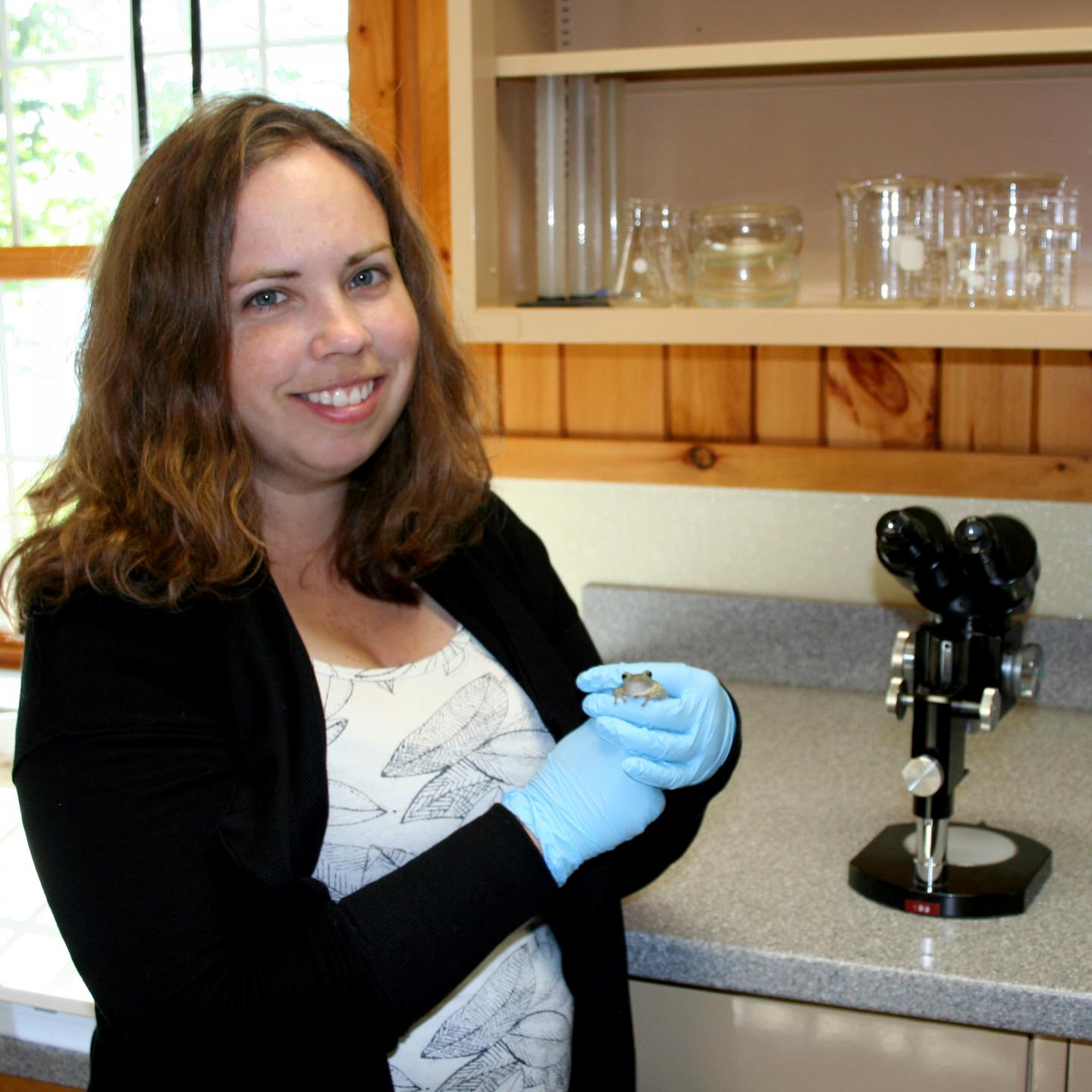
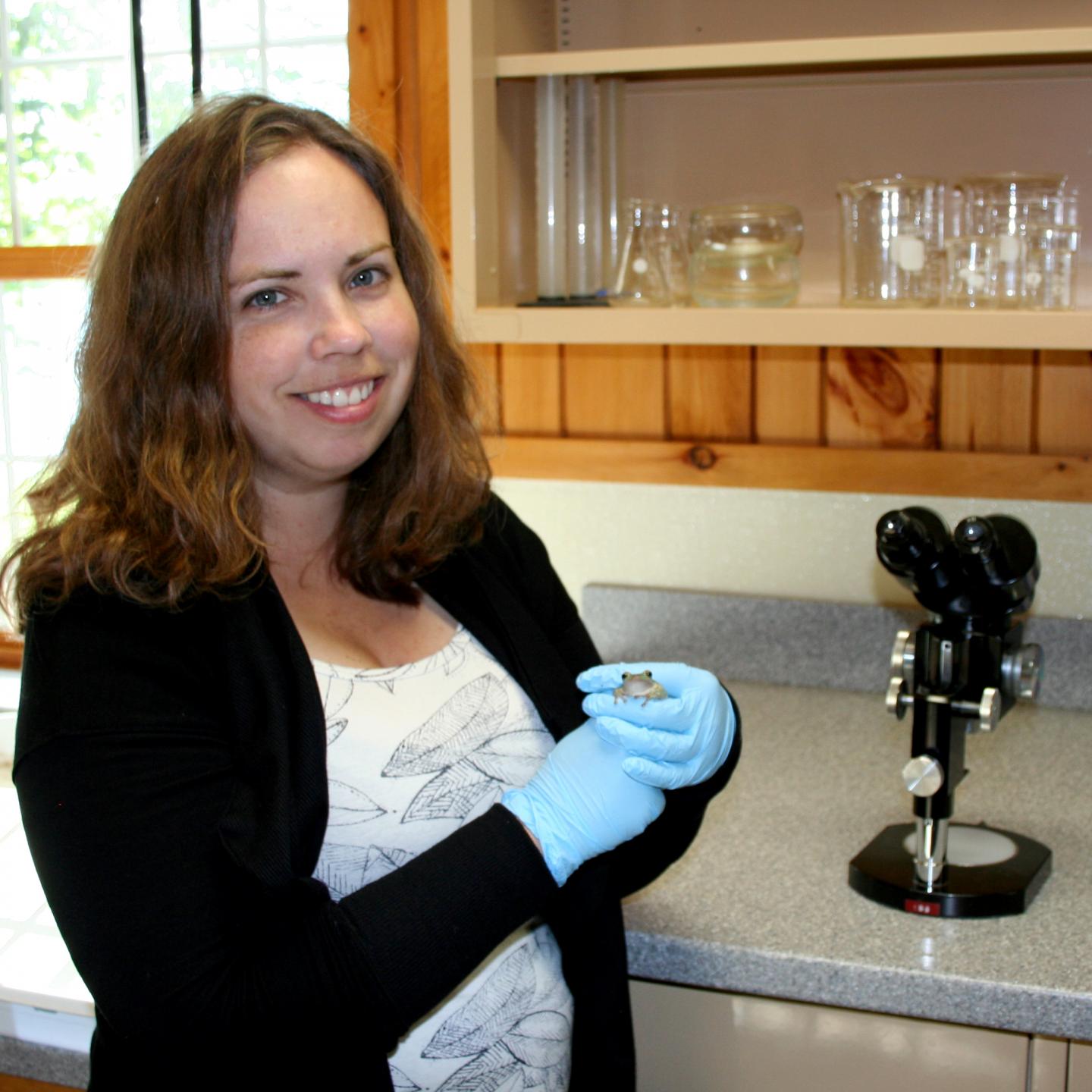
TAMPA, Fla. (July 20, 2017) – University of South Florida biologists have found that a crucial window in the development of tadpoles may influence a frog's later ability to fight infectious diseases as an adult.
The findings from a research team led by USF post-doctoral researcher Sarah Knutie in USF's Department of Integrative Biology focused on the potentially protective gut microbes of young frogs and is published in the new edition of the journal Nature Communications, released today.
The project is significant not only for the insight it provides in threats to the health of the world's frogs, but in its potential applicability to understanding the immune systems of mammals and even humans.
Several factors such as pollutants, antibiotics, nutrition and climate can disrupt the microbes of animals as well as increase the risk of infectious disease. Working in the lab of USF associate professor Jason Rohr, the scientists showed that an early-life disruption of the gut and skin bacterial communities of tadpoles later affects the adult frogs' ability to fight off parasitic gut worms. In contrast, the bacterial communities of adult frogs at the time of infection did not affect their ability to resist parasites.
"Our study found that a disruption of bacteria in tadpoles has enduring negative effects on how adult frogs deal with their parasite," Knutie said. "These results suggest that preventing early-life disruptions of bacteria by factors such as nutrition, antibiotics and pollution, might confer protection against diseases later in life."
The impact of a healthy bacterial community in the gut is an increasing focus of scientists looking to understand a wide-range of ailments in a many species, including humans. Previous research has found that an early-life disruption of the gut microbiota mammals can result in a hyper-reactive immune system that may increase the subsequent risk of immune-related health issues, such as allergies and autoimmune diseases.
Research led by Rohr and his lab has long explored an array of threats, such as pesticides and diseases, which are contributing to the plummeting populations of amphibians and considered one of the greatest threats to global biodiversity. Understanding how the bacterial community can protect hosts against such threats might provide insight into conserving biodiversity.
In their experiments, the scientific team manipulated the bacterial communities of Cuban tree frog tadpoles (Osteopilus septentrionalis) and then exposed them to parasites later in life. The tadpoles were either raised in natural pond water or one of three other treatments to manipulate the bacterial communities of tadpoles: sterile pond water, sterile pond water with short-term antibiotics, or sterile pond water with long-term antibiotics.
Adult frogs that had reduced bacterial diversity as tadpoles had three times more parasites than adults that did not have their microbiota disrupted as tadpoles, the study said. Those results suggest that preventing early-life disruptions of host-associated bacterial communities might reduce infection risk later in life, the researchers wrote.
"We think that the microbiota of juveniles likely played a role in priming the immune system against parasite establishment," the researchers wrote. "We found that the relative abundance of certain bacteria … in juveniles was positively correlated with parasite resistance in adulthood."
###
The team of scientists include Knutie, Rohr and former undergraduate Christina Wilkinson of USF, and Kevin Kohl of the University of Pittsburgh. Knutie begins a faculty position at the University of Connecticut in August.
The project was funded by the National Science Foundation, the British Ecological Society, the National Institutes of Health, the U.S. Department of Agriculture and the Environmental Protection Agency.
Media Contact
Adam Freeman
[email protected]
813-974-9047
@USFResearch
http://www.usf.edu/research-innovation/