Credit: UC San Diego Health
Kawasaki disease (KD) is the most common acquired heart disease in children. Untreated, roughly one-quarter of children with KD develop coronary artery aneurysms — balloon-like bulges of heart vessels — that may ultimately result in heart attacks, congestive heart failure or sudden death.
The causative agent for KD remains unknown — a windborne pathogen is suspected — but equally mysterious is why and how some children are more susceptible. Researchers at University of California San Diego School of Medicine, with colleagues at Rady Children's Institute for Genomic Medicine and in London and Singapore, have conducted novel whole genome sequencing of a family in which two of four children were affected by KD. They have identified plausible gene variants that predispose some children to developing the disease.
The findings were recently published in the PLOS ONE.
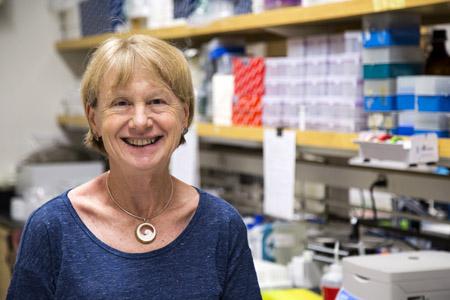
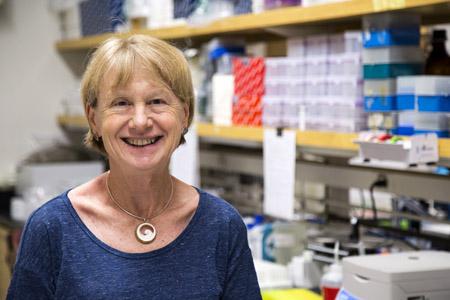
"This is the first successful analysis of whole genome sequence from a family that revealed a new gene implicated in KD susceptibility," said senior author Jane C. Burns, MD, professor and director of the Kawasaki Disease Research Center at UC San Diego School of Medicine and Rady Children's Hospital-San Diego. "The finding is intriguing because this gene, a member of the Toll-like receptor family, encodes for a protein that is expressed on the cell surface and uniquely binds to proteins outside the cell that come from fungi. This may be a clue that fungal antigens could be one environmental trigger for the disease."
Prevalence rates of KD are increasing among children in Asia, the United States and Western Europe. In Japan, the country with the highest incidence: 306 out of every 100,000 children under the age of five, with more than 14,000 new cases annually. One in every 60 boys and one in every 75 girls in Japan will develop KD during childhood.
Incidence rates in the United States are lower — 9 to 19 per 100,000 children under age 5 — but rising, at least in San Diego County. Predictive models estimate that by 2030, 1 in every 1,600 American adults will have been affected by the disease.
KD has a clear genetic link. It is most common in the U.S. among persons of Asian or African descent, but its genetics is complex and researchers have struggled to identify which gene variants and combinations cause some children to develop the disease. Burns and colleagues employed analysis of whole genome sequence for the first time to examine a six-member African-American family in which two children had KD, but the parents and other siblings did not.
"Despite their apparent increased susceptibility, children of African-American descent have been excluded from previous KD genetic analysis," the authors wrote.
Key among the tools used was whole genome sequencing, a process in which the complete DNA sequence of a person's genome is determined at a single time. The researchers also looked at genome-wide association studies, which search for genetic variation in large populations. The goal was to find, if possible, distinct gene variants that, in combination, might indicate predisposition to and higher likelihood of developing KD.
The researchers identified a variation of the toll-like receptor 6 gene, which plays a fundamental role in the immune system, that may be linked to the pro-inflammatory state during the acute stage of KD. Previous research had not identified this gene as influencing susceptibility to KD.
In addition, another variant in a gene called tumor-associated calcium signal transducer 2, which is involved in cellular calcium signaling, was highlighted. The authors said further investigation of TACSTD2 is needed.
Burns said the study, with its analytic approach and use of whole genome sequencing, represents a new method for uncovering relevant gene variants in families affected by not just KD, but many other complex genetic diseases.
"The analysis of whole genome sequence to understand disease genetics is only recently becoming a tool that is affordable and manageable due to new developments in computer science. We are excited to be learning how to harness the power of this analysis to study our children," Burns said.
"Our next approach will be to compare the whole genome sequence from KD patients with severe heart damage to those with no damage despite no or delayed treatment. We hope this will lead us to the genetic pathways that result in damage to the coronary arteries, which in turn will suggest new therapies to target those pathways."
###
Co-authors include: Jihoon Kim, Chisato Shimizu, Eric Levy, Andre M. Ribeiro do Santos, Hai Yang, Olivier Harismendy, and Lucila Ohno-Machado, UC San Diego; Stephen F. Kingsmore, and Narayanan Veeraraghavan, Rady Children's Institute for Genomic Medicine; Jay Flatley, Illumina; Long Truong Hoang, Genome Institute of Singapore; Martin L. Hibberd, London School of Hygiene and Tropical Medicine; and Adriana H. Tremoulet, UC San Diego and Rady Children's Hospital
Media Contact
Scott LaFee
[email protected]
858-249-0456
@UCSanDiego
http://www.ucsd.edu