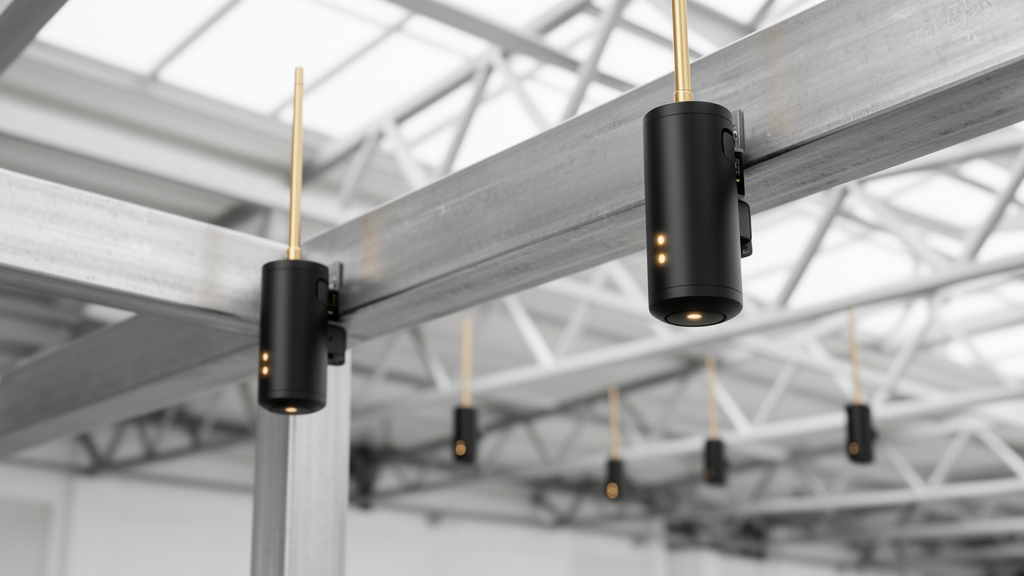
A new reinforcement learning framework reduces cluster reconstruction overhead in distributed Internet of Things sensor networks by coupling node candidacy with event-triggered timing. In a study published in Cluster Computing, researchers Ganggang Yang, Yaodan Chi, and Junxi Wang showed that their Event-Triggered Energy-Balanced Dynamic Cluster-Head Multi-Agent Q-Learning system delays the first-node-death event while maintaining a high packet delivery ratio across experimental sensor clusters.
The research addresses an operational dilemma in distributed wireless sensor clusters. Frequent cluster-head reselection consumes scarce battery energy through repeated control signaling, even when an existing network topology remains reliable. Conversely, blindly holding a topology risks overloading energy-critical cluster heads and degrading packet delivery. The authors framed cluster-head control as a coupled challenge linking energy-safe cluster-head candidacy with event-triggered topology-update timing.
Under the proposed Event-Triggered Energy-Balanced Dynamic Cluster-Head Multi-Agent Q-Learning framework, designed as a lightweight architecture for low-overhead sensor clusters, decision complexity at the individual device level is intentionally restricted. Each alive sensor node decides only whether to keep its current operational role or submit a request for cluster-head candidacy. Learned candidacy requests do not directly establish the network organization, preventing individual reinforcement learning actions from directly installing an unsafe cluster configuration.
Instead, learned candidacy requests undergo multi-stage environment-level safety filtering before a final topology is formed. The filtering pipeline incorporates LocalEGap, EnergyGate, and a Cluster-Head Survival Guard, together with dynamic cluster-head-count control and load- and energy-aware member assignment. This screening ensures that candidate selections preserve energy reserves and prevent premature node failure.
To reduce signaling overhead during regular operations, a Topology Hold mechanism separates Decision Slots from Data Slots. This operational separation reuses reliable cluster-head and member structures across successive rounds without unnecessary recomputation. Network reconstruction is triggered only when specific threshold events occur, including cluster-head energy risk, packet-delivery or acknowledgment degradation, node overload, residual-energy dispersion, or the expiration of the hold window.
The researchers evaluated the framework across two distinct experimental environments designated as S1 and S2. In scenario S1, which evaluated 100 nodes, the system delayed the first-node-death event and reduced topology decisions to approximately 22 percent of operational rounds. In compact scenario S2, testing 50 nodes within a 50-meter by 50-meter field, the framework again achieved the latest first-node-death milestone while lowering the topology-decision ratio to approximately 20 percent.
The experimental outcomes demonstrate that event-triggered cluster-head management substantially reduces repeated topology reconstructions while preserving high packet delivery ratios. According to the authors, the principal novelty of the framework rests in explicitly coupling node-level candidacy requests, environment-level safety filtering, and event-triggered update timing so that learned policies cannot directly generate an unsafe cluster topology.
Subject of Research: Topology control in distributed Internet of Things sensor clusters
Article Title: Event-triggered distributed Q-learning for low-overhead topology control in distributed IoT sensor clusters
Article References: Yang, G., Chi, Y., & Wang, J. (2027). Event-triggered distributed Q-learning for low-overhead topology control in distributed IoT sensor clusters. Cluster Computing, 30(1), Article 6. https://doi.org/10.1007/s10586-026-06748-9
Image Credits: AI Generated
DOI: 10.1007/s10586-026-06748-9
Keywords: distributed IoT, sensor clusters, topology control, cluster head reselection, multi-agent Q-learning, event-triggered control, ET-EB-DynCH-QMARL, first-node-death, packet delivery ratio, Topology Hold, LocalEGap, EnergyGate, CH Survival Guard, Decision Slots, Data Slots, residual-energy dispersion, wireless sensor clusters, hold-window expiration
News Source: Denise Maddox. (November 16, 2026). Event-Triggered Reinforcement Learning Cuts Control Overhead in Distributed IoT Sensor Clusters. Scienmag.