Credit: WFU/Ken Bennett
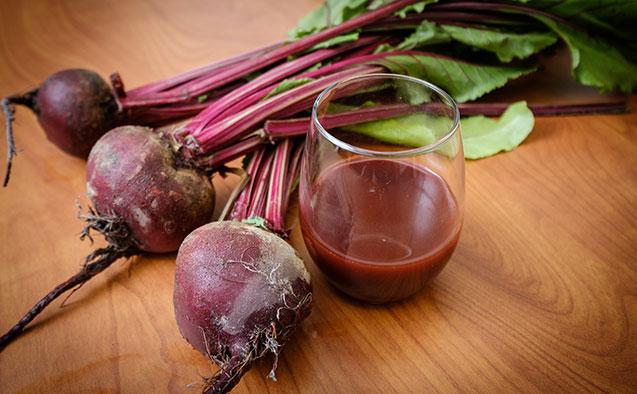
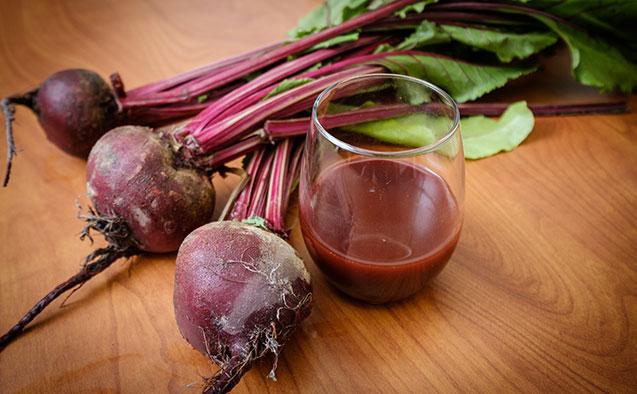
Drinking a beetroot juice supplement before working out makes the brain of older adults perform more efficiently, mirroring the operations of a younger brain, according to a new study by scientists at Wake Forest University.
"We knew, going in, that a number of studies had shown that exercise has positive effects on the brain," said W. Jack Rejeski, study co-author. "But what we showed in this brief training study of hypertensive older adults was that, as compared to exercise alone, adding a beet root juice supplement to exercise resulted in brain connectivity that closely resembles what you see in younger adults."
While continued work in this area is needed to replicate and extend these exciting findings, they do suggest that what we eat as we age could be critically important to the maintenance of our brain health and functional independence.
Rejeski is Thurman D. Kitchin Professor and Director of the Behavioral Medicine Laboratory in the Department of Health & Exercise Science. The study, "Beet Root Juice: An Ergogenic Aid for Exercise and the Aging Brain," was published in the peer-reviewed Journals of Gerontology: Medical Sciences. One of his former undergraduate students, Meredith Petrie, was the lead author on the paper.
This is the first experiment to test the combined effects of exercise and beetroot juice on functional brain networks in the motor cortex and secondary connections between the motor cortex and the insula, which support mobility, Rejeski said.
The study included 26 men and women age 55 and older who did not exercise, had high blood pressure, and took no more than two medications for high blood pressure. Three times a week for six weeks, they drank a beetroot juice supplement called Beet-It Sport Shot one hour before a moderately intense, 50-minute walk on a treadmill. Half the participants received Beet-It containing 560 mg of nitrate; the others received a placebo Beet-It with very little nitrate.
Beets contain a high level of dietary nitrate, which is converted to nitrite and then nitric oxide (NO) when consumed. NO increases blood flow in the body, and multiple studies have shown it can improve exercise performance in people of various ages.
"Nitric oxide is a really powerful molecule. It goes to the areas of the body which are hypoxic, or needing oxygen, and the brain is a heavy feeder of oxygen in your body," said Rejeski.
When you exercise, the brain's somatomotor cortex, which processes information from the muscles, sorts out the cues coming in from the body. Exercise should strengthen the somatomotor cortex.
So, combining beetroot juice with exercise delivers even more oxygen to the brain and creates an excellent environment for strengthening the somatomotor cortex. Post-exercise analysis showed that, although the study groups has similar levels of nitrate and nitrite in the blood before drinking the juice, the beetroot juice group had much higher levels of nitrate and nitrite than the placebo group after exercise.
###
The study was supported by the Translational Science Center of Wake Forest and received funding from the National Institutes of Health. The research team included Paul J. Laurienti and Jonathan H. Burdette of the Department of Radiology; Anthony P. Marsh of the Department of Health & Exercise Science; Swati Basu and Daniel B. Kim-Shapiro of the Department of Physics; and James L. Norris of the Department of Mathematics.
This research is among the latest in a series of findings concerning the effects of beets on health:
- Drinking beet juice can increase blood flow to the brain in older adults, according to a 2010 study out of Wake Forest published in Nitric Oxide: Biology and Chemistry. This was the first study to link beet consumption and blood flow to the brain.
- A daily does of beetroot juice significantly improved exercise endurance and blood pressure in elderly patients with heart failure with preserved ejection fraction, according to a Wake Forest study published in the Journal of the American College of Cardiology-Heart Failure in 2016.
- Consuming whole beets improved running performance among fit adults, according to a 2012 study in the Journal of the Academy of Nutrition and Dietetics.
- Beetroot juice helped chronic obstructive pulmonary disease (COPD) patients increase exercise time, according to a 2015 Wake Forest study published in Nitric Oxide: Biology and Chemistry.
- Blood pressure dropped after drinking beetroot juice, according to a study published in Hypertension in 2008.
Media Contact
Katie Neal
[email protected]
336-758-6141
@WakeForest
Home
Related Journal Article
http://dx.doi.org/10.1093/gerona/glw219