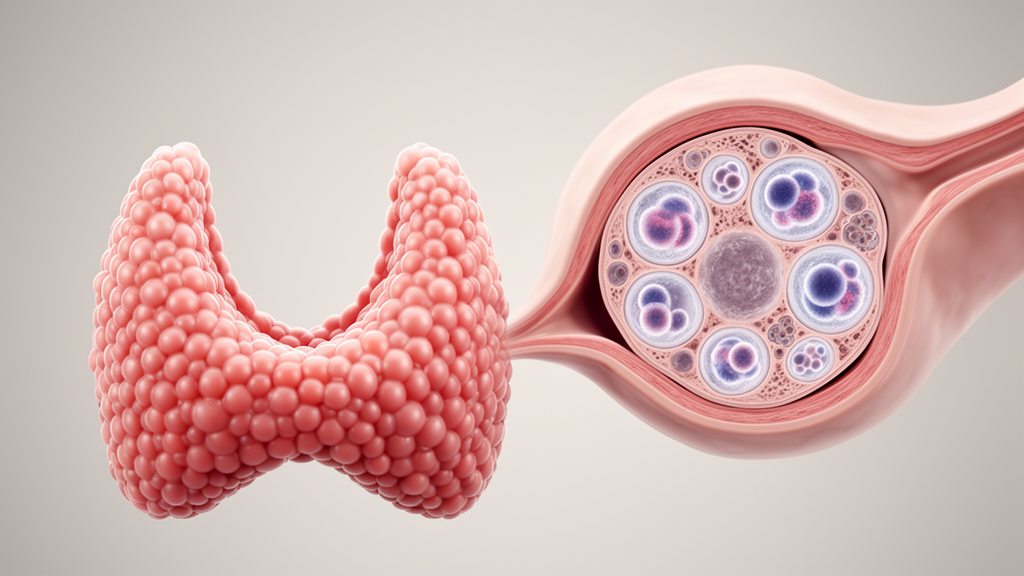
A recent retrospective cross-sectional study has determined that subclinical hypothyroidism and thyroid autoimmunity are not independently associated with markers of ovarian reserve in women diagnosed with polyendocrine metabolic ovarian syndrome (PMOS). The research, which analyzed data from 897 patients, sought to clarify the clinical relationship between thyroid function and reproductive markers in a population presenting with irregular menstruation and no overt thyroid dysfunction. The findings indicate that, after adjusting for confounding factors, thyroid-related variables do not serve as independent predictors of ovarian reserve parameters.
To evaluate these associations, the study stratified participants based on their thyroid-stimulating hormone (TSH) concentrations into three distinct groups: SCH0 (0.27–2.49 mIU/L), SCH1 (2.50–4.20 mIU/L), and SCH2 (greater than 4.20 mIU/L). Researchers also accounted for the modifying role of thyroid autoimmunity (TAI).
The quantitative results showed no statistically significant differences in primary ovarian reserve markers across the categorized TSH levels. Specifically, the study found no significant variations in Anti-Müllerian hormone (p = 0.362), follicle-stimulating hormone (p = 0.566), luteinizing hormone (p = 0.528), or estradiol (p = 0.833). Furthermore, polycystic ovarian morphology (p = 0.793) and cycle-related ovarian structures (p = 0.066) remained consistent across the different thyroid status groups.
A specific exception was noted regarding phenotype D, where researchers observed a variation in Anti-Müllerian hormone levels across the different TSH categories (p = 0.017). Despite this localized finding, subsequent multivariable adjustment demonstrated that thyroid-related variables overall lacked an independent association with ovarian reserve markers or related clinical parameters, with all other p-values remaining above 0.05.
In conclusion, the investigators suggested that the variability seen in ovarian reserve parameters among women with PMOS is primarily explained by factors such as body mass index, age, and the specific PMOS phenotype, rather than thyroid status alone.
Subject of Research: Reproductive endocrinology and metabolic health in women with PMOS.
Article Title: Ovarian reserve markers in women with polyendocrine metabolic ovarian syndrome and subclinical hypothyroidism: the modifying role of thyroid autoimmunity
Article References: Baran, R., Jach, R., & Gawron, I. (2026). Ovarian reserve markers in women with polyendocrine metabolic ovarian syndrome and subclinical hypothyroidism: the modifying role of thyroid autoimmunity. Journal of Ovarian Research. https://doi.org/10.1186/s13048-026-02358-6
Image Credits: AI Generated
DOI: 10.1186/s13048-026-02358-6
Keywords: Polyendocrine metabolic ovarian syndrome, PMOS, subclinical hypothyroidism, SCH, thyroid autoimmunity, TAI, ovarian reserve, Anti-Müllerian hormone, AMH, follicle-stimulating hormone, FSH, luteinizing hormone, estradiol, polycystic ovarian morphology, reproductive health, cross-sectional study, thyroid-stimulating hormone, endocrine markers, metabolic health
News Source: Ophelia Keating. (November 16, 2026). Thyroid Status Does Not Independently Predict Ovarian Reserve in PMOS Patients. Scienmag.