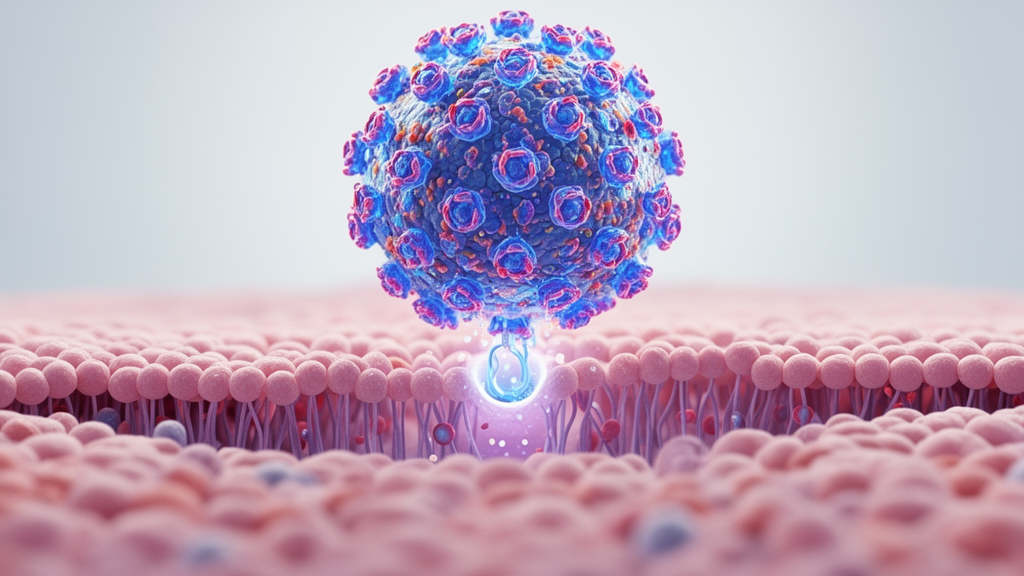
Researchers have engineered an adeno-associated virus variant that substantially enhances gene delivery into human T cells and natural killer cells, offering a promising route toward direct in vivo immune cell engineering. While adeno-associated virus vectors provide established safety and precision in gene therapy, their application in lymphocyte engineering has been constrained by poor natural tropism, requiring excessive viral doses that induce cellular stress. To address this obstacle, investigators conducted directed capsid evolution within activated primary human T cells, identifying variants characterized by a specific tripeptide motif. The lead candidate, designated AAV.APR31, transduces human and mouse lymphocytes at vector concentrations roughly one hundred to one thousand times lower than parental AAV6. In preclinical evaluations, this engineered capsid supported transient expression, targeted genomic knock-in, and transposon integration, generating chimeric antigen receptor T cells that effectively controlled tumors in animal cancer models.
The selection strategy was designed to identify capsid structures capable of entering primary human lymphocytes rather than relying on immortalized cell culture models. Starting from an AAV6 backbone, the researchers performed saturation mutagenesis on variable region four of the viral protein one capsid protein, covering residues 454 to 460. Flanking this modified region with AAV2 inverted terminal repeats, the team assembled a library containing over three million unique capsid variants. Peripheral blood mononuclear cells from healthy donors were activated using CD3, CD28, and CD2 reagents and incubated with the viral pool. Thorough washing removed surface-bound particles so that only internalized viral DNA was harvested and amplified. Across three selection cycles in cells from independent donors, high-throughput sequencing revealed marked enrichment of variants harboring an alanine-proline-arginine motif at positions 455 through 457. Among these, the variant AAV.APR31, carrying the sequence 454-AAPRANE-460, emerged as a dominant clone showing consistent enrichment across donors.
The authors evaluated vector production yields and binding dynamics to verify that the modified capsid loop remained suitable for practical manufacturing. Packaging self-complementary reporter cassettes and single-stranded chimeric antigen receptor constructs yielded vector titers exceeding ten trillion viral genomes per liter of culture medium. Although these packaging outputs represented an approximate two-fold reduction relative to parental AAV6, production remained robust across distinct transgene cassettes. Binding and uptake assays revealed substantial kinetic advantages for the engineered capsid. When activated primary human T cells were incubated with vectors at four degrees Celsius to arrest endocytosis, AAV.APR31 exhibited significantly higher cell-surface binding than AAV6 across several multiplicities of infection. Upon warming the cells to thirty-seven degrees Celsius for two hours to enable internalization, intracellular vector accumulation for AAV.APR31 increased dramatically, yielding more than a thirty-seven-fold rise in internal viral genomes compared to AAV6 at an exposure of one thousand vector genomes per cell.
This enhanced cellular uptake translated directly into superior functional transgene expression across immortalized and primary lymphocytes. In Jurkat T cells transduced with reporter vectors, AAV.APR31 produced over twenty-six percent fluorescent cells at a multiplicity of infection of one hundred, compared to less than one percent for AAV6. At an exposure of one thousand vector genomes per cell, the engineered capsid exceeded ninety percent expression, whereas AAV6 plateaued around eighteen percent. Parallel transcript analyses confirmed that these flow cytometric improvements corresponded to marked elevations in reporter messenger RNA. High transduction potency was confirmed across primary human T cells from eleven healthy donors tested at distinct time points after activation. At an exposure of two hundred and fifty genomes per cell, AAV.APR31 achieved reporter expression on day five that surpassed parental AAV6 administered at ten thousand genomes per cell, while cross-species testing demonstrated enhanced transduction in mouse cytotoxic T and natural killer cells.
The investigators examined whether AAV.APR31 could improve CRISPR-Cas9-mediated gene knock-in by delivering donor repair templates at reduced vector dosages. Targeting the first exon of the T cell receptor alpha constant locus, primary human T cells were electroporated with Cas9 ribonucleoprotein complexes and incubated with viral repair templates. At an exposure of two hundred and fifty viral genomes per cell, AAV.APR31 achieved site-specific integration of a fluorescent reporter in nearly thirty-one percent of T cells, compared to four percent with AAV6. When delivering a larger therapeutic cassette encoding a CD22-specific chimeric antigen receptor, AAV.APR31 yielded up to fifty-eight percent receptor-positive cells at one thousand viral genomes per cell, versus fourteen percent for AAV6. Quantitative genomic measurements showed that average integrated copy numbers remained below two copies per cell, mirroring parental AAV6 and confirming that higher knock-in frequencies reflect a greater proportion of successfully edited cells rather than unintended multicopy integration events.
The vector system demonstrated robust flexibility when tested in non-prestimulated lymphocytes and across alternative genomic targets. Standard ex vivo antibody activation drives cell cycle progression to facilitate homology-directed repair, but preserving less differentiated T cell subsets is clinically advantageous for cell persistence. In non-prestimulated bulk human CD8-positive T cells with partial activation markers, AAV.APR31 achieved thirteen percent knock-in at a multiplicity of infection of one hundred, markedly exceeding the two percent rate observed with AAV6. The vector also supported efficient integration at the T cell receptor beta constant one locus and the glyceraldehyde-3-phosphate dehydrogenase locus. Leveraging this efficiency, the team performed simultaneous multiplex knock-in by delivering two separate donor templates. AAV.APR31 enabled concurrent targeted insertion of mesothelin-directed and CD22-directed receptors into distinct chromosomes in over forty percent of primary T cells at an exposure of five hundred viral genomes per cell, vastly outperforming parental AAV6.
To identify the cellular mechanisms governing this expanded tropism, the authors conducted genome-scale CRISPR knockout screens in Jurkat T cells alongside parallel screens in NALM-6 B cells using the Brunello single-guide RNA library. Transduced cells were sorted based on reporter expression, and enriched guide RNAs were quantified by deep sequencing. While shared hits included canonical adeno-associated virus host factors such as TM9SF2, VPS51, VPS52, and the essential receptor KIAA0319L, the cell-surface glycoprotein CD7 emerged as an indispensable dependency specifically in T cells. Functional validation confirmed that CRISPR knockout of CD7 in Jurkat cells and primary human T cells substantially reduced AAV.APR31 transduction while leaving parental AAV6 largely unaffected. Preincubation of lymphocytes with anti-CD7 blocking antibodies caused a comparable dose-dependent decline in transduction. Furthermore, ectopic expression of CD7 in naturally CD7-negative NALM-6 B cells significantly restored AAV.APR31 transduction, establishing CD7 as a lineage-restricted entry factor for the engineered capsid.
Structural modeling and biochemical assays clarified how AAV.APR31 engages CD7 while preserving canonical receptor interactions. AlphaFold 3 predictions indicated that the AAPRANE motif alters the spatial conformation of variable region four, creating an exposed loop that forms electrostatic contacts and hydrogen bonds with the extracellular domain of CD7. Nevertheless, preincubating vectors with soluble fragments of the canonical receptor AAVR produced concentration-dependent inhibition of transduction for both AAV6 and AAV.APR31 in Jurkat cells. Surface plasmon resonance measurements confirmed that AAV.APR31 binds AAVR with an equilibrium dissociation constant of 397 nanomolar, compared to 230 nanomolar for AAV6. These findings support a layered entry model in which ubiquitous AAVR interactions provide baseline entry, while CD7 engagement confers lineage-specific enhancement. Consistent with this model, profiling human peripheral blood cells demonstrated that AAV.APR31 achieved markedly elevated transduction in CD7-positive CD8-positive T cells, CD4-positive T cells, and natural killer cells, but showed no significant enhancement in CD7-negative B cells or monocytes.
The researchers applied AAV.APR31 to engineer diverse therapeutic constructs across adaptive and innate immune cells. Beyond monomeric chimeric receptors, the capsid supported efficient knock-in of a tandem bispecific receptor targeting CD19 and CD20, an NY-ESO-1-specific T cell receptor recognizing intracellular antigens, and a sleeping beauty transposon integration platform termed MAJESTIC. Primary human natural killer cells, valuable for off-the-shelf allogeneic cell therapy, were edited to express CD22-specific chimeric receptors with efficiencies approaching forty-eight percent at high vector doses. When directly benchmarked against AAV-hT7, a previously reported T cell-tropic capsid, AAV.APR31 achieved significantly higher transient delivery and site-specific knock-in under matched conditions. Transcriptome sequencing of engineered T cells at sixteen hours and seven days post-transduction showed that gene expression profiles clustered primarily by donor origin rather than viral serotype, with CAR-T cells generated using AAV.APR31 exhibiting functional and phenotypic profiles indistinguishable from products manufactured using parental AAV6 or clinical-standard lentiviral vectors.
Preclinical in vivo evaluations demonstrated altered tissue biodistribution and strong therapeutic activity in animal models. Intravenous administration of luciferase-expressing vectors in mice revealed that AAV.APR31 exhibited substantially reduced hepatic and pulmonary accumulation compared to AAV6, mitigating common off-target delivery sinks while maintaining low background signals in myocardial and neural tissues. In an established ovarian cancer xenograft model, CAR-T cells generated ex vivo with AAV.APR31 achieved complete tumor clearance and extended animal survival at rates comparable to lentivirus-manufactured cells. To evaluate direct in vivo engineering, human T cells were adoptively transferred into immunodeficient mice bearing established leukemia, followed by systemic injection of AAV.APR31 encoding a CD22-directed receptor. Vector administration produced significant tumor regression and extended survival, whereas parental AAV6 showed negligible efficacy. Similar tumor control occurred in a human pancreatic carcinoma model receiving mesothelin-targeted vectors, demonstrating that AAV.APR31 provides an effective platform for advancing in vivo immune cell engineering.
Subject of Research: Targeted in vivo engineering of T and natural killer cells using an evolved adeno-associated virus vector
Article Title: A CD7-targeted AAV variant enables efficient T and NK cell engineering in vivo
Article References: Hong, L., Chen, G., Liu, Y., Cao, Y., Li, X., Li, W., Pan, Y., Wang, H., Ru, G., Yang, S., Cheng, M., Lv, T., Zhu, Y., Huang, S., Nian, X., Ou, H., Wang, C., Gu, S. X., Lek, M., & Ye, L. (2026). A CD7-targeted AAV variant enables efficient T and NK cell engineering in vivo. Nature Biotechnology. https://doi.org/10.1038/s41587-026-03344-5
Image Credits: AI Generated
DOI: 10.1038/s41587-026-03344-5
Keywords: adeno-associated virus, directed evolution, AAV.APR31, AAV6 capsid, CD7 receptor, AAVR pathway, CAR-T cell therapy, CAR-NK cells, homology-directed repair, CRISPR-Cas9 knock-in, TRAC locus, in vivo gene delivery, immunotherapy, Jurkat cells, pancreatic cancer model, leukemia xenograft, MAJESTIC transposon, biodistribution detargeting
News Source: Kristina Jarvis. (November 16, 2026). Engineered Adeno-Associated Virus Enables Efficient In Vivo Immune Cell Programming. Scienmag.