• HOME
  • NEWS
  • EXPLORE
    • CAREER
      • Companies
      • Jobs
    • EVENTS
    • iGEM
      • News
      • Team
    • PHOTOS
    • VIDEO
    • WIKI
  • BLOG
  • COMMUNITY
    • FACEBOOK
    • INSTAGRAM
    • TWITTER
Tuesday, November 17, 2026
BIOENGINEER.ORG
No Result
View All Result
  • Login
  • HOME
  • NEWS
  • EXPLORE
    • CAREER
      • Companies
      • Jobs
        • Lecturer
        • PhD Studentship
        • Postdoc
        • Research Assistant
    • EVENTS
    • iGEM
      • News
      • Team
    • PHOTOS
    • VIDEO
    • WIKI
  • BLOG
  • COMMUNITY
    • FACEBOOK
    • INSTAGRAM
    • TWITTER
No Result
View All Result
Bioengineer.org
No Result
View All Result
Home NEWS Science News Biology

Deep Learning Predicts Protein Desiccation Tolerance Directly From Amino Acid Sequences

by
November 16, 2026
in Biology, Technology
Reading Time: 2 mins read
0
Deep Learning Predicts Protein Desiccation Tolerance Directly From Amino Acid Sequences

Deep Learning Predicts Protein Desiccation Tolerance Directly From Amino Acid Sequences

Share on FacebookShare on TwitterShare on LinkedinShare on RedditShare on Telegram

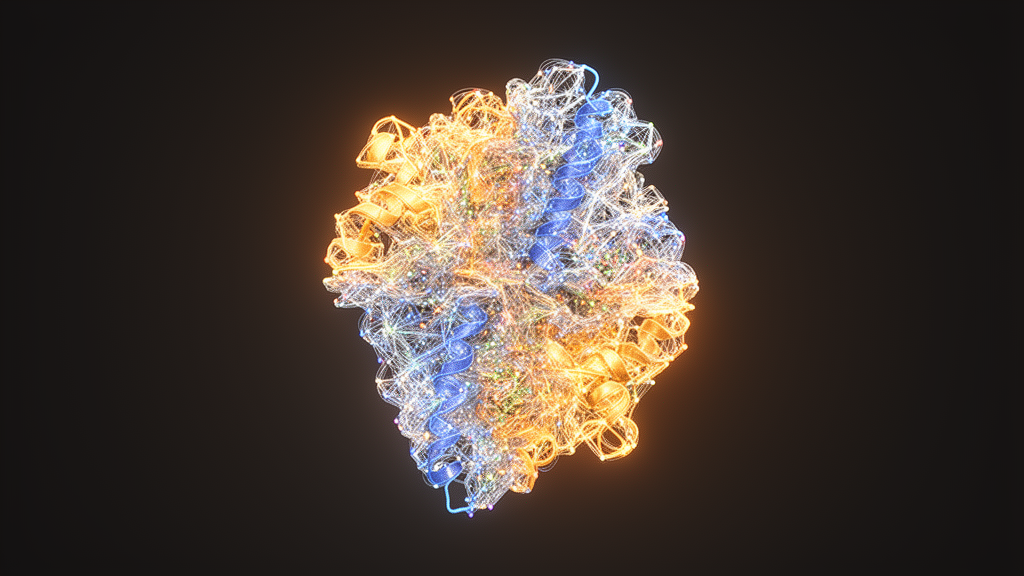
A high-throughput deep learning framework can predict protein desiccation tolerance directly from primary amino acid sequences, according to a computational biology study published in BMC Bioinformatics. Developed by researchers Jeong-Yang Park and Keunwan Park, the new computational framework leverages the ESM-2 protein language model to capture high-dimensional sequence representations. This sequence-based approach achieves competitive predictive accuracy for dehydration survival without requiring the heavy computational overhead associated with explicit three-dimensional structural modeling.

Understanding protein desiccation tolerance is fundamental to deciphering how diverse organisms survive conditions of extreme dehydration in harsh environments. While researchers have previously developed extensive computational tools to evaluate protein aggregation, solubility, and thermostability, these existing algorithms capture only part of the biophysical properties relevant to the dry state. Because conventional metrics leave key dry-state behaviors unaddressed, a specialized computational approach was necessary to identify the distinct molecular features governing dehydration tolerance.

To evaluate predictive performance, the investigators tested their deep learning framework against conventional predictors using a rigorous held-out test set. The model consistently outperformed traditional computational tools designed separately for predicting aggregation, solubility, and thermostability. This clear performance advantage indicates that desiccation tolerance is not an isolated attribute, but instead reflects a specific combination of these underlying stability and solubility properties operating together in dehydrated conditions.

Validation across independent experimental datasets demonstrated that the ESM-2 framework accurately reproduces the reported ranking of proteins under both desiccation and lyophilization conditions. Further structural and sequence analysis revealed that desiccation tolerance is statistically associated with predicted structural order alongside an acidic surface bias. Moreover, cross-species computational evaluations confirmed that the learned predictive capabilities transfer successfully to the proteomes of other organisms beyond the primary training set.

The researchers concluded that desiccation tolerance is a composite, sequence-encoded biophysical property that can be predicted directly from linear amino acid sequences. By eliminating the requirement for explicit structural simulations, the framework enables high-throughput, proteome-wide screening of dehydration-tolerant candidates. The authors emphasize that this computational screening tool provides practical utility for engineering drought-resistant agricultural crops and stabilizing biopharmaceutical products for reliable cold-chain-free storage.

Subject of Research: Sequence-based prediction of protein desiccation tolerance using deep learning

Article Title: Sequence-based prediction of protein desiccation tolerance using protein language models

Article References: Park, J.-Y., & Park, K. (2026). Sequence-based prediction of protein desiccation tolerance using protein language models. BMC Bioinformatics. https://doi.org/10.1186/s12859-026-06774-9

Image Credits: AI Generated

DOI: 10.1186/s12859-026-06774-9

Keywords: protein desiccation tolerance, ESM-2, protein language models, deep learning framework, sequence-based prediction, lyophilization, dehydration survival, structural order, acidic surface bias, proteome-wide screening, biopharmaceutical stabilization, cold-chain-free storage, drought-resistant crops, protein aggregation, protein solubility, protein thermostability

News Source: Blake Davidson. (November 16, 2026). Deep Learning Predicts Protein Desiccation Tolerance Directly From Amino Acid Sequences. Scienmag.


Tags: acidic surface biasbiopharmaceutical stabilizationcold-chain-free storageDeep learning frameworkdehydration survivaldrought-resistant cropsESM-2lyophilizationprotein aggregationprotein desiccation toleranceprotein language modelsprotein solubilityprotein thermostabilityproteome-wide screeningsequence-based predictionstructural order
Share12Tweet7Share2ShareShareShare1

Related Posts

Microglia Study Identifies FKBP5 as a Regulator of Alzheimer's Inflammation

Microglia Study Identifies FKBP5 as a Regulator of Alzheimer’s Inflammation

November 17, 2026
Holmium Substitution Improves SmFeO3 Supercapacitor Electrochemical Performance in KI/KOH Electrolyte

Holmium Substitution Improves SmFeO3 Supercapacitor Electrochemical Performance in KI/KOH Electrolyte

November 17, 2026

Comparative Study Reveals Disparate Performance in Light Field Occlusion Removal Algorithms

November 17, 2026

Herbal Iridoid Extract Relieves Fatty Liver Hemorrhagic Syndrome in Laying Hens

November 17, 2026

POPULAR NEWS

  • Staged Surgical Protocol Reconstructs Adolescent Mandible Following Ossifying Fibroma Resection

    Staged Surgical Protocol Reconstructs Adolescent Mandible Following Ossifying Fibroma Resection

    29 shares
    Share 12 Tweet 7
  • Microglia Study Identifies FKBP5 as a Regulator of Alzheimer’s Inflammation

    29 shares
    Share 12 Tweet 7
  • Holmium Substitution Improves SmFeO3 Supercapacitor Electrochemical Performance in KI/KOH Electrolyte

    29 shares
    Share 12 Tweet 7
  • Comorbidities Associated With Lower RSV Humoral and Cellular Immunity in Older Adults

    29 shares
    Share 12 Tweet 7

About

We bring you the latest biotechnology news from best research centers and universities around the world. Check our website.

Follow us

Recent News

Staged Surgical Protocol Reconstructs Adolescent Mandible Following Ossifying Fibroma Resection

Microglia Study Identifies FKBP5 as a Regulator of Alzheimer’s Inflammation

Holmium Substitution Improves SmFeO3 Supercapacitor Electrochemical Performance in KI/KOH Electrolyte

Subscribe to Blog via Email

Enter your email address to subscribe to this blog and receive notifications of new posts by email.

Join 88 other subscribers
  • Contact Us

Bioengineer.org © Copyright 2023 All Rights Reserved.

Welcome Back!

Login to your account below

Forgotten Password?

Retrieve your password

Please enter your username or email address to reset your password.

Log In
No Result
View All Result
  • Homepages
    • Home Page 1
    • Home Page 2
  • News
  • National
  • Business
  • Health
  • Lifestyle
  • Science

Bioengineer.org © Copyright 2023 All Rights Reserved.