• HOME
  • NEWS
  • EXPLORE
    • CAREER
      • Companies
      • Jobs
    • EVENTS
    • iGEM
      • News
      • Team
    • PHOTOS
    • VIDEO
    • WIKI
  • BLOG
  • COMMUNITY
    • FACEBOOK
    • INSTAGRAM
    • TWITTER
Monday, November 16, 2026
BIOENGINEER.ORG
No Result
View All Result
  • Login
  • HOME
  • NEWS
  • EXPLORE
    • CAREER
      • Companies
      • Jobs
        • Lecturer
        • PhD Studentship
        • Postdoc
        • Research Assistant
    • EVENTS
    • iGEM
      • News
      • Team
    • PHOTOS
    • VIDEO
    • WIKI
  • BLOG
  • COMMUNITY
    • FACEBOOK
    • INSTAGRAM
    • TWITTER
No Result
View All Result
Bioengineer.org
No Result
View All Result
Home NEWS Science News Chemistry

Engineered Polyamic Acid Sizing Agents Enhance Carbon Fiber PEEK Composite Strength

by
November 16, 2026
in Chemistry
Reading Time: 2 mins read
0
Engineered Polyamic Acid Sizing Agents Enhance Carbon Fiber PEEK Composite Strength

Engineered Polyamic Acid Sizing Agents Enhance Carbon Fiber PEEK Composite Strength

Share on FacebookShare on TwitterShare on LinkedinShare on RedditShare on Telegram

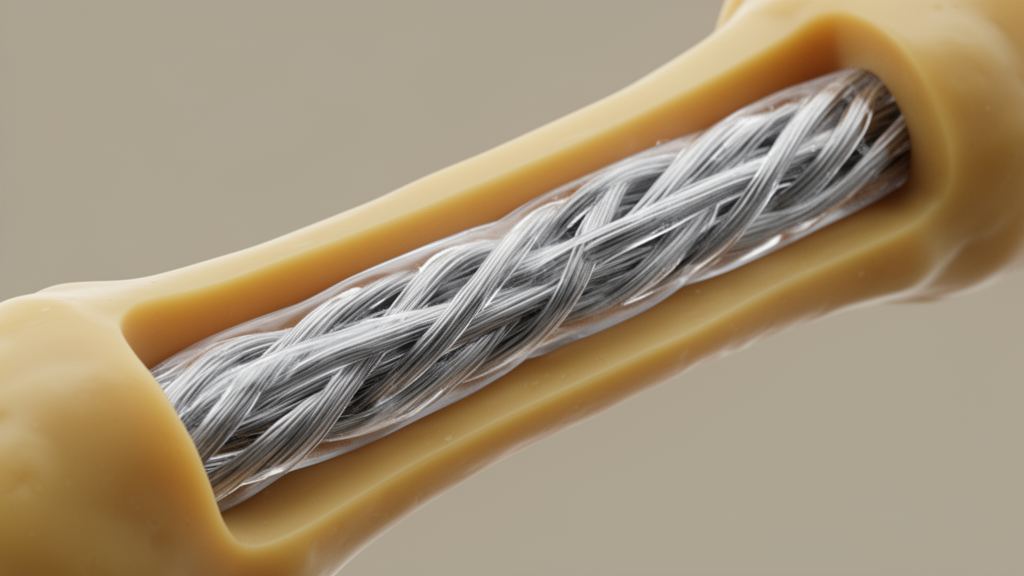
Engineered waterborne polyamic acid ammonium salt sizing agents featuring distinct flexible-chain architectures significantly enhance the interfacial performance and mechanical properties of carbon fiber reinforced poly(ether ether ketone) composites, according to an experimental investigation published in Polymer Bulletin. The research evaluates how tailoring flexible segments within waterborne sizing systems influences composite interfacial characteristics and overall reinforcement when applied to carbon fiber and poly(ether ether ketone) matrix materials.

To examine the impact of chain architecture, the investigators synthesized three representative polyamic acid ammonium salt systems containing cyclic, linear, and hybrid flexible segments. Each sizing formulation was systematically characterized and assessed across multiple operational parameters, including aqueous processability, surface coating behavior, thermal stability, interfacial characteristics, and resulting composite mechanical performance.

The experimental results demonstrate that the flexible-chain architecture directly governs the preparation route and processing behavior of the sizing agents.

In contrast, the linear polyamic acid ammonium salt architecture required a semi-solvent preparation strategy due to the presence of hydrophobic long-chain aliphatic segments within its molecular structure. Meanwhile, the hybrid architecture achieved a favorable balance between aqueous processability and film-forming capability by integrating both cyclic and linear flexible structures into a single sizing agent framework.

During subsequent melt processing of the composite materials, the deposited polyamic acid ammonium salt layer underwent thermal conversion into a continuous polyimide interphase. This thermally generated interphase enhanced compatibility between the carbon fibers and the surrounding poly(ether ether ketone) matrix, directly facilitating stress transfer across the composite interface.

Mechanical evaluation revealed that all three polyamic acid ammonium salt-sized carbon fiber reinforced poly(ether ether ketone) composites exhibited improved mechanical properties compared with the unsized control. The composite treated with the linear sizing system achieved the highest tensile strength of 143.20 MPa, representing an increase of 17.18 percent over the unsized baseline.

The composite prepared with the hybrid polyamic acid ammonium salt system exhibited the highest elongation at break at 12.47 percent and the highest impact strength at 22.75 kJ m⁻², corresponding to improvements of 14.93 percent and 27.09 percent over the untreated composite control.

Subject of Research: Interfacial performance of carbon fiber reinforced poly(ether ether ketone) composites using flexible polyamic acid sizing agents

Article Title: Flexible-chain architecture engineering of waterborne polyamic acid ammonium salt sizing agents for enhanced interfacial performance of CF/PEEK composites

Article References: Xu, Z., Zhang, X., Yu, S., Zhou, G., Liu, T., Ji, Z., Liu, J., & Lu, G. (2027). Flexible-chain architecture engineering of waterborne polyamic acid ammonium salt sizing agents for enhanced interfacial performance of CF/PEEK composites. Polymer Bulletin, 84(1), Article 34. https://doi.org/10.1007/s00289-026-06762-2

Image Credits: AI Generated

DOI: 10.1007/s00289-026-06762-2

Keywords: polyamic acid ammonium salt, CF/PEEK composites, carbon fiber, poly(ether ether ketone), sizing agents, flexible-chain architecture, interfacial performance, polyimide interphase, aqueous processability, semi-solvent strategy, tensile strength, impact strength, elongation at break, melt processing, fiber-matrix compatibility, thermal stability, coating behavior

News Source: Bethany Barker. (November 16, 2026). Engineered Polyamic Acid Sizing Agents Enhance Carbon Fiber PEEK Composite Strength. Scienmag.

Tags: aqueous processabilitycarbon fiberCF/PEEK compositescoating behaviorelongation at breakfiber-matrix compatibilityflexible-chain architectureimpact strengthinterfacial performancemelt processingpolyamic acid ammonium saltpolyether ether ketonepolyimide interphasesemi-solvent strategysizing agentstensile strengththermal stability
Share12Tweet7Share2ShareShareShare1

Related Posts

Sugarcane Biomass Residues Yield Highly Porous Gels for Sustainable Carbon Materials

Sugarcane Biomass Residues Yield Highly Porous Gels for Sustainable Carbon Materials

November 16, 2026
Global Silk Sericin Nanotechnology Research Surges While Clinical Translation Lags Behind

Global Silk Sericin Nanotechnology Research Surges While Clinical Translation Lags Behind

November 16, 2026

Peak Profile Choice Strongly Influences XRD Crystallinity Calculations in PVDF Foam

November 16, 2026

Combined Hormone Treatment Significantly Boosts Seed Yield in Sainfoin Forage

November 16, 2026

POPULAR NEWS

  • Multimodal Deep Learning Improves Postoperative Bone Metastasis Prediction in Breast Cancer

    Multimodal Deep Learning Improves Postoperative Bone Metastasis Prediction in Breast Cancer

    29 shares
    Share 12 Tweet 7
  • Optimal Red-Blue Light Ratio Enhances Adzuki Bean Yield and Grain Quality

    29 shares
    Share 12 Tweet 7
  • Community Gaps Shape Modern Contraceptive Access Across Thirty-Five African Countries

    29 shares
    Share 12 Tweet 7
  • Laboratory Survey Identifies Swabs as Most Error-Prone Material Across Diagnostic Workflows

    29 shares
    Share 12 Tweet 7

About

We bring you the latest biotechnology news from best research centers and universities around the world. Check our website.

Follow us

Recent News

Loneliness and Poor Sleep Linked to Depressive Symptoms in Older Adults

Sugarcane Biomass Residues Yield Highly Porous Gels for Sustainable Carbon Materials

Global Silk Sericin Nanotechnology Research Surges While Clinical Translation Lags Behind

Subscribe to Blog via Email

Enter your email address to subscribe to this blog and receive notifications of new posts by email.

Join 88 other subscribers
  • Contact Us

Bioengineer.org © Copyright 2023 All Rights Reserved.

Welcome Back!

Login to your account below

Forgotten Password?

Retrieve your password

Please enter your username or email address to reset your password.

Log In
No Result
View All Result
  • Homepages
    • Home Page 1
    • Home Page 2
  • News
  • National
  • Business
  • Health
  • Lifestyle
  • Science

Bioengineer.org © Copyright 2023 All Rights Reserved.