• HOME
  • NEWS
  • EXPLORE
    • CAREER
      • Companies
      • Jobs
    • EVENTS
    • iGEM
      • News
      • Team
    • PHOTOS
    • VIDEO
    • WIKI
  • BLOG
  • COMMUNITY
    • FACEBOOK
    • INSTAGRAM
    • TWITTER
Saturday, February 7, 2026
BIOENGINEER.ORG
No Result
View All Result
  • Login
  • HOME
  • NEWS
  • EXPLORE
    • CAREER
      • Companies
      • Jobs
        • Lecturer
        • PhD Studentship
        • Postdoc
        • Research Assistant
    • EVENTS
    • iGEM
      • News
      • Team
    • PHOTOS
    • VIDEO
    • WIKI
  • BLOG
  • COMMUNITY
    • FACEBOOK
    • INSTAGRAM
    • TWITTER
  • HOME
  • NEWS
  • EXPLORE
    • CAREER
      • Companies
      • Jobs
        • Lecturer
        • PhD Studentship
        • Postdoc
        • Research Assistant
    • EVENTS
    • iGEM
      • News
      • Team
    • PHOTOS
    • VIDEO
    • WIKI
  • BLOG
  • COMMUNITY
    • FACEBOOK
    • INSTAGRAM
    • TWITTER
No Result
View All Result
Bioengineer.org
No Result
View All Result
Home NEWS Science News Biology

Discovery of new Hepatitis C Virus mechanism

Bioengineer by Bioengineer
January 24, 2018
in Biology, Science News
Reading Time: 2 mins read
0
Share on FacebookShare on TwitterShare on LinkedinShare on RedditShare on Telegram
IMAGE

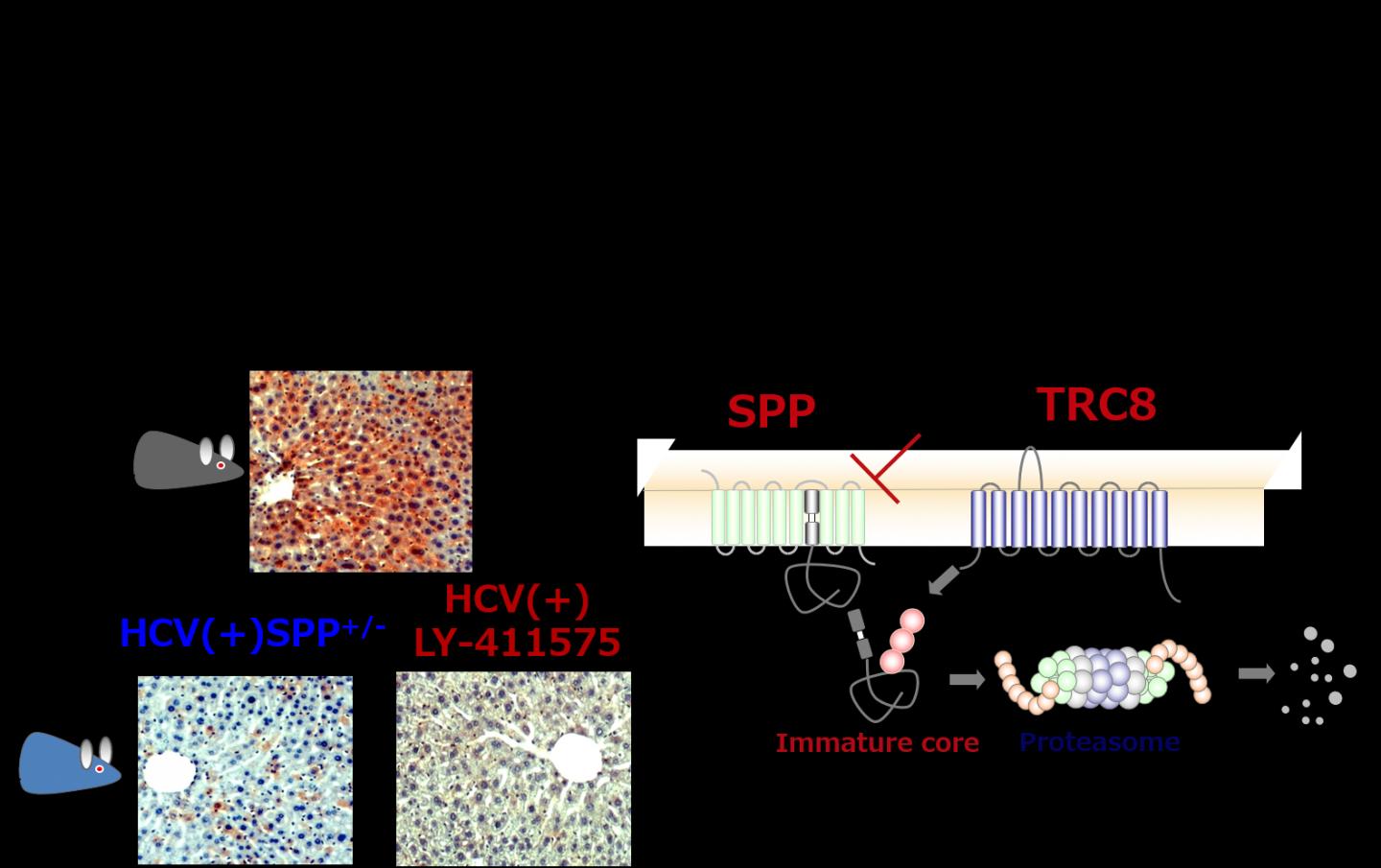
Researchers at Osaka University, Japan uncovered the mechanisms that suppress the propagation of the hepatitis C virus (HCV) with the potential of improving pathological liver conditions. Using model mice, they confirmed that when a certain enzyme is inhibited, HCV particle production is reduced leading to an improvement of pathological liver conditions. They thereby identified a new drug target for the development of new HCV drugs.

About 200 million people around the world are infected with the HCV virus. HCV infection may cause fatty liver, hepatic fibrosis and liver cancer. In Japan, the HCV virus is the main cause for viral liver cancer, constituting 70% of liver cancers. Although the recent development of effective drugs targeting HCV replicative enzymes has enabled the elimination of HCV, challenges remain including the emergence of resistant viruses and the development of liver cancer after virus elimination. So far it was known that the cleavage of the HCV core protein by the enzyme signal-peptide peptidase (SPP) in infected host cells played an important role in the formation of viral particles and the development of pathological liver conditions. However, the details of this mechanism were not understood.

A research group led by Toru Okamoto, assistant professor and Yoshiharu Matsuura, professor at Research Institute for Microbial Diseases, Osaka University has now discovered that when the enzyme SPP is inhibited, HCV particle production is reduced resulting in an improvement of pathological liver conditions.

The researchers found a chemical compound that inhibits the SPP enzyme in the y-secretase inhibitor which is currently in the development process for Alzheimer's disease treatment. They also discovered that the immature core proteins which are not cleaved by SPP are recognized by the enzyme TRC8 and quickly degraded. If this degradation process is suppressed, cellular damage is strongly induced by endoplasmic reticulum stress (ER stress). The endoplasmic reticulum is central to protein biosynthesis and in a state of ER stress, the proteins synthesizing there are unable to fold up correctly thereby causing cell damage. This degradation process can therefore be considered as a quality control mechanism for new proteins. When the researchers administered the SPP inhibitor to model mice, HCV particle production was significantly reduced, improving HVC pathologic conditions such as insulin resistance and fatty liver.

The results of this study suggest the development of SPP inhibitors as a new hepatitis C drug. In addition, the observed protein quality control mechanism via SPP/TRC8 is thought to be related to other diseases as well thereby being potentially useful for the drug development for a variety of diseases.

###

This research was featured in the electronic version of Nature Communications on Wednesday, May 4, 2016 (British Time).

Media Contact

Saori Obayashi
[email protected]
81-661-055-886
@osaka_univ_e

http://www.osaka-u.ac.jp/en

Share12Tweet7Share2ShareShareShare1

Related Posts

Inflammasome Protein ASC Drives Pancreatic Cancer Metabolism

February 7, 2026

Phage-Antibiotic Combo Beats Resistant Peritoneal Infection

February 7, 2026

Boosting Remote Healthcare: Stepped-Wedge Trial Insights

February 7, 2026

Barriers and Boosters of Seniors’ Physical Activity in Karachi

February 7, 2026
Please login to join discussion

POPULAR NEWS

  • Robotic Ureteral Reconstruction: A Novel Approach

    Robotic Ureteral Reconstruction: A Novel Approach

    82 shares
    Share 33 Tweet 21
  • Digital Privacy: Health Data Control in Incarceration

    63 shares
    Share 25 Tweet 16
  • Study Reveals Lipid Accumulation in ME/CFS Cells

    57 shares
    Share 23 Tweet 14
  • Breakthrough in RNA Research Accelerates Medical Innovations Timeline

    53 shares
    Share 21 Tweet 13

About

We bring you the latest biotechnology news from best research centers and universities around the world. Check our website.

Follow us

Recent News

Inflammasome Protein ASC Drives Pancreatic Cancer Metabolism

Phage-Antibiotic Combo Beats Resistant Peritoneal Infection

Boosting Remote Healthcare: Stepped-Wedge Trial Insights

Subscribe to Blog via Email

Enter your email address to subscribe to this blog and receive notifications of new posts by email.

Join 73 other subscribers
  • Contact Us

Bioengineer.org © Copyright 2023 All Rights Reserved.

Welcome Back!

Login to your account below

Forgotten Password?

Retrieve your password

Please enter your username or email address to reset your password.

Log In
No Result
View All Result
  • Homepages
    • Home Page 1
    • Home Page 2
  • News
  • National
  • Business
  • Health
  • Lifestyle
  • Science

Bioengineer.org © Copyright 2023 All Rights Reserved.