A newly published review in Annals of Biomedical Engineering presents an evidence-based framework for integrating women’s health engineering into university curricula, drawing directly on the pedagogical foundations and operational experiences of six independently developed collegiate courses. Authored by six biomedical engineering professors who pioneered standalone classes in the discipline, the study establishes instructional strategies to overcome longstanding academic and clinical omissions. Although women represent approximately 50 percent of the United States population and 56.8 percent of its workforce, research into conditions specific to female physiology has historically remained unprioritized and siloed from technical disciplines. Consequently, the vast majority of biomedical engineering undergraduates complete degree programs without academic exposure to sex-specific physiological systems, distinct pathological mechanisms, or tailored biomedical device development. By documenting practical curricular architectures, core learning objectives, and adaptable implementation pathways, the authors provide institutional models enabling engineering departments to train future innovators capable of designing medical technologies for female health needs.
The curricular initiative addresses deep structural disparities in biomedical funding, regulatory policy, and medical research models that have accumulated across decades. Formal training in women’s health traces back millennia to ancient Egyptian and Roman midwifery, while contemporary academic focus expanded alongside second-wave feminism and the 1993 creation of the National Institutes of Health Office of Research in Women’s Health. Momentum increased following the 2016 implementation of the federal Sex as a Biologic Variable policy, which mandated the inclusion of both male and female cells, tissues, and animals in federally supported investigations. Federal prioritization expanded further through executive actions in 2023 and 2024, followed by an early 2025 National Academies of Sciences, Engineering, and Medicine report that documented persistent budgetary shortfalls. That quantitative assessment revealed that less than 10 percent of biomedical research funding directly addresses women’s health, with proportional investment falling even as aggregate budgets grew, despite economic projections indicating that closing this research divide could generate a one-trillion-dollar global economic boost.
Analyzing current higher-education offerings, the authors identified ten standalone collegiate courses dedicated specifically to women’s health engineering offered nationwide as of spring 2026, eight of which were launched within the preceding five years. Across the six courses directed by the author team, instructional metrics demonstrated sustained demand, with class enrollment fill rates consistently exceeding 100 percent and maintaining extensive waitlists throughout terms. By comparison, standard elective courses across the same engineering departments achieved an average enrollment fill rate of 73.8 percent during identical instructional semesters. Demographic tracking indicated that female students comprised nearly three-quarters of class enrollments, highlighting strong student commitment toward closing innovation deficits in health technology. While this female participation markedly outpaces historical gender balances in broader biomedical engineering programs, the authors underscored that recruiting male, international, and first-generation college students remains a vital instructional priority, noting that male engineers must be actively prepared to address systemic physiological challenges that span fundamental human health.
The pedagogical architecture articulated in the review synthesizes foundational public health guidelines with contemporary engineering education standards to establish rigorous instructional objectives. The curricular model incorporates three core principles originally defined in 2013 guidance from the United States Department of Health and Human Services and the Health Resources and Services Administration: the whole-body lifespan perspective spanning puberty through post-menopause, the influence of social determinants of health, and cultural considerations affecting care access. The authors integrated these elements with feminist and gender-responsive pedagogies, which treat biological sex as an essential technical variable while dismantling historical male-default baseline assumptions in data analysis, equipment prototyping, and safety standards. Furthermore, the framework maps women’s health learning objectives directly onto established ABET student outcomes. This formal alignment demonstrates that incorporating sex-specific biological differences does not require establishing separate accreditation metrics, but instead provides an authentic, high-impact societal context for students to master core engineering problem-solving, design iteration, and ethical analysis.
To deliver these learning outcomes within standalone courses, the framework outlines four essential instructional mechanisms: evidence-based literature analysis, human-centered design challenges, physical laboratory modules, and multi-sector guest lectures. Evidence-based assignments employ primary research papers to guide students through written methodological critiques, journal club presentations, and multi-study syntheses that expose unresolved clinical questions. Design-centered modules implement semester-long, phased project deliverables spanning needs assessment, literature review, prototyping, and pitch presentations, training students to engineer solutions for conditions such as endometriosis or menopausal discomfort. Hands-on laboratory experiences introduce accessible, low-cost experimental platforms, including facility tours of microfluidic organ-on-a-chip fabrication and digital image-processing pipelines using open-source platforms like FIJI or IMARIS to inspect three-dimensional micro-computed tomography and functional magnetic resonance datasets. Complementing technical instruction, interdisciplinary guest lectures from clinicians, basic scientists, and FemTech entrepreneurs bridge translation divides, demonstrating how emerging diagnostic devices transition from academic research laboratories to commercial medical settings.
Beyond standalone electives, the authors provide detailed pedagogical strategies for infusing women’s health modules directly into foundational courses across the standard biomedical engineering curriculum. In quantitative physiology, instructors can introduce sex-divergent regulatory mechanisms within cardiovascular, immunological, and endocrinological systems, examining variations in heart disease presentation, exercise physiology across life stages, and dynamic pregnancy-related tissue remodeling. In biomechanics and mechanobiology courses, real-world biological applications illustrate fundamental stress and loading principles. Students can analyze structural integrity and load-bearing shifts caused by altered joint laxity, maternal body morphometry, and fetal mass accumulation during pregnancy. Fluid mechanics modules can quantify uterine blood perfusion, cardiovascular volumetric adaptations, and mammary fluid transport during lactation. Additionally, continuum mechanics problems can model soft-tissue growth and viscoelastic remodeling within the cervix and pelvic floor under prolonged mechanical strain, while laboratory modules evaluate the fatigue life of sports bra textiles or the mechanical load capacities of surgical pelvic meshes.
Thermodynamics, mass transport, and biomaterials courses provide further opportunities to apply core engineering principles to critical female health contexts while examining past design failures. Mass transport lectures can examine placental gas and nutrient exchange across multilayered tissue barriers using Fickian diffusion, convective-diffusion coupling, and active cellular transport to analyze conditions like intrauterine growth restriction. Thermal engineering modules model evaporative and convective cutaneous dissipation during menopausal vasomotor hot flashes, while cryopreservation courses address non-isothermal cryoprotectant transport during oocyte vitrification. Contemporary biomaterials instruction can contrast this historical failure against modern regenerative platforms, including decellularized uterine matrices for endometrial repair, synthetic three-dimensional cervical culture scaffolds, localized bioadhesive vaginal drug delivery vehicles, and silicone breast implants evaluated for capsular contracture risks.
In advanced tissue engineering and pharmacokinetics coursework, the framework highlights how sex-specific biological differences dictate distinct transport behaviors, systemic distribution, and experimental modeling requirements. Standard in vivo preclinical testing relies heavily on animal models that neither menstruate nor experience natural menopause, necessitating tissue-engineered New Approach Methodologies such as microphysiological systems and organoids to recapitulate menstrual biology and endometrial disorders like endometriosis. In drug delivery, physiological divergences substantially modify pharmacokinetic curves: females exhibit slower gastric emptying and prolonged intestinal transit times, altering oral drug bioavailability across hormonal fluctuations. Moreover, women typically present lower total body water, higher relative body fat percentages, altered hepatic enzymatic clearances, and decreased glomerular filtration rates compared to males. These physiological variances directly elevate adverse toxicity and overdose risks when drug dosages follow male-normed standards, a regulatory reality highlighted by historical revisions to zolpidem dosing guidelines following documented female metabolic differences.
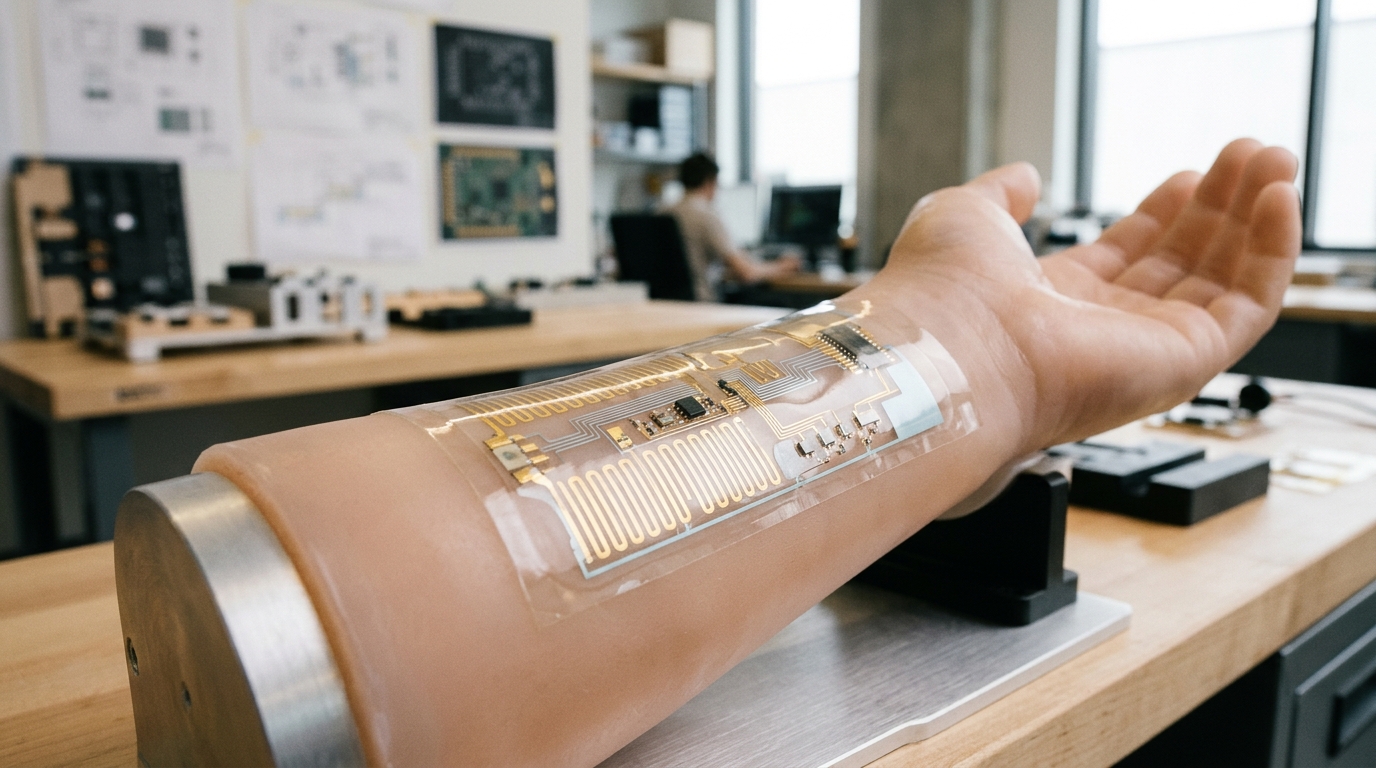
The review demonstrates that bioinstrumentation, optical imaging, and sensing systems offer rich technological environments for teaching signal processing within complex, non-stationary physiological baselines. Fetal electrocardiography challenges students to implement adaptive filtering, blind source separation, and spectral extraction techniques to isolate microvolt fetal cardiac signals from dominating maternal electrical activity and motion artifacts. Sensor development modules explore optical photoplethysmography wearables for postpartum maternal monitoring, near-infrared spectroscopy for placental and pelvic oxygenation, and wearable piezoresistive strain sensors for continuous non-invasive blood pressure tracking to detect hypertensive complications like preeclampsia. In imaging curricula, transvaginal and transabdominal ultrasound illustrate acoustic impedance matching, real-time procedural guidance, and Doppler flow velocity tracking during gestational growth.
Integrating women’s health into computation, synthetic biology, and capstone design equips engineering students to address ethical governance while deploying cutting-edge data science tools. Machine learning modules demonstrate how supervised algorithms analyze narrative clinical notes, cervical length measurements, and laboratory biomarkers to enhance risk stratification for preterm birth, preeclampsia, and gestational diabetes. Image-based deep learning systems improve diagnostic sensitivity in mammography and automate morphometric embryo selection for in vitro fertilization, while computational digital twins simulate individual maternal cardiovascular dynamics during gestation. However, the authors emphasize that predictive algorithms trained on biased datasets risk compounding historical disparities among underrepresented demographics, making subgroup validation an essential engineering responsibility. Combined with synthetic biology modules exploring CRISPR-engineered Lactobacillus strains to prevent bacterial vaginosis and ethical case studies evaluating post-market withdrawals of transvaginal surgical mesh, capstone design partnerships with clinical practitioners and FemTech firms cultivate a workforce prepared to advance equitable, life-saving medical innovation.
Subject of Research: Curricular frameworks and implementation strategies for women's health engineering education
Article Title: A Framework for Women’s Health Engineering Education: Pedagogical Foundations and Practical Implementation
Article References: Connizzo, B. K., Barker, S. D., Gnecco, J., Bayer, C. L., O’Brien, C. M., & Oyen, M. L. (2026). A Framework for Women’s Health Engineering Education: Pedagogical Foundations and Practical Implementation. Annals of Biomedical Engineering. https://doi.org/10.1007/s10439-026-04426-w
Image Credits: AI Generated
DOI: 10.1007/s10439-026-04426-w
Keywords: women's health engineering, biomedical engineering education, curriculum development, pedagogical framework, sex as a biologic variable, FemTech, biomechanics, tissue engineering, drug delivery, medical device design, ABET student outcomes, health equity, bioinstrumentation, microphysiological systems, active learning, quantitative physiology
News Source: Denise Maddox. (November 15, 2026). Biomedical Engineering Professors Establish Curricular Framework for Advancing Women’s Health Education. Scienmag.