In a newly published comprehensive scientific review in the Journal of Pharmaceutical Investigation, researchers Monica Sakla, Shahir Aziz, Samar Mansour, and Sangeun Lee outline an integrated formulation framework for chronic wound therapy that pairs bioactive polymeric nanoparticles with topical semisolid vehicles to actively counter the hostile wound microenvironment. Normal tissue repair advances through an orderly, overlapping sequence consisting of hemostasis, inflammation, cellular proliferation, and extracellular matrix remodeling. In non-healing chronic wounds such as diabetic foot ulcers, venous ulcers, and pressure ulcers, this physiological cascade stalls in a persistent inflammatory state. Inflammatory neutrophils fail to clear efficiently, macrophages fail to undergo an adequate phenotypic transition from a pro-inflammatory M1 phenotype to a reparative M2 phenotype, and unchecked inflammatory cascades sustain elevated concentrations of reactive oxygen species and matrix metalloproteinases, establishing a vicious cycle of persistent tissue damage and impaired regeneration.
The pathological microenvironment of chronic wounds presents multiple severe biochemical barriers that disrupt regular cellular repair functions and delay wound healing. Under normal healing conditions, reactive oxygen species act as essential signaling molecules that regulate antimicrobial defense, angiogenesis, and tissue repair, whereas chronic wounds endure excessive oxidative stress that causes oxidative damage to host cells, growth factors, and extracellular matrix components. In addition, an imbalance between elevated matrix metalloproteinases and reduced levels of tissue inhibitors of metalloproteinases promotes destructive proteolysis of newly formed granulation tissue. Concurrently, defective angiogenesis, impaired local perfusion, edema, and high metabolic oxygen consumption by inflammatory cells and microbial populations reduce local oxygen tension from typical healing levels of thirty to sixty millimeters of mercury down to approximately ten millimeters of mercury, causing severe hypoxia. Furthermore, chronic wounds frequently display an alkaline pH ranging from approximately 7.2 to 8.9 compared with the mildly acidic pH of 5.4 to 5.3 observed in healthy skin, a shift driven by acidic mantle loss, exposure to bodily fluids, persistent inflammation, and bacterial colonization, which collectively alters enzyme activity and impairs keratinocyte and fibroblast function.
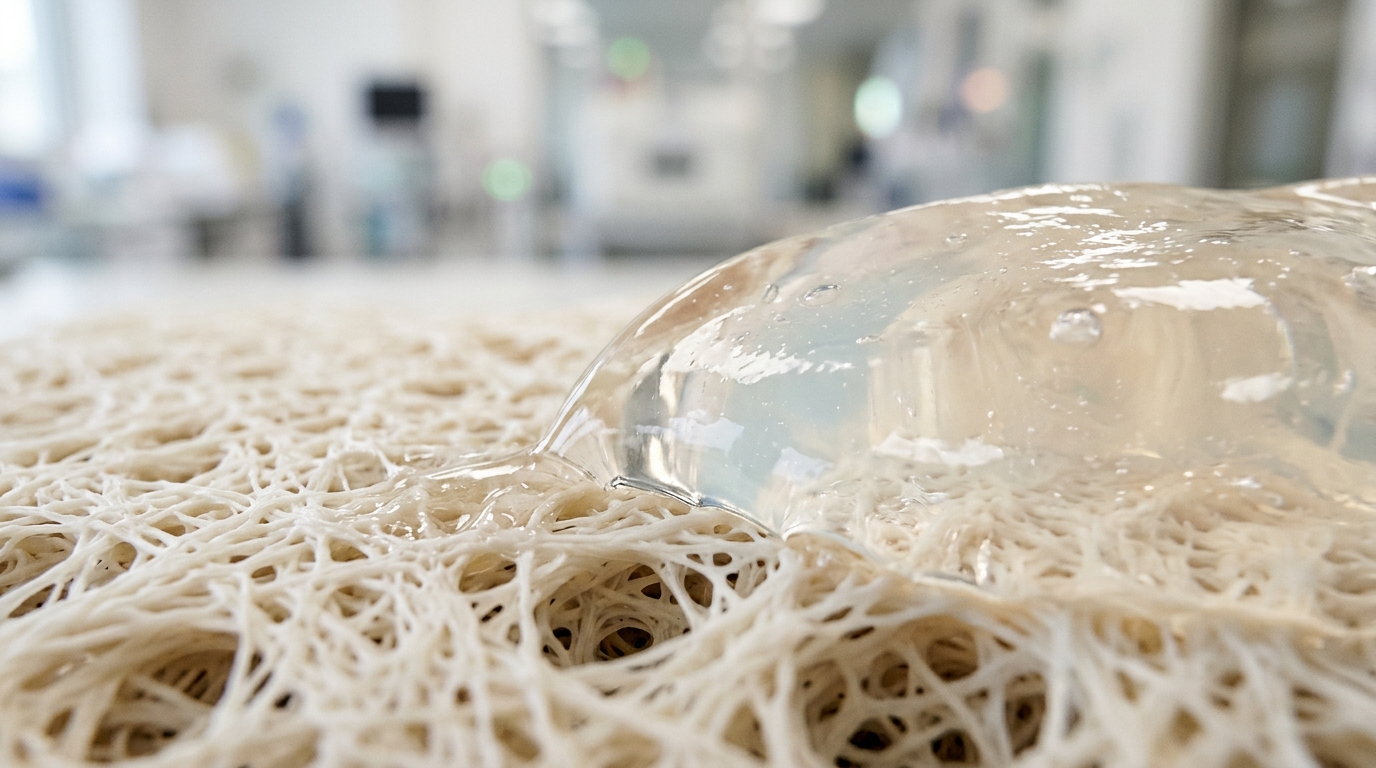
Conventional topical interventions, while routinely employed in clinical wound management, encounter distinct physical and pharmacological limitations when facing this complex pathological landscape. Solid dressings provide physical protection and absorb exudates but lack conformal contact on irregular, deep wound beds and fail to deliver therapeutic compounds homogeneously. Conversely, conventional semisolid preparations such as ointments, creams, and plain gels offer practical handling, close surface contact, and tunable rheological properties like viscosity, spreadability, and bioadhesion, yet they function largely as passive systems. In highly exuding chronic wounds, lipophilic ointments struggle to maintain intimate surface contact, while conventional creams absorb fluid rapidly, altering their rheological consistency and leaching away from the wound bed. Single-polymer hydrogels and plain gels often demonstrate weak mechanical integrity, poor structural stability, rapid enzymatic breakdown, and rapid clearance, which causes dilution of applied therapeutics and limits their ability to provide sustained, precisely controlled drug release over prolonged periods.
To overcome these delivery barriers, the review demonstrates that incorporating biodegradable polymeric nanoparticles into semisolid matrices establishes multifunctional delivery platforms that fundamentally transform topical chronic wound treatment. Nanoscale encapsulation improves the apparent solubility and chemical stability of hydrophobic or fragile active pharmaceutical ingredients, shields labile molecules against premature enzymatic degradation within protease-rich wound exudate, and regulates drug-release kinetics. Polymeric nanoparticles provide exceptional structural versatility, enabling researchers to tune composition, architecture, surface charge, degradation behavior, and surface chemistry to meet specific microenvironmental demands. When incorporated into topical hydrogels, polymeric nanoparticles act as dynamic structural components that interact with polymer chains through physical or chemical interactions, modifying network architecture, crosslink density, and interfacial dynamics. These interactions optimize rheological characteristics such as shear-thinning and self-recovery behavior, facilitating easy spreading during topical administration while maintaining mechanical stability, colloidal dispersion, and long-term retention at the wound site without aggregation or phase separation.
Physical dimensions and surface characteristics represent essential engineering variables governing nanoparticle transport, retention, and cellular uptake in wounded tissues. The authors note that polymeric nanoparticles with dimensions smaller than approximately two hundred nanometers are generally suitable for chronic wound applications because they are efficiently internalized by macrophages, keratinocytes, fibroblasts, and endothelial cells while maintaining sufficient drug-loading capacity and local retention. Particles smaller than fifty nanometers exhibit superior penetration through dense bacterial biofilms, although their smaller internal volume limits payload capacity and their rapid clearance can shorten local therapeutic residence. Conversely, larger particles diffuse more slowly through extracellular matrix components and wound exudates but offer larger drug payloads. When embedded within hydrogels, nanoparticle mobility is dictated by the hydrogel mesh size, where steric hindrance restricts movement when mesh dimensions approach particle diameters, permitting prolonged retention or governed depot release depending on whether cargo or intact nanoparticles are intended to escape.
Surface chemistry and electrostatic charge further dictate how polymeric nanoparticles interact with the biological components of the wound bed. Because bacterial cell envelopes, mammalian cell membranes, and extracellular matrix proteins display net negative surface charges, cationic nanoparticles exhibit strong electrostatic attraction toward microbial membranes, driving membrane disruption, intracellular drug entry, and potent antibacterial action. However, excessive positive charge density compromises cytocompatibility by destabilizing mammalian cell membranes and triggering inflammatory responses, necessitating precise charge balancing. Neutral or slightly anionic surfaces exhibit reduced nonspecific protein adsorption and favorable host tissue compatibility for sustained delivery. Furthermore, chemical surface modifications such as polyethylene glycol grafting create a steric hydration layer that limits opsonization and nonspecific protein binding, whereas bioactive coatings containing chitosan or collagen promote cell adhesion and mimic extracellular matrix cues. In addition, functional surface groups allow covalent or non-covalent conjugation of targeted peptides, enzymes, or growth factors to direct cellular responses toward angiogenesis and re-epithelialization.
A critical shift emphasized in the review is the transition of polymeric nanoparticles from passive drug carriers into active therapeutic agents through intrinsic polymer bioactivity. Beyond serving as structural delivery vehicles, select synthetic and natural polymers possess inherent antimicrobial, antioxidant, hemostatic, and immunomodulatory properties that directly address specific pathological features of the chronic wound microenvironment. For instance, the synthetic aliphatic polyester poly(lactic-co-glycolic acid) degrades by ester hydrolysis into lactic acid and glycolic acid, which are cleared via the tricarboxylic acid cycle; during degradation, generated lactate metabolites can stimulate angiogenesis to accelerate healing. Natural polymers, including chitosan, alginate, hyaluronic acid, dextran, gelatin, collagen, and silk fibroin, provide biomimetic cues. Cationic chitosan disrupts negatively charged bacterial membranes, promotes platelet aggregation and rapid hemostasis through electrostatic interactions with erythrocyte membranes, and enhances fibroblast migration. Similarly, collagen and gelatin scaffolds support cell adhesion and primary hemostasis through platelet receptor activation, while hyaluronic acid targets CD44 receptors on fibroblasts and immune cells to resolve persistent inflammation.
Stimuli-responsive polymeric systems offer targeted functional capabilities by undergoing reversible or irreversible physicochemical transitions in response to pathological chronic wound stimuli such as alkaline pH, elevated matrix metalloproteinases, and high reactive oxygen species levels. Chemical modification with functional groups, such as phenylboronic ester moieties on dextran or cyclodextrin, enables smart responsiveness where exposure to reactive oxygen species oxidizes boronate linkages, releasing encapsulated anti-inflammatory payloads while simultaneously scavenging free radicals. In infected wound environments, membrane-active cationic polymers such as epsilon-poly-L-lysine and arginine-based biodynamers interact with lipopolysaccharide-rich bacterial envelopes; arginine-based biodynamers undergo structural transitions to beta-sheet conformations, markedly lowering the minimum inhibitory concentrations of co-administered antibiotics like colistin and expanding antimicrobial spectrums with minimal host toxicity.
The authors stress that clinical translation requires adopting a microenvironment-first, formulation-system perspective where polymer chemistry, nanoparticle functionality, semisolid matrix behavior, and wound conditions are co-designed as interdependent variables rather than isolated parts. Nanoparticle-matrix platforms must be engineered according to whether the delivery objective requires retaining the particles within the vehicle to govern molecular drug diffusion or releasing intact nanoparticles to penetrate biofilms and cellular barriers. Comprehensive biological evaluations must characterize cytotoxicity, hemocompatibility, tissue irritation, degradation kinetics, and systemic exposure. Furthermore, practical manufacturing challenges, including batch-to-batch reproducibility, formulation stability during extended storage, sterilization methods that do not alter polymer integrity or trigger premature drug leakage, and the physiological limitations of standard preclinical rodent models in replicating human biofilm and ischemic environments, must be rigorously addressed to successfully advance these advanced multifactorial therapies into clinical wound practice.
Subject of Research: Polymeric nanoparticles and semisolid formulations for chronic wound therapy
Article Title: Polymeric nanoparticles for chronic wound therapy: integrating polymer bioactivity, semisolid formulation, and the wound microenvironment
Article References: Sakla, M., Aziz, S., Mansour, S., & Lee, S. (2026). Polymeric nanoparticles for chronic wound therapy: integrating polymer bioactivity, semisolid formulation, and the wound microenvironment. Journal of Pharmaceutical Investigation. https://doi.org/10.1007/s40005-026-00841-2
Image Credits: AI Generated
DOI: 10.1007/s40005-026-00841-2
Keywords: polymeric nanoparticles, chronic wound healing, semisolid formulations, hydrogels, wound microenvironment, chitosan, poly(lactic-co-glycolic acid), reactive oxygen species, bioactive polymers, stimuli-responsive drug delivery, bacterial biofilms, hyaluronic acid, drug delivery systems, tissue regeneration, extracellular matrix, nanomedicine
News Source: Ophelia Keating. (November 15, 2026). Bioactive Polymeric Nanoparticles in Semisolid Formulations Target Chronic Wound Microenvironments. Scienmag.