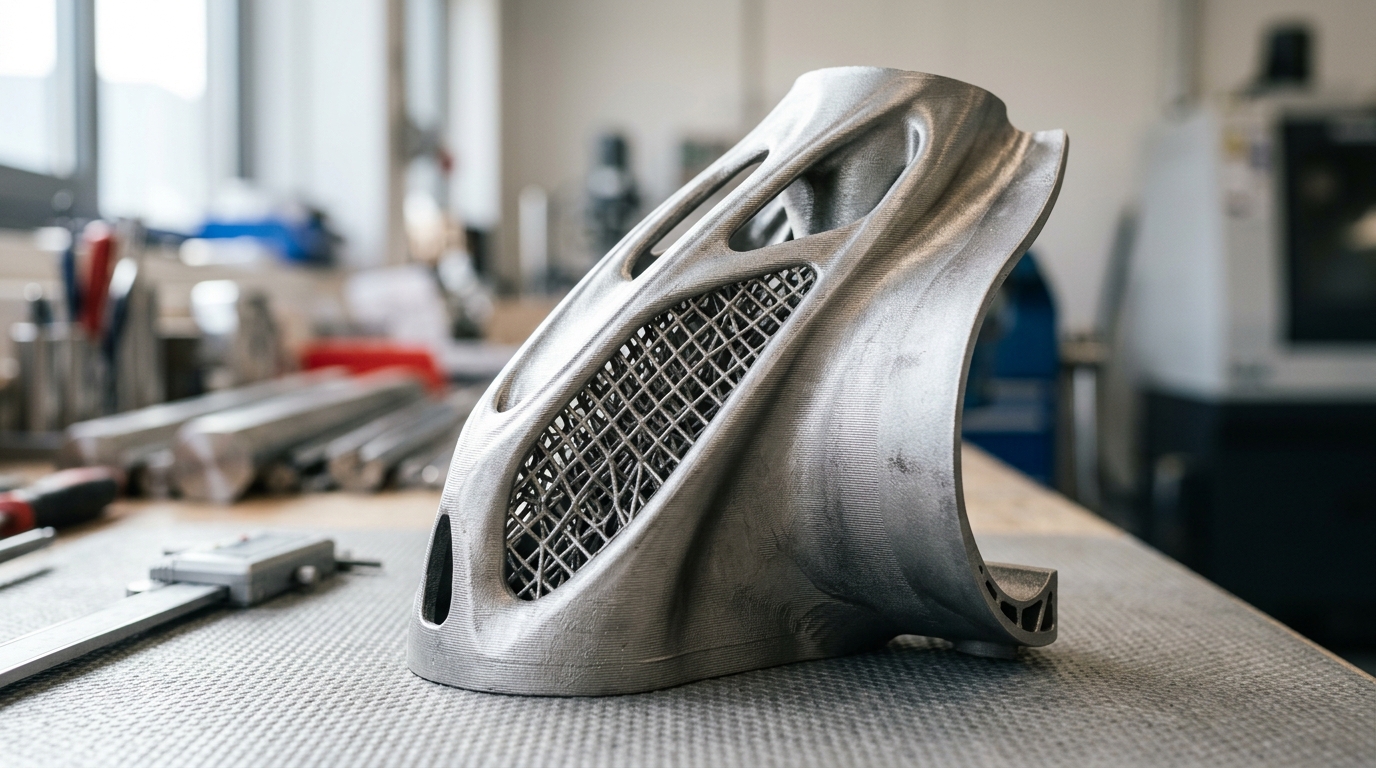
Laser powder bed fusion enables the additive manufacturing of complex metallic components with demanding geometry, yet coordinating forming quality with post-solidification mechanical performance remains a persistent engineering challenge. In a review published in Advanced Materials Joining, researchers led by Minghao Liu, Wei Xu, and colleagues evaluate how explainable artificial intelligence can bridge the historical divide between defect suppression and mechanical optimization. Additive manufacturing processes rely on focused laser beams melting consecutive powder layers, where highly localized energy deposition and rapid cooling rates reaching 10⁴ to 10⁶ K/s create severe thermal gradients. Traditional data-driven machine learning models frequently correlate raw process inputs directly with bulk properties, but these purely statistical correlations lack metallurgical interpretability and fail when extrapolated beyond narrow experimental boundaries.
The review systematically categorizes how physical interpretability has been established across metallic materials through four foundational knowledge domains: physical metallurgy principles, cross-scale numerical information, microstructural image data, and causal physical mechanisms. The first domain introduces classical metallurgical laws as regularizing constraints within statistical algorithms, thereby preventing predictions from violating physical principles. For example, physical metallurgy-guided support vector machines utilize thermodynamic driving forces and equilibrium phase fractions to constrain process schemes, while deep data-mining convolutional neural networks integrate thermodynamic mechanisms to predict martensite start temperatures with high out-of-distribution stability. By establishing physics-guided boundaries, these models balance statistical fitting freedom against extrapolation stability in small-sample metallurgical datasets.
The second knowledge domain incorporates cross-scale numerical descriptors derived from atomic, mesoscopic, and macroscopic simulations without necessarily altering the underlying neural network architecture. At the atomic scale, first-principles calculations supply formation enthalpies and cohesive energies to inform high-entropy alloy designs, while at the mesoscopic scale, Calculation of Phase Diagrams methods supply quantitative descriptors such as non-equilibrium phase fractions, solidification intervals, and transformation temperatures. At the macroscopic continuum level, finite element modeling and molecular dynamics provide thermal stress distributions and solidification cooling rates. The third domain captures microstructural image data directly from scanning electron microscopy, electron backscatter diffraction, and optical microscopy using deep learning networks like U-Net and variational autoencoders, achieving automated phase segmentation and spatial feature extraction without relying on manual parameterization.
Causal physical mechanisms form the fourth domain by embedding governing equations and causal directions directly into loss functions and structural model graphs. Physics-informed neural networks incorporate fundamental partial differential equations, such as the conservation of mass, momentum, and energy, to simulate molten-pool geometry and Marangoni convection. Similarly, phase-field dynamics modeled via the Allen-Cahn and Cahn-Hilliard equations describe dendritic growth and solute segregation during solidification, while mechanics-based fatigue formulations incorporate Basquin’s law and stress-dependent variance rules. Incorporating causal transfer learning has allowed researchers to predict fatigue strength in low-alloy steels from tensile data with as few as thirty training sets, achieving a verified 50 MPa fatigue strength increase by ensuring algorithmic decisions respect physical cause and effect.
In laser powder bed fusion practice, research has historically split into two distinct paradigms dictated by the dominant physical bottlenecks of specific materials. Steels and titanium alloys represent the performance-first paradigm, where components readily achieve near-full density across broad processing windows, but suffer from anisotropic microstructures, cyclic thermal reheating, and non-equilibrium phase evolution. In LPBF steels, rapid cooling triggers complex sequences of austenite-to-martensite transformation and cyclic partial tempering, where statistical models paired with physical metallurgy descriptors have successfully mapped linear energy inputs to density and nanohardness with classification accuracies reaching 92.4%. Similarly, combining extreme gradient boosting with SHAP interpretability and NSGA-III multi-objective optimization enabled the rapid design of ultra-high-strength stainless compositions balancing strength, toughness, and corrosion resistance.
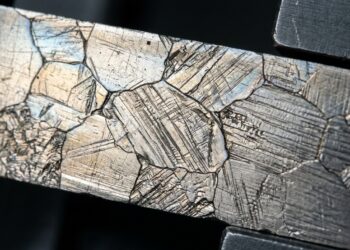
For LPBF titanium alloys, such as Ti-6Al-4V, directional heat extraction along the build direction induces coarse prior-beta columnar grains with strong <001> fiber textures, while rapid cooling forms brittle acicular alpha-prime martensite. Explainable machine learning strategies have targeted these anisotropic failure modes through physics-informed fatigue modeling. Incorporating threshold stress intensity factors and Kitagawa-Takahashi envelope constraints into neural network loss functions improved fatigue strength prediction coefficients of determination from 0.70 to 0.82 while reducing mean absolute errors from 40.5 MPa to 29.9 MPa across 143 experimental samples. Furthermore, combining three-dimensional micro-computed tomography defect volumes with deep neural networks identified maximum defect circumscribed sphere diameter and sphericity as the primary determinants of fatigue life, attaining a test coefficient of determination of 0.946.
Conversely, aluminum alloys and nickel-based superalloys represent the formability-first paradigm, where severe hot tearing, liquation cracking, high laser reflectivity, and wide freezing intervals dominate processing challenges. High-strength aluminum alloys, including 2xxx and 7xxx series, feature freezing ranges exceeding 100 K, which prolong exposure to the vulnerable mushy zone where interdendritic liquid cannot accommodate thermal contraction stresses. To resolve these challenges, researchers developed graph attention networks integrated with physical metallurgy knowledge graphs, designing an additive aluminum alloy that achieved 99.98% relative density without substrate preheating, accompanied by an ultimate tensile strength of 454 MPa and an elongation of 9.5%. In nickel-based superalloys, dual-parameter criteria evaluating heat resistance and deformation resistance successfully mapped cracking susceptibility by quantifying elemental microsegregation, explaining why trace additions of boron, zirconium, and hafnium severely aggravate cracking by depressing the solidus temperature.
Despite these individual successes, the authors emphasize that contemporary studies remain predominantly task-specific and single-objective, focusing either on defect mitigation or on mechanical strength. Because both formability and mechanical properties arise from the identical composition-process-thermal history pathway, adjusting processing parameters to eliminate porosity inevitably alters grain morphology, crystallographic texture, and residual stress states. To overcome this limitation, the authors propose a unified multi-objective optimization framework structured around shared thermal history descriptors, such as local thermal gradient G, solidification front velocity R, cooling rate, and remelting depth. Coupling physics-constrained models with standardized multimodal databases and causal discovery algorithms will allow researchers to determine whether formability and performance objectives are driven by cooperative or competing metallurgical mechanisms.
Realizing this collaborative control strategy requires resolving several critical data and computational challenges across additive manufacturing research. Currently available datasets are fragmented, typically reporting either defect characteristics or mechanical test metrics, but rarely providing paired measurements obtained from identical specimen batches. Furthermore, training distributions suffer from publication bias favoring successful fabrication parameters, which impedes models from learning the precise physical boundaries of process instability. Establishing standardized repositories that pair raw process signals, three-dimensional defect geometries, and mechanical performance measurements will be vital for training reliable multi-objective surrogate architectures, ultimately advancing explainable artificial intelligence from post-hoc laboratory analysis to closed-loop, physics-traceable alloy development.
Beyond tensile property optimization, explainable methodologies have resolved biomechanical compromises in biomedical titanium alloys. To prevent stress shielding in implants, researchers introduced physical metallurgy descriptors—including the molybdenum equivalent, valence electron concentration ratio, and d-electron parameters—into gradient-boosted decision trees trained on seventy-five compositions. Embedding these parameters as constraints within genetic algorithms enabled the design of quaternary and quinary titanium-molybdenum-niobium-zirconium-tin alloys. Both achieved stable single-phase beta structures with measured elastic moduli of 40 GPa and 37 GPa, matching predicted targets of 43 GPa and 39 GPa. In parallel, physics-informed neural network models incorporating Weibull distributions, finite element frequency mapping, and Monte Carlo estimation established reliable ultra-high-cycle fatigue predictions for Ti-6Al-4V, boosting crack propagation resistance by 20 to 30 percent while cutting development cycles by more than half.
In crack-sensitive aluminum systems, interpretable machine learning has resolved formability bottlenecks through composition engineering and grain refinement. Researchers utilized quantum machine learning alongside high-throughput computing to design the lightweight Al85Cu5Li4Mg3Zn3 entropy alloy, exploiting rapid cooling to convert brittle intermetallics into hierarchical cellular eutectic structures and dense planar faults. In related work, combining light gradient boosting with genetic algorithms enabled the introduction of nanoscale titanium diboride particles into the aluminum matrix. By promoting ultrafine equiaxed grains that suppress hot tearing, this framework quantitatively decoupled the synergistic contributions of grain-boundary, Orowan, dislocation, and solid-solution strengthening mechanisms, achieving a verified balance between high strength and ductility.
For nickel-based superalloys, physics-guided modeling has similarly clarified complex solidification behavior and grain-boundary liquation damage. In Inconel 718 processing, coupling meshless graph-theory thermal simulations with support vector machines enabled rapid thermal history extraction, predicting molten-pool depths within an error of 12 micrometers and primary dendrite arm spacings within 71 nanometers. At the atomic scale, first-principles calculations revealed that intergranular liquation cracking originates from boron microsegregation that depresses solidus temperatures. By engineering carbon-containing phase boundaries where niobium carbides preferentially trap interstitial boron atoms, investigators developed the crack-resistant AMSC-DB superalloy, achieving high-density fabrication across an exceptionally wide processing window without compromising high-temperature tensile performance.
To translate these isolated methodologies into robust additive manufacturing workflows, the review outlines a seven-stage implementation methodology centered on crack-sensitive alloys. The framework coordinates formability bounds, physical-metallurgy design space pruning, multiscale intermediate descriptors from thermodynamic simulations, and paired multimodal experimental characterization. Multi-objective surrogates then combine causal directed acyclic graphs with Pareto optimization to distinguish genuine physical synergies from dataset correlations. Crucially, the authors emphasize that transitioning these models into industrial production requires rigorous uncertainty quantification. Distinguishing aleatoric variability caused by powder bed heterogeneity and sensor noise from epistemic uncertainty in sparsely sampled design spaces ensures that algorithmic predictions and their explanatory feature attributions remain stable and transferable.
Subject of Research: Explainable artificial intelligence frameworks for collaborative formability and performance control in laser powder bed fusion alloys
Article Title: Explainable artificial intelligence for laser powder bed fusion alloys: breaking the formability–performance trade-off via collaborative control
Article References: Liu, M., Fu, J., Kang, Y., Yu, H., Wei, X., Li, Y., Wang, L., Wang, C., & Xu, W. (2026). Explainable artificial intelligence for laser powder bed fusion alloys: breaking the formability–performance trade-off via collaborative control. Advanced Materials Joining, 1(1), Article 21. https://doi.org/10.1007/s44500-026-00023-y
Image Credits: AI Generated
DOI: 10.1007/s44500-026-00023-y
Keywords: laser powder bed fusion, explainable artificial intelligence, additive manufacturing, physical metallurgy, solidification cracking, computational alloy design, physics-informed neural networks, microstructural anisotropy, titanium alloys, nickel-based superalloys, aluminum alloys, fatigue prediction, process optimization, multimodal data fusion, causal inference, marangoni convection, scheil-gulliver solidification
News Source: Denise Maddox. (November 15, 2026). Explainable Artificial Intelligence Framework Targets Formability and Performance Trade-Off in Additive Alloys. Scienmag.