Postharvest flesh discoloration represents a major commercial challenge for red-fleshed plumcots (Prunus simonii Carrière cv. ‘Weidi’), a fruit whose market value and functional appeal depend heavily on high concentrations of health-promoting anthocyanin pigments. During conventional refrigerated distribution, these water-soluble flavonoids undergo rapid catabolic breakdown and oxidative degradation, causing the vivid red flesh to fade and dramatically diminishing consumer acceptance. While exogenous nitric oxide application has emerged as a residue-free approach capable of modulating plant senescence and inducing antioxidant responses, its commercial utility has been constrained by the short-lived nature of its gaseous signaling activity. Simultaneously, although traditional warehouse-scale hypobaric storage effectively suppresses produce respiration by lowering partial pressures of oxygen, its reliance on heavy stationary vacuum chambers renders it largely incompatible with agile supply chain operations. To address these operational and biochemical bottlenecks, researchers developed and evaluated an integrated preservation system combining hypobaric-assisted nitric oxide fumigation pretreatment with individual rigid hypobaric packaging containers, systematically monitoring pigment stability, metabolic fluxes, and structural integrity during 36 days of refrigerated storage.
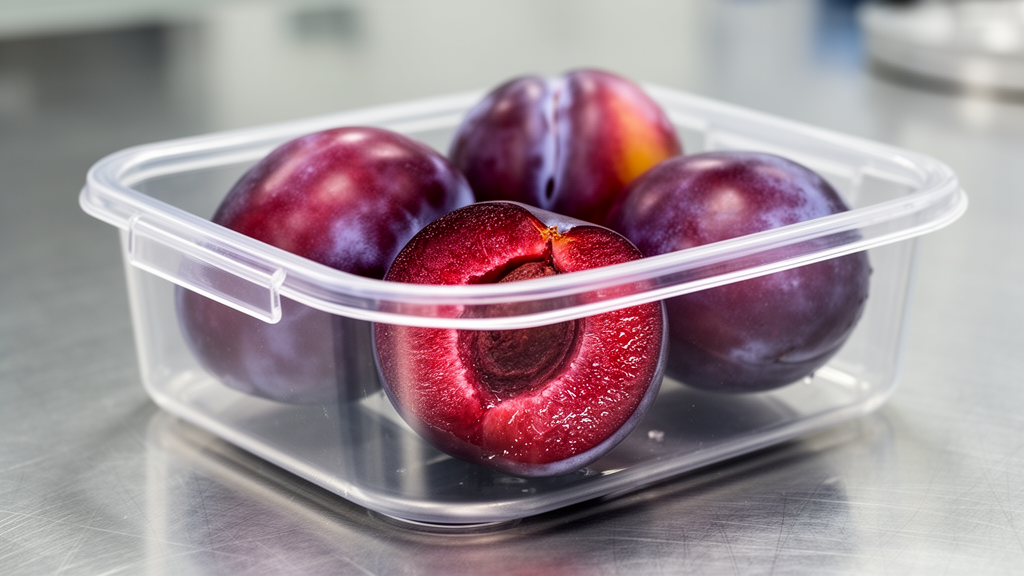
The experimental trial was conducted on commercially mature ‘Weidi’ plumcots harvested from the Aksu region in Xinjiang, China, with an initial soluble solids content of at least 19.50 percent. Following harvest, fruit free from mechanical injuries or pathological defects were transported under refrigeration at 4 degrees Celsius to the laboratory within 20 hours. A rigorous experimental design comprising three independent biological replicates utilized a total of 1800 uniform plumcots distributed across 300 custom-made rigid boxes. For each biological replicate, 600 fruit were partitioned equally into an untreated ambient-pressure control group and an integrated treatment group designated as NO+HYP. The NO+HYP cohort underwent hypobaric-assisted nitric oxide fumigation in a vacuum chamber evacuated to 8000 Pascals and exposed to 20 microliters per liter of nitric oxide gas for one hour. Following pretreatment, fruit were sealed in unmodified rigid plastic containers with external dimensions of 16 by 16 by 6.5 centimeters and a manufacturer-specified capacity of 1.6 liters. Each package accommodated six fruit with a mean combined mass of 498 grams, yielding an estimated headspace volume of approximately 1.1 liters and an initial internal pressure reduced to 50 kilopascals, while control specimens were packaged in identical containers under ambient atmospheric pressure.
Packaged fruit from both experimental cohorts were transferred to dark cold storage maintained at 1 plus or minus 1 degree Celsius for 36 days. At six-day intervals spanning from harvest day zero through day 36, researchers conducted destructive sampling of six packages per treatment within each biological replicate, totaling 18 packages and 108 fruit per sampling date across the entire study. Each container was assigned to a single time point and was neither resealed nor returned to storage after opening, ensuring that physical atmosphere disruption did not confound downstream measurements. Puncture measurements using a dedicated vacuum meter revealed that internal package pressure in the NO+HYP containers rose steadily from 50 kilopascals to approximately 76 kilopascals over the 36-day evaluation window, reflecting an average pressure drift of approximately 0.7 kilopascals per day. Tissue samples intended for biochemical and molecular assays were immediately snap-frozen in liquid nitrogen and stored at minus 80 degrees Celsius. Visual flesh color degradation was evaluated non-blinded on longitudinal fruit halves using a standardized six-level flesh discoloration index scoring the proportion of discolored exposed flesh.
Statistical evaluation via two-way analysis of variance across post-treatment storage dates revealed significant treatment-by-time interactions for flesh discoloration and total anthocyanin content. In both groups, flesh color fading progressed as storage duration lengthened, but the deterioration was substantially suppressed in plumcots subjected to the integrated NO+HYP regimen. Šidák-adjusted simple-effects comparisons demonstrated that the NO+HYP treatment maintained significantly higher total anthocyanin concentrations and lower discoloration scores from day 12 through day 36. Concurrently, total anthocyanin pigment content measured spectrophotometrically was 16.70 percent higher in treated plumcots at day 12, demonstrating that the combined physical and chemical intervention established early protection over pigment pools before severe storage-induced senescence could manifest.
To obtain detailed qualitative and quantitative insight into pigment dynamics, peeled flesh samples collected at harvest, day 18, and day 36 were subjected to targeted liquid chromatography-tandem mass spectrometry profiling using a SCIEX QTRAP 6500+ instrument. The initial analytical panel reported 39 multiple reaction monitoring target records, but four analyte pairs possessed identical or near-coincident transitions and retention times that prevented independent chromatographic integration. Consequently, eight unresolved records were set aside, leaving 31 rigorously retained features for independent metabolomic analysis. Because single unit-resolution transitions were monitored without qualifier transitions or sample-standard co-elution verifications, identifications remained tentative and relative abundances were reported instead of absolute tissue concentrations. Among the most prominent retained features, signals designated Anthocyanidin_11, Anthocyanidin_12, and Anthocyanidin_15 exhibited dramatic preservation under the combined treatment. Following Benjamini-Hochberg adjustment, 18 distinct features were significantly elevated in NO+HYP fruit at day 18.
The sustained retention of anthocyanins was directly underpinned by the coordinated upregulation of key biosynthetic enzymes throughout the upstream phenylpropanoid pathway and its downstream flavonoid branches. The two-way analysis of variance demonstrated significant treatment-by-time interactions for phenylalanine ammonia-lyase, cinnamate 4-hydroxylase, 4-coumarate CoA ligase, and chalcone isomerase, while dihydroflavonol 4-reductase and UDP-glucose flavonoid 3-O-glucosyltransferase exhibited highly significant treatment main effects across the storage period. By day 36, measured activities of phenylalanine ammonia-lyase, cinnamate 4-hydroxylase, 4-coumarate CoA ligase, and chalcone isomerase in NO+HYP fruit exceeded those in control fruit by 43.33 percent, 21.62 percent, 25.85 percent, and 16.41 percent, respectively. Dihydroflavonol 4-reductase and UDP-glucose flavonoid 3-O-glucosyltransferase exhibited mean activity increases of 17.42 percent and 13.72 percent.
Simultaneously, the integrated preservation treatment markedly repressed the catalytic capacity of primary anthocyanin-degrading enzymes whose unchecked activity accelerates postharvest fading. Significant treatment-by-time interactions occurred for polyphenol oxidase, beta-glucosidase, and anthocyanidin reductase over the cold storage timeframe. At the conclusion of the 36-day trial, the activities of beta-glucosidase, anthocyanidin reductase, and polyphenol oxidase were 29.58 percent, 13.79 percent, and 19.35 percent lower in NO+HYP-treated plumcots compared to ambient control counterparts.
In addition to regulating targeted pigment enzymes, the NO+HYP system substantially reinforced the physiological antioxidant defense apparatus, protecting vulnerable pigment chromophores from non-enzymatic oxidative attack. Fruit senescence is fundamentally governed by oxidative stress driven by the uncontrolled accumulation of reactive oxygen species, including superoxide anions and hydrogen peroxide. Statistical testing established significant treatment-by-time interactions for catalase, superoxide dismutase, ascorbate peroxidase, glutathione reductase, and peroxidase, as well as for the non-enzymatic antioxidants ascorbic acid and reduced glutathione. By day 36, enzyme activities in NO+HYP tissues were significantly elevated over controls, with catalase increasing by 24.06 percent, superoxide dismutase by 18.72 percent, peroxidase by 18.94 percent, ascorbate peroxidase by 8.57 percent, and glutathione reductase by 5.74 percent. Although ascorbic acid and glutathione levels declined throughout cold storage across all fruit, the rate of depletion was heavily mitigated by the intervention, leaving ascorbic acid 18.34 percent higher and reduced glutathione 28.00 percent higher at day 36.
Hydrogen peroxide levels exhibited a significant treatment-by-time interaction and were maintained at significantly lower concentrations in NO+HYP fruit from day 24 through day 36, concluding the storage period 24.24 percent below control levels. Superoxide anion accumulation showed a significant overall treatment main effect, remaining consistently depressed across the 6-to-36-day interval and recording a descriptive reduction of 10.71 percent at day 36. Malondialdehyde content, a critical biochemical marker of membrane lipid damage, was 35.48 percent lower in treated fruit at day 36, while electrolyte leakage was reduced by 17.36 percent, with both physiological parameters displaying statistically significant reductions from day 18 onward.
The structural stabilization conferred by the NO+HYP treatment extended to the supramolecular architecture of the plumcot cell wall, counteracting tissue softening and mechanical breakdown. Throughout cold storage, activities of major pectin-degrading and cellulolytic enzymes—pectin methyl esterase, polygalacturonase, pectin lyase, and cellulase—displayed significant treatment-by-time interactions. In control specimens, pectin methyl esterase and polygalacturonase activities peaked sharply at day 24, at which point their activities were 51 percent and 23 percent higher, respectively, than those recorded in NO+HYP-treated fruit. Pectin lyase activity was 14.67 percent higher in control tissues at day 12, while cellulase activity at day 36 was 12.17 percent lower in the treated cohort. Consequently, the breakdown of high-molecular-weight structural polysaccharides was substantially delayed. Levels of protopectin, cellulose, and hemicellulose remained consistently higher in treated fruit at day 36, whereas the accumulation of water-soluble pectin was significantly suppressed from day 12 through the end of storage.
Supplementary assessments of broader fruit quality parameters, including flesh firmness, total soluble solids, titratable acidity, overall weight loss, decay incidence, and ethylene production rates, demonstrated no deleterious treatment-related alterations over the 36-day cold storage regimen. However, the authors emphasized several fundamental physiological and technical limitations inherent to the study design. Because the experimental framework focused on evaluating the unified NO+HYP prototype against an ambient control without testing isolated nitric oxide fumigation or standalone hypobaric packaging under identical storage conditions, the data cannot separate the individual contributions of each technology nor substantiate claims of synergistic interaction. Furthermore, internal package atmosphere dynamics were not tracked: package oxygen and carbon dioxide partial pressures were unmeasured, and fruit respiration rates and ethylene signaling pathways were not directly characterized. The steady increase in packaging pressure from 50 to 76 kilopascals underscores the need for improved hermetic sealing or active pressure regulation in commercial iterations. Finally, because anaerobic fermentation metabolites such as ethanol and acetaldehyde were not quantified and formal sensory evaluations were omitted, the physiological safety margins and organoleptic acceptability of the system require dedicated verification before commercial adoption.
Subject of Research: Postharvest preservation of red-fleshed plumcots using combined nitric oxide fumigation and rigid hypobaric packaging
Article Title: An integrated system combining nitric oxide pretreatment and hypobaric packaging stabilizes anthocyanins in red-fleshed plumcots: Evidence from targeted LC–MS/MS and biochemical profiling
Article References: Zhang, Y., Liang, J., Xing, Y., Wang, N., Yuan, Y., & Wu, B. (2026). An integrated system combining nitric oxide pretreatment and hypobaric packaging stabilizes anthocyanins in red-fleshed plumcots: Evidence from targeted LC–MS/MS and biochemical profiling. Food Chemistry: X, 40, Article 104692. https://doi.org/10.1016/j.fochx.2026.104692
Image Credits: AI Generated
DOI: 10.1016/j.fochx.2026.104692
Keywords: plumcots, Prunus simonii, nitric oxide, hypobaric packaging, anthocyanins, postharvest storage, flesh discoloration, cold chain, phenylpropanoid pathway, polyphenol oxidase, reactive oxygen species, antioxidant enzymes, cell wall metabolism, targeted metabolomics, mass spectrometry, lipid peroxidation, electrolyte leakage
News Source: Bethany Barker. (November 15, 2026). Nitric Oxide and Hypobaric Packaging Stabilize Anthocyanins in Stored Plumcots. Scienmag.