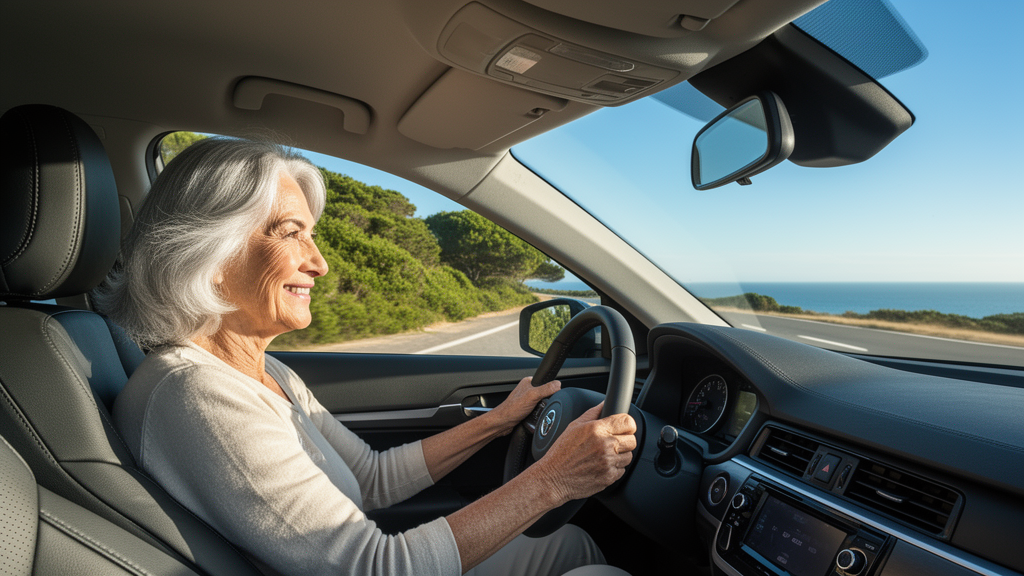
Community-dwelling adults aged 60 years or older who demonstrate better physical performance are significantly more likely to be current drivers, according to a cross-sectional study published in Aging Clinical and Experimental Research. Investigating the multidimensional factors that accompany mobility in aging populations, the researchers evaluated how physical capabilities, demographic characteristics, and psychosocial factors associate with driving status. The study found that higher physical performance scores were independently associated with current driving among community-dwelling older adults.
The authors observed that driving in later life reflects an interplay of physical, psychological, and social resources. At the same time, the researchers emphasized that current driving status is substantially influenced by access and life-course opportunities. With these considerations in mind, the primary aim of the study was to formally examine the association of physical performance alongside other clinical and psychosocial factors with current driving status among community-dwelling older adults.
Methodologically, the cross-sectional analysis evaluated de-identified data drawn from a regional sarcopenia screening programme focused on community-dwelling adults aged 60 years or older. Across the cohort evaluated by the research team, driving status was definitively known for 605 participants. Among these 605 individuals with known driving status, 186 participants, or 30.7 percent of the cohort, were identified as current drivers, providing the baseline empirical foundation for subsequent statistical modeling.
To analyze the independent relationships among the variables, the investigators developed a primary complete-case multivariable logistic regression model. This complete-case analysis included 448 participants, of whom 152 were current drivers. The primary regression model incorporated participant sex, age, Short Physical Performance Battery score, educational attainment, depressive symptoms, and smoking status. In addition to the primary model estimation, the authors conducted internal validation procedures and sensitivity analyses to verify their analytical findings.
The statistical results demonstrated that physical capability was positively associated with maintaining driver status. Specifically, higher Short Physical Performance Battery scores were associated with current driving, yielding an odds ratio of 1.64 per standard deviation increase, with a 95 percent confidence interval ranging from 1.23 to 2.18. This finding confirms that older individuals displaying higher physical performance on standardized assessments were more likely to report being active drivers.
Demographic factors also showed notable associations within the complete-case model. Male sex was strongly associated with current driving status, recording an odds ratio of 8.62 with a 95 percent confidence interval of 5.11 to 14.53. In addition, younger age was associated with current driving, showing an odds ratio of 0.68 per standard deviation, with a 95 percent confidence interval of 0.51 to 0.90 within the analyzed cohort.
Educational background emerged as another strong factor associated with current driving in the multivariable analysis. Compared to the reference educational category, participants with secondary education exhibited an odds ratio of 2.89, with a 95 percent confidence interval of 1.38 to 6.07. Those with tertiary education demonstrated an odds ratio of 5.65, with a 95 percent confidence interval of 2.51 to 12.72. The complete-case model achieved an optimism-corrected c-statistic of 0.814.
In their discussion, the researchers highlighted that an exploratory sex interaction supported a stronger association between physical performance and current driving in men. However, the authors noted that historical differences in access to driving were not directly measured in the study. Ultimately, the authors concluded that while current driving status may serve as a useful contextual indicator during geriatric assessment, it is neither a measure of driving cessation nor evidence of fitness to drive.
Subject of Research: Association of physical performance with current driving status in community-dwelling older adults
Article Title: Physical performance and current driving status in community-dwelling older adults: a cross-sectional Study
Article References: Matijević, R., Rasović, P., Dulić, O., Obradović, M., Vranješ, M., Bjelobrk, M., & Seleši, D. (2026). Physical performance and current driving status in community-dwelling older adults: a cross-sectional Study. Aging Clinical and Experimental Research. https://doi.org/10.1007/s40520-026-03568-0
Image Credits: AI Generated
DOI: 10.1007/s40520-026-03568-0
Keywords: physical performance, current driving status, older adults, community-dwelling adults, Short Physical Performance Battery, SPPB score, sarcopenia screening, geriatric assessment, logistic regression, cross-sectional study, depressive symptoms, educational attainment, c-statistic, internal validation, sensitivity analysis, driving cessation, fitness to drive
News Source: Ophelia Keating. (November 15, 2026). Higher Physical Performance Is Associated With Current Driving in Older Adults. Scienmag.