• HOME
  • NEWS
  • EXPLORE
    • CAREER
      • Companies
      • Jobs
    • EVENTS
    • iGEM
      • News
      • Team
    • PHOTOS
    • VIDEO
    • WIKI
  • BLOG
  • COMMUNITY
    • FACEBOOK
    • INSTAGRAM
    • TWITTER
Sunday, November 15, 2026
BIOENGINEER.ORG
No Result
View All Result
  • Login
  • HOME
  • NEWS
  • EXPLORE
    • CAREER
      • Companies
      • Jobs
        • Lecturer
        • PhD Studentship
        • Postdoc
        • Research Assistant
    • EVENTS
    • iGEM
      • News
      • Team
    • PHOTOS
    • VIDEO
    • WIKI
  • BLOG
  • COMMUNITY
    • FACEBOOK
    • INSTAGRAM
    • TWITTER
No Result
View All Result
Bioengineer.org
No Result
View All Result
Home NEWS Science News Health

Retinal Break Features Show No Significant Link to Redetachment After Vitrectomy

by
November 15, 2026
in Health
Reading Time: 2 mins read
0
Retinal Break Features Show No Significant Link to Redetachment After Vitrectomy

Retinal Break Features Show No Significant Link to Redetachment After Vitrectomy

Share on FacebookShare on TwitterShare on LinkedinShare on RedditShare on Telegram

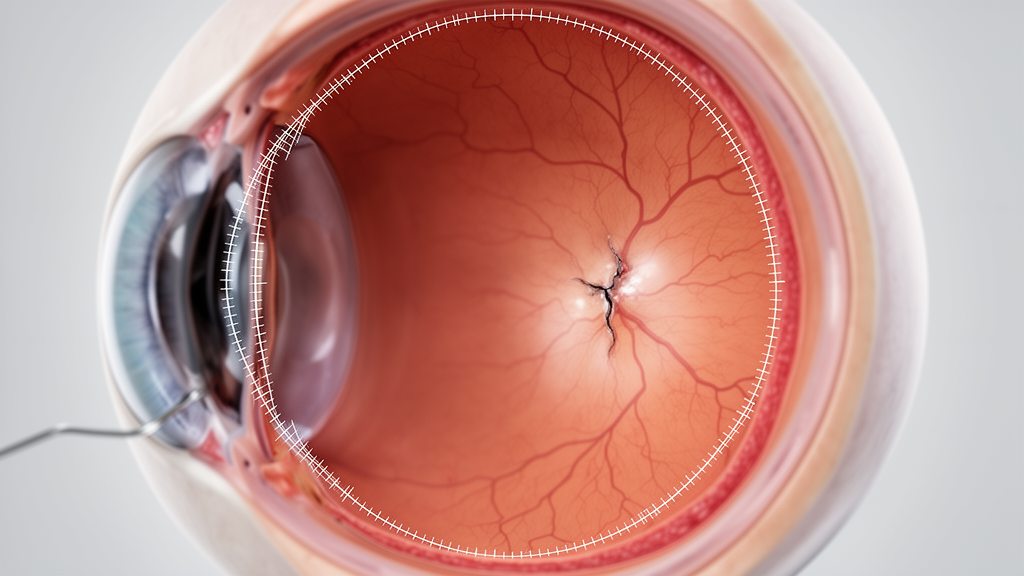
In a retrospective cohort study evaluating outcomes after pars plana vitrectomy for primary rhegmatogenous retinal detachment, researchers found that specific retinal break characteristics were not significantly associated with long-term anatomical failure or postoperative visual acuity. The investigation assessed whether anatomical and functional prognoses were influenced by the number of retinal breaks, their quadrant distribution, or the presence of inferior breaks.

The study cohort comprised 133 eyes from 133 patients, including 49 women and 84 men, who underwent primary vitrectomy at a single medical center between January 2013 and December 2024. All included individuals were monitored for a minimum follow-up duration of 12 months, with an overall mean follow-up period of 36.9 ± 12.5 months and an observed range spanning from 13 to 63 months.

To evaluate uncomplicated cases of primary rhegmatogenous retinal detachment, the investigators established explicit selection criteria. Patients were excluded from the analysis if they presented with complicated retinal detachment, mixed-type detachment, recurrent detachment, or advanced proliferative vitreoretinopathy classified as grade C or higher, as well as those with less than 12 months of postoperative observation.

Clinical records documented the total count of retinal breaks, their distribution across retinal quadrants, and whether breaks were located in the inferior retina. The research team evaluated the time to redetachment utilizing Kaplan–Meier survival analysis alongside multivariable Cox proportional hazards regression models.

Across the cohort, the single-surgery anatomical success rate reached 92.5% at 12 months and 79.7% over the extended follow-up window. In multivariable Cox proportional hazards regression, the presence of an inferior break was not significantly associated with redetachment, yielding an adjusted hazard ratio of 1.522 with a 95% confidence interval of 0.687 to 3.369 (p = 0.300). Furthermore, neither the quadrant distribution nor the total number of breaks showed a statistically significant association with long-term single-surgery anatomical success (p > 0.05 for all comparisons).

Regarding visual function, baseline best-corrected visual acuity emerged as the sole independent predictor of 12-month visual acuity (B = 0.286; 95% CI, 0.121–0.451; p = 0.001), while retinal break characteristics were not significantly associated with 12-month vision. Postoperative visual outcomes at 12 months also did not differ significantly between patients treated with gas versus silicone oil tamponade (p = 0.430). The authors concluded that because the cohort featured a limited number of redetachment events resulting in wide confidence intervals, these findings require cautious interpretation.

Subject of Research: Prognostic significance of retinal break characteristics following primary vitrectomy for rhegmatogenous retinal detachment

Article Title: Retinal break characteristics and time to redetachment after primary vitrectomy for uncomplicated rhegmatogenous retinal detachment: a retrospective cohort study

Article References: Onur, I. U., Furuncuoglu, U., Altay, L., Demirayak, B., Topuz, H. N., & Vural, A. (2026). Retinal break characteristics and time to redetachment after primary vitrectomy for uncomplicated rhegmatogenous retinal detachment: a retrospective cohort study. BMC Ophthalmology. https://doi.org/10.1186/s12886-026-05524-y

Image Credits: AI Generated

DOI: 10.1186/s12886-026-05524-y

Keywords: rhegmatogenous retinal detachment, pars plana vitrectomy, retinal break characteristics, inferior retinal breaks, break quadrant distribution, redetachment, anatomical success, best-corrected visual acuity, silicone oil tamponade, gas tamponade, Kaplan–Meier survival analysis, multivariable Cox regression, proliferative vitreoretinopathy, retrospective cohort study, ophthalmology, postoperative outcomes

News Source: Ophelia Keating. (November 15, 2026). Retinal Break Features Show No Significant Link to Redetachment After Vitrectomy. Scienmag.

Tags: anatomical successbest-corrected visual acuitybreak quadrant distributiongas tamponadeinferior retinal breaksKaplan-Meier survival analysismultivariable Cox regressionOphthalmologypars plana vitrectomypostoperative outcomesproliferative vitreoretinopathyredetachmentretinal break characteristicsretrospective cohort studyrhegmatogenous retinal detachmentsilicone oil tamponade
Share12Tweet7Share2ShareShareShare1

Related Posts

Case Report Examines Kleptomanic Behavior During Nortriptyline Treatment in Frontotemporal Dementia

Case Report Examines Kleptomanic Behavior During Nortriptyline Treatment in Frontotemporal Dementia

November 15, 2026
Lipid Nanoparticles Face Biological and Translational Hurdles in Tuberculosis Drug Delivery

Lipid Nanoparticles Face Biological and Translational Hurdles in Tuberculosis Drug Delivery

November 15, 2026

Dupilumab Reverses Severe Multi-Organ Disease in Rare STAT6 Mutation Case

November 15, 2026

Antifungal Combinations Not Associated With Significantly Different Outcomes in Hematological Malignancies

November 15, 2026

POPULAR NEWS

  • Recyclable Polymer Complexes Reversibly Assemble and Dissociate Driven by Carbon Dioxide

    Recyclable Polymer Complexes Reversibly Assemble and Dissociate Driven by Carbon Dioxide

    29 shares
    Share 12 Tweet 7
  • Pheniramine Maleate Induces Photosystem Dysfunction and Growth Inhibition in Aquatic Ferns

    29 shares
    Share 12 Tweet 7
  • Compact Candidate 23-SNP Panel Differentiates Capsicum annuum Germplasm in Computational Study

    29 shares
    Share 12 Tweet 7
  • Dupilumab Reverses Severe Multi-Organ Disease in Rare STAT6 Mutation Case

    29 shares
    Share 12 Tweet 7

About

We bring you the latest biotechnology news from best research centers and universities around the world. Check our website.

Follow us

Recent News

Case Report Examines Kleptomanic Behavior During Nortriptyline Treatment in Frontotemporal Dementia

Jigjiga Camels Outproduce Borana Ecotype in Ethiopian Daily Milk Yield Study

Lipid Nanoparticles Face Biological and Translational Hurdles in Tuberculosis Drug Delivery

Subscribe to Blog via Email

Enter your email address to subscribe to this blog and receive notifications of new posts by email.

Join 87 other subscribers
  • Contact Us

Bioengineer.org © Copyright 2023 All Rights Reserved.

Welcome Back!

Login to your account below

Forgotten Password?

Retrieve your password

Please enter your username or email address to reset your password.

Log In
No Result
View All Result
  • Homepages
    • Home Page 1
    • Home Page 2
  • News
  • National
  • Business
  • Health
  • Lifestyle
  • Science

Bioengineer.org © Copyright 2023 All Rights Reserved.