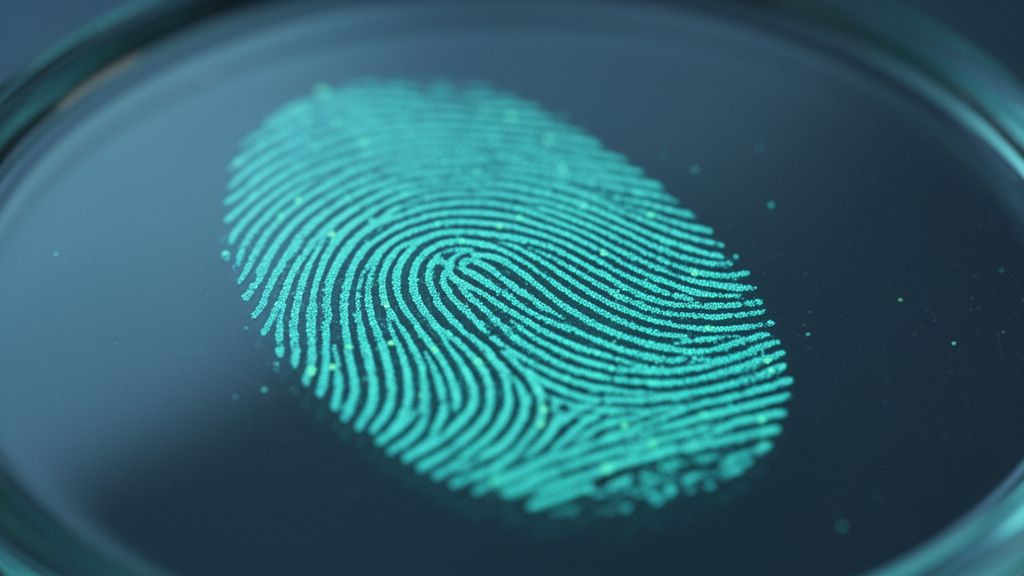
Researchers at Universitas Syiah Kuala in Indonesia have developed a method for visualizing latent fingerprints using blue-emissive carbon quantum dots derived from Piper betle leaves. Published in Results in Optics, the study demonstrates that these bio-based nanomaterials can reveal detailed ridge patterns on non-porous and semi-porous surfaces within seconds. The approach offers a potential alternative to traditional forensic visualization agents, which often rely on synthetic chemical precursors or toxic dyes that pose environmental and health risks.
Latent fingerprints are invisible traces left on surfaces such as glass, metal, or plastic, requiring specific techniques to become visible. Conventional methods include powder dusting, chemical fuming, and the application of fluorescent organic dyes like rhodamine 6G or fluorescein. While these organic fluorophores provide enhanced signal contrast, their forensic utility is frequently limited by high chemical toxicity, susceptibility to photobleaching, and poor selectivity for complex fingerprint residues. To address these limitations, recent material advancements have shifted toward fluorescent nanomaterials, particularly carbon quantum dots, which exhibit high quantum yields, superior photostability, and tunable surface chemistry.
The novelty of the current work lies in utilizing the natural phytochemical profile of Piper betle leaves as a precursor for synthesizing dopant-free carbon quantum dots. The leaves, collected from Aceh Besar, Indonesia, are rich in secondary metabolites including flavonoids, phenols, saponins, tannins, steroids, and triterpenoids. These compounds serve as an excellent carbon source and provide intrinsic functional groups that facilitate the formation of the nanomaterials. By employing a simple hydrothermal technique with minimal chemical involvement, the team aimed to create an eco-friendly, non-toxic alternative that aligns with the principles of green chemistry.
The synthesis process began with the extraction of betel leaves using 96% ethanol. The dried leaves were ground into a fine powder and macerated in the solvent for 48 hours at ambient temperature. After filtration and concentration, the ethanolic extract was dissolved in deionized water to prepare a precursor solution. This solution was subjected to hydrothermal treatment at 473.15 K for five hours in a Teflon-lined stainless steel autoclave. The high temperature and pressure enabled the carbonization of organic molecules, resulting in a yellowish-brown dispersion that exhibited vibrant blue fluorescence under ultraviolet light.
Characterization of the synthesized carbon quantum dots revealed a uniform distribution of spherical nanoparticles. Transmission electron microscopy showed particle sizes ranging from 4 to 22 nanometers, with a mean diameter of 13.2 nanometers. High-resolution imaging identified lattice fringes with a d-spacing of 0.21 nanometers, indicating the presence of graphitic carbon domains. This graphitic structure is crucial for the electronic and optical properties of the dots, contributing to their fluorescence efficiency and conductivity. Fourier-transform infrared spectroscopy confirmed the retention of essential functional groups such as hydroxyl, amine, and carbonyl groups, which are vital for solubility and interaction with fingerprint residues.
Optical analysis demonstrated that the carbon quantum dots absorb ultraviolet light at 280 nanometers and emit visible light at 455 nanometers. The material exhibited a quantum yield of 25.06%, a value that is competitive with other biomass-derived carbon quantum dots and significantly higher than those derived from precursors like lemon juice or oyster shells. This high quantum yield suggests that the Piper betle leaves contain favorable carbon structures and functional groups that enhance fluorescence during hydrothermal synthesis. The optical band gap was estimated at 4.9 electron volts, consistent with typical values reported for carbon quantum dots derived from various sources.
Photostability tests indicated that the material maintains its fluorescence intensity under continuous ultraviolet exposure. Over a 16-day period of irradiation at 365 nanometers, the normalized fluorescence intensity remained nearly unchanged during the first two days. A slight decline occurred between days four and ten, dropping to approximately 0.88, before stabilizing at over 85% of its original brightness. This robust photostability is attributed to stable conjugated domains and protective surface passivation layers that suppress photooxidative degradation. Time-resolved photoluminescence analysis yielded an average fluorescence lifetime of 3.71 nanoseconds, indicating efficient radiative recombination in the core domains and surface states.
In forensic applications, the carbon quantum dots were applied to fingerprints deposited on glass, mica plastic, and glossy paper. The visualization process was rapid, with latent fingerprints developing in seconds under ambient temperature. This is a significant improvement over previous methods using red-emissive carbon quantum dots from p-phenylenediamine, which required 30 minutes for development. Under ultraviolet light, the dots illuminated ridge patterns and minutiae with high precision, enhancing features such as sweat pores, bifurcations, ridge terminations, and scars. The strong interaction between the dots and fingerprint residues, particularly lipid and sweat components, ensured uniform deposition and high-contrast imaging.
The study evaluated the performance of the developer across three different substrates. On non-porous surfaces like glass and smooth mica plastic, the developer adhered seamlessly to sebaceous residues, producing sharp ridge lines with minimal background autofluorescence. On the semi-porous glossy paper, the developer achieved similarly high contrast, clearly resolving level-one ridge flow and level-two minutiae. The consistent visualization quality across these diverse materials highlights the broad applicability of the probe in forensic scenarios. The ability to distinguish individual fingerprints based on ridge morphology and sweat pore patterns supports the potential for advanced forensic identification.
The use of natural precursors reduces reliance on toxic chemicals and expensive synthetic materials, contributing to environmental sustainability. The hydrothermal synthesis process is cost-effective and relatively short, making it suitable for scalable production. The resulting carbon quantum dots are biocompatible and exhibit low background interference, which are desirable traits for forensic applications. By leveraging the superior optical properties of carbon-based nanomaterials, this approach offers a safer and more sustainable option for latent fingerprint detection.
Despite the promising results, the study notes that the particle size distribution is polydisperse, which may influence the collective optical properties. The effectiveness of the visualization can vary depending on the surface texture and the specific characteristics of the individual depositing the fingerprint, such as skin oil content and moisture levels. Further research is needed to optimize the quantum yield and photostability through surface passivation or heteroatom doping. Integrating these optimized materials into portable scanners or automated analytical platforms could accelerate forensic examinations and improve safety.
This work represents a step toward greener forensic technologies by utilizing agricultural waste as a source for high-performance nanomaterials. The successful synthesis and application of Piper betle-derived carbon quantum dots demonstrate that natural resources can be effectively transformed into tools for scientific analysis. The method provides a rapid, non-toxic, and high-resolution means of visualizing latent fingerprints, addressing the limitations of traditional chemical agents. As forensic science continues to evolve, the integration of eco-friendly nanomaterials offers a viable path for enhancing both the efficiency and sustainability of evidence recovery.
X-ray photoelectron spectroscopy provided detailed insight into the elemental composition and surface bonding of the carbon quantum dots. The survey spectrum confirmed the presence of carbon, oxygen, and nitrogen, reflecting an organic framework enriched with heteroatom surface groups. High-resolution deconvolution of the carbon 1s core level identified four chemical states: sp2 and sp3 carbon-carbon bonds at 284.6 electron volts, carbon-oxygen or carbon-nitrogen bonds at 285.8 electron volts, carbonyl carbons at 287.0 electron volts, and carboxyl or ester groups at 288.8 electron volts. Fitting of the oxygen 1s spectrum resolved carbonyl bonds at 531.5 electron volts alongside hydroxyl, ether, or epoxy bonds at 533.0 electron volts. Analysis of the nitrogen 1s spectrum detected pyridinic nitrogen at 398.5 electron volts and pyrrolic nitrogen at 400.1 electron volts, confirming that nitrogen atoms from betel leaf phytochemicals were directly incorporated into the quantum dot structure.
Beyond irradiation tests, the optical stability of the nanomaterial was systematically assessed across an aqueous pH range spanning from 2 to 11. Spectroscopic monitoring revealed that the dots exhibited heightened optical stability in acidic conditions between pH 2 and pH 6, where protonation of surface functional groups preserves resistance against structural degradation. Photoluminescence decay kinetics evaluated through a bi-exponential model further explained the emission mechanism. The fitted decay profile demonstrated two discrete relaxation channels: a rapid decay component of 2.01 nanoseconds accounting for an amplitude of 34.4 percent, and a slower decay component of 4.14 nanoseconds accounting for 65.6 percent, with a goodness-of-fit value of 1.14. These dual pathways indicate that ultrafast energy transitions within the core domains are stabilized by passivated surface states.
The practical forensic procedure involved controlled sample collection and a tape-lifting protocol before visualization. Fingerprints from volunteer participants were transferred onto transparent adhesive tape, treated with the dot solution using a dropper, air-dried, and documented under ultraviolet illumination using a 50-megapixel smartphone camera equipped with a super macro feature. Testing across distinct donors revealed observable differences in fingerprint impression clarity; for instance, two individual donors produced notably more prominent ridge patterns across glass and plastic substrates, reflecting natural biological variations in skin hydration and lipid excretion. Glass consistently yielded crisper ridge patterns than plastic surfaces, which exhibited more faded residue transfer. All participant samples were gathered with voluntary written informed consent under ethical clearance granted by the Research Ethics Committee at Universitas Syiah Kuala under approval number 113/ETIK-FKIP/USK/2025.
Subject of Research: Synthesis and forensic application of bio-based carbon quantum dots for latent fingerprint visualization
Article Title: Blue emissive carbon quantum dots from Piper betle leaves for fluorescent detection of latent fingerprints
Article References: Nazar, M., Syahrial, S., Hasan, M., Adlim, M., Puspita, K., Alsa, R. F., Gani, B. A., & Akbar, S. A. (2026). Blue emissive carbon quantum dots from Piper betle leaves for fluorescent detection of latent fingerprints. Results in Optics, 25, Article 101210. https://doi.org/10.1016/j.rio.2026.101210
Image Credits: AI Generated
DOI: 10.1016/j.rio.2026.101210
Keywords: carbon quantum dots, Piper betle, latent fingerprints, forensic science, hydrothermal synthesis, fluorescence, bio-based nanomaterials, green chemistry, photostability, quantum yield, fingerprint visualization, non-porous surfaces, semi-porous surfaces, ultraviolet light, forensic identification, sustainable materials, nanotechnology, optical properties, ethanol extraction, surface functionalization
News Source: Katie Riggs. (November 15, 2026). Betel leaf quantum dots enable rapid fingerprint detection. Scienmag.