A retrospective, session-level cohort investigation conducted at the Second Affiliated Hospital of Chongqing Medical University has found that inadvertent intraoperative hypothermia is significantly associated with an elevated risk of postoperative complications within 30 days after percutaneous transhepatic cholangioscopic lithotripsy. Published in Frontiers in Medicine, the study evaluated 588 procedural sessions conducted across 330 patients between January 2016 and December 2025. The researchers observed that patients experiencing core body temperatures falling below 36.0 degrees Celsius during lithotripsy sustained a 66.7 percent crude rate of postoperative adverse events, compared to 51.1 percent among sessions where normothermia was maintained. After multivariable adjustment for prespecified patient clinical characteristics and laboratory baselines ascertainable prior to the procedure, intraoperative hypothermia remained linked to a 33.5 percent relative increase in complication risk. These observational findings indicate that unintended intraoperative cooling serves as an informative, potentially modifiable perioperative risk marker during complex endoscopic biliary interventions.
Hepatolithiasis, characterized by the formation and presence of calculus deposits within the intrahepatic bile ducts, presents a persistent clinical challenge across East Asia, where it frequently precipitates recurrent bouts of acute cholangitis, progressive hepatic parenchymal destruction, stricture formation, and an elevated long-term hazard of intrahepatic cholangiocarcinoma. Percutaneous transhepatic cholangioscopic lithotripsy has emerged as an essential minimally invasive therapeutic modality for complicated or recurrent disease presentations, granting clinicians direct visualization of the arborizing biliary tree to guide targeted stone fragmentation and extraction when retrograde endoscopic techniques are anatomically unfeasible or ineffective. Because each separate lithotripsy session exposes the patient to varying operative durations, tract manipulations, and physiological stresses, complication vulnerabilities can differ substantially across successive treatments even within the exact same individual.
Previous investigations into postoperative morbidity following percutaneous transhepatic cholangioscopic lithotripsy have predominantly focused on defining risk models for specific systemic inflammatory or infectious sequelae, such as systemic inflammatory response syndrome, postoperative acute cholangitis, and frank biliary sepsis. While earlier work confirmed that tract dilation, prolonged intraductal manipulations, and initial procedural sessions correlate with acute adverse events, the potential prognostic relevance of inadvertent intraoperative thermal shifts remained unexplored within this surgical population. Inadvertent intraoperative hypothermia, defined clinically as a core body temperature dropping below 36.0 degrees Celsius, represents a pervasive consequence of general anesthesia. Anesthetic agents impair endogenous central thermoregulatory reflexes, lower the threshold for vasoconstrictive defenses, and trigger an internal redistribution of thermal energy from core compartments toward cooler peripheral musculature and cutaneous tissues. In lithotripsy procedures, this thermal vulnerability is further compounded by continuous intraductal saline irrigation and prolonged operative manipulation.
To rigorously quantify this clinical relationship, the Chongqing surgical research team established an analytical design utilizing individual surgical sessions as the fundamental unit of analysis. Between January 2016 and December 2025, 620 candidate sessions were evaluated, from which 32 were excluded due to the presence of active malignancies, malignant biliary tree obstructions, uncontrolled baseline preoperative systemic sepsis or septic shock, active hepatic abscesses, severe non-biliary infections, or necessary emergency conversions to open surgical intervention. The resulting cohort encompassed 588 complete lithotripsy sessions among 330 unique individuals. Demonstrating the recurring therapeutic pathway inherent to advanced hepatolithiasis management, 124 patients underwent a single procedure, 162 patients underwent two sessions, 38 patients underwent three sessions, and six patients required four or more distinct sessions. Importantly, institutional scheduling ensured that all subsequent sessions took place well beyond 30 days after the preceding intervention, preventing the predefined 30-day postoperative outcome monitoring windows from overlapping.
All surgical procedures were executed under general anesthesia in dedicated operative suites according to standardized institutional clinical pathways, performed by a single hepatobiliary specialist possessing more than a decade of specialized lithotripsy experience. Interventions followed either a single-step approach, dilating an acute tract from 8 French to 18 French immediately before introducing a rigid or electronic cholangioscope, or a staged two-step approach, wherein initial percutaneous transhepatic drainage catheters matured for over two weeks prior to dilation and instrumentation. Intraductal stones were extracted via retrieval baskets or fragmented utilizing holmium laser lithotripsy under continuous pressurized biliary irrigation with prewarmed saline suspended approximately two meters above the operative table. Concurrently, standard perioperative thermal support, including warming blankets and intravenous fluid-warming apparatuses, was deployed routinely across all cases. Core body temperatures were captured at continuous five-minute intervals throughout anesthesia via dedicated nasopharyngeal probes, strictly excluding pre-induction and postanesthesia recovery unit readings.
The study protocol prospectively designated the primary outcome as the occurrence of any adverse postoperative complication within 30 days of the index session, graded according to the standard Clavien-Dindo classification criteria as any deviation from an uncomplicated postoperative course. Two clinical adjudicators, systematically blinded to all recorded intraoperative temperature values, independently reviewed inpatient charts, outpatient visit logs, readmission documents, and follow-up records to register newly emerging or objectively deteriorating clinical conditions. Statistical modeling utilized modified Poisson generalized estimating equations featuring a logarithmic link function, an exchangeable working correlation matrix, and patient-clustered robust standard errors to explicitly correct for intra-individual correlation arising from repeated sessions across the same patients. The primary multivariable model adjusted for prespecified baseline covariates, including session sequence, prior biliary interventions, age, sex, body mass index, cirrhosis, hypertension, diabetes mellitus, stone distribution, and comprehensive preoperative hematological and biochemical panels.
Across the 588 analyzed interventions, inadvertent hypothermia occurred during 195 sessions, representing an overall incidence of 33.2 percent, whereas 393 sessions maintained temperatures at or above the 36.0 degrees Celsius threshold. Postoperative complications arose following 331 sessions, generating an overall cohort complication frequency of 56.3 percent. Unadjusted analysis revealed that complications developed after 66.7 percent of hypothermic sessions compared to 51.1 percent of normothermic sessions, yielding a crude risk ratio of 1.318 with a 95 percent confidence interval spanning 1.146 to 1.516. When adjusting for the full battery of preoperative clinical and biochemical characteristics, intraoperative hypothermia remained independently associated with increased morbidity, producing an adjusted risk ratio of 1.335 with a 95 percent confidence interval of 1.162 to 1.533. Model-standardized predictions estimated complication probabilities of 67.3 percent for hypothermic sessions versus 50.3 percent under normothermia, yielding a statistically significant model-standardized risk difference of 17.1 percentage points.
Notable clinical and procedural differences were apparent between thermal cohorts upon baseline comparison. Sessions complicated by intraoperative hypothermia involved considerably longer median operative durations of 155 minutes, with an interquartile range of 110 to 205 minutes, contrasted against a median of 123 minutes, with an interquartile range of 85 to 165 minutes, in normothermic sessions, reflecting an absolute standardized mean difference of 0.477. Multiple operative percutaneous tracts were likewise more prevalent among hypothermic sessions, occurring in 61.5 percent versus 47.3 percent of normothermic cases. When investigators incorporated these procedural variables into a supportive procedural-complexity-adjusted model controlling for operative technique, tract multiplicity, spline-modeled duration, estimated blood loss, and intraoperative biliary bleeding, the association attenuated slightly but persisted significantly, presenting an adjusted risk ratio of 1.252 with a 95 percent confidence interval of 1.089 to 1.440.
To evaluate potential exposure-response relationships, researchers stratified hypothermia sessions into prespecified clinical severity tiers based on the lowest recorded nasopharyngeal reading: Grade 1 hypothermia, defined as temperatures between 35.5 and 35.9 degrees Celsius, and combined Grade 2 to 3 hypothermia, defined as readings dropping below 35.5 degrees Celsius. Grade 1 cooling occurred in 136 sessions, resulting in a 66.2 percent complication incidence and an adjusted risk ratio of 1.305 with a 95 percent confidence interval of 1.119 to 1.523. Combined Grade 2 to 3 hypothermia occurred in 59 sessions, exhibiting a 67.8 percent complication rate and an adjusted risk ratio of 1.405 with a 95 percent confidence interval of 1.148 to 1.720. While both severity strata displayed heightened adverse outcomes relative to normothermic controls, the authors noted that the observed complication risks remained highly comparable between mild and deeper cooling categories, indicating the absence of an obvious progressive dose-response gradient.
The robustness of the primary findings was further tested through multiple secondary sensitivity specifications and advanced causal inference techniques. Propensity-score overlap weighting, constructed to optimize balance across all baseline clinical and laboratory covariates within the overlapping population, produced an overlap-weighted risk ratio of 1.313, with a 95 percent confidence interval of 1.134 to 1.528, and a corresponding risk difference of 15.8 percentage points. Additional sensitivity checks testing alternative independent working correlation matrix structures, contrasting operational duration functional models, marginal standardization formulas, and restricting analysis solely to the initial session of each treatment episode, where the adjusted risk ratio reached 1.278 with a confidence interval of 1.096 to 1.489, yielded highly concordant results confirming that analytical outcomes were not artifacts of statistical model parameterization.
Several biological mechanisms plausibly explain the heightened vulnerability observed among hypothermic patients, although the retrospective nature of the data precludes definitive mechanistic confirmation. Mild hypothermic states impair innate immunological defense systems by inducing peripheral vasoconstriction, which decreases local tissue perfusion and oxygen tension, while simultaneously impairing neutrophil phagocytosis and suppressing the respiratory burst oxidative pathways required for effective bacterial killing. During percutaneous lithotripsy, continuous intraductal manipulation and elevated biliary tract pressures can precipitate transient cholangiovenous reflux, permitting the translocation of resident intraductal pathogens and endotoxins directly into systemic circulation. Thermal impairment of host immune responses may undermine the body’s physiological ability to sequester and neutralize these microbial inoculations.
The study authors highlighted several methodological limitations that temper direct causal deductions from these observational findings. First, as a single-center retrospective study conducted at a specialized hepatobiliary center, unmeasured residual confounding cannot be entirely eliminated despite extensive covariate adjustment and propensity weighting. Second, defining hypothermia based on the lowest single nasopharyngeal value recorded at discrete five-minute intervals precluded assessing the cumulative duration of cold exposure or tracking longitudinal thermal trajectories throughout each case. Third, the primary outcome relied upon an aggregate composite of complications varying widely in clinical severity and anatomical etiology, preventing well-powered individual assessments of distinct infectious versus noninfectious complications.
Subject of Research: Association between inadvertent intraoperative hypothermia and 30-day postoperative complications following percutaneous transhepatic cholangioscopic lithotripsy
Article Title: Intraoperative hypothermia as a perioperative risk marker after percutaneous transhepatic cholangioscopic lithotripsy: a session-level cohort study
Article References: Cheng, L., Hu, L., Li, Q., Liu, J., Zhang, Q., Niu, J., Li, S., & Cheng, Y. (2026). Intraoperative hypothermia as a perioperative risk marker after percutaneous transhepatic cholangioscopic lithotripsy: a session-level cohort study. Frontiers in Medicine, 13, Article 2012812. https://doi.org/10.3389/fmed.2026.2012812
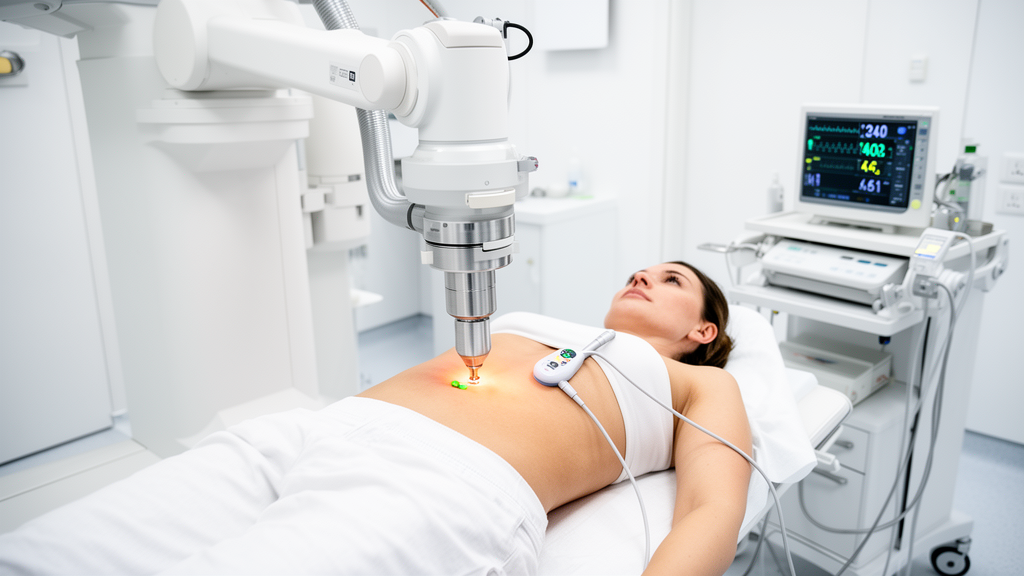
Image Credits: AI Generated
DOI: 10.3389/fmed.2026.2012812
Keywords: intraoperative hypothermia, percutaneous transhepatic cholangioscopic lithotripsy, hepatolithiasis, postoperative complications, perioperative care, core body temperature, modified Poisson regression, generalized estimating equations, biliary stone removal, general anesthesia, biliary tract procedures, nasopharyngeal temperature, overlap weighting, surgical safety, holmium laser lithotripsy, biliary irrigation
News Source: Ophelia Keating. (November 14, 2026). Low Body Temperature During Gallstone Lithotripsy Linked to Higher Complication Rates. Scienmag.