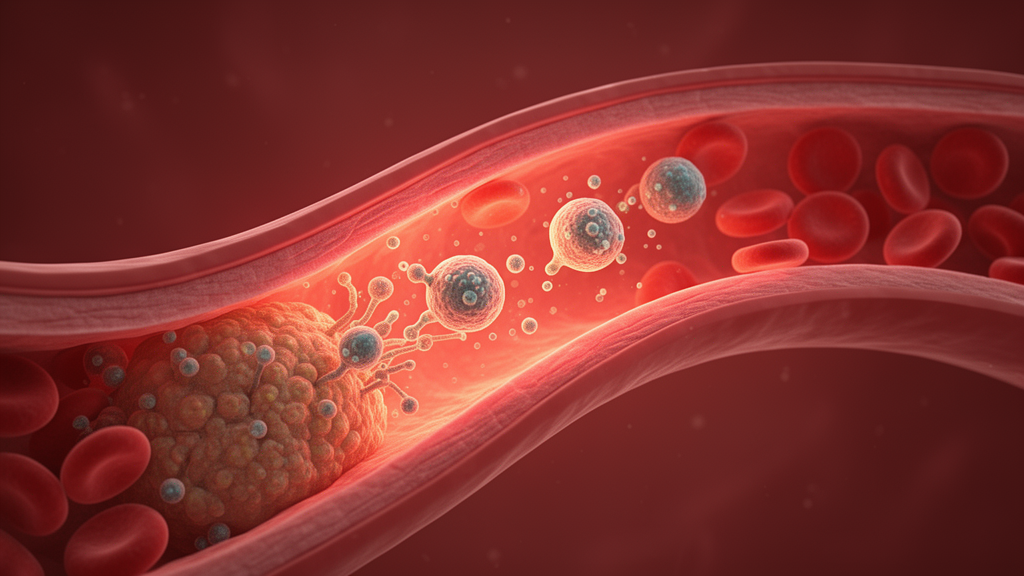
Atherosclerotic cardiovascular disease remains the leading cause of death worldwide, presenting substantial residual clinical risk even when patients achieve recommended targets for low-density lipoprotein cholesterol, blood pressure, and systemic blood glucose. Clonal hematopoiesis of indeterminate potential, commonly known as CHIP, represents a significant non-traditional source of cardiovascular inflammation that arises when somatic driver mutations accumulate in hematopoietic stem cells with advancing age. Clinical investigations have firmly associated CHIP with an approximate 1.9-fold increase in the risk of developing coronary artery disease. However, according to an extensive review published in Frontiers in Cardiovascular Medicine by researchers Kensuke Ueno and Yukiteru Nakayama, measuring the numerical size of a mutant clone in circulating blood does not adequately capture how that clone actually promotes vascular pathology. The authors argue that selective advantage is not an indivisible event but operates across three dissociable biological checkpoints ranging from marrow stem cells to arterial plaque macrophages.
The traditional conceptual model of clonal hematopoiesis assumed a strictly linear trajectory in which somatic mutations confer a competitive growth advantage within the bone marrow, causing mutant hematopoietic stem cells to overproduce inflammatory myeloid cells that directly infiltrate vascular lesions. Ueno and Nakayama demonstrate that an advantage gained at an early stage does not automatically carry forward into subsequent biological compartments. To resolve these discrepancies, the authors formulate a three-checkpoint framework that categorizes clonal selection into distinct anatomical steps. Checkpoint 1 evaluates competitive survival, self-renewal, and proliferation among hematopoietic stem cells in the bone marrow niche. Checkpoint 2 governs the quantitative output, lineage composition, and functional inflammatory phenotype of circulating myeloid progeny. Checkpoint 3 encompasses the physical recruitment, tissue retention, niche occupancy, and local proliferation of mutant cells inside cardiovascular tissues, emphasizing that selection within one compartment cannot be inferred from cellular abundance in another.
A primary clinical limitation identified by the review is the conventional reliance on blood variant allele frequency, or VAF, which measures the proportion of sequenced blood DNA carrying a somatic driver mutation. Because blood VAF reflects the combined outcome of both stem cell competition and downstream myeloid lineage differentiation, it cannot directly quantify the true mutant fraction residing inside the marrow stem cell pool. The relationship between blood VAF and stem cell burden varies markedly depending on the specific driver gene involved. In human lineage restriction analyses, approximately 54.2 percent of TET2 mutations are confined strictly to the myeloid lineage, and zero out of twenty-four examined TET2 carriers displayed multipotent differentiation across myeloid, B, and T cells. In contrast, 23.2 percent of DNMT3A mutations were myeloid-restricted, while 35.7 percent exhibited multipotent involvement, demonstrating that identical peripheral blood VAF values across different mutated genes represent entirely dissimilar internal stem cell populations.
At checkpoint 1, competitive dynamics among hematopoietic stem cells depend profoundly on driver genetics and microenvironmental signaling within the bone marrow. In experimental mouse models, cells deficient in Tet2 undergo progressive competitive expansion even in the absence of induced atherogenesis, favored by cytokines such as interleukin-6 and tumor necrosis factor alpha. Conversely, CRISPR-inactivated Dnmt3a stem cells demonstrated no significant expansion over four months of observation, and homozygous Dnmt3a and Jak2 mutations were progressively lost during competitive repopulation assays. The finding that DNMT3A represents the most prevalent driver mutation detected in human clinical cohorts yet fails to expand readily in standard baseline mouse models underscores the disconnect between early stem cell fitness and mature disease prevalence. Furthermore, human single-cell multi-omic profiling reveals that mutant stem cells frequently exhibit an attenuated inflammatory adaptation compared to neighboring wild-type stem cells, indicating that cellular mechanisms driving stem cell dominance differ from downstream pathogenic actions.
The physical bone marrow niche functions as an active regulator of checkpoint 1 rather than a passive cytokine background. Cardiac stress actively remodels marrow architecture; for instance, diminished transforming growth factor beta signaling within the sympathetic niche closes chromatin at Smad3-binding sites, biasing progenitor differentiation toward inflammatory CCR2-positive cardiac macrophages. Severe cardiovascular stress also depletes mesenchymal stromal cells producing heparin-binding EGF-like growth factor and induces stromal adipogenesis, where experimental knockdown of Hbegf alone triggers myeloid skewing, cardiac macrophage accumulation, and contractile dysfunction. Fatty bone marrow generates localized, interleukin-6-rich environments that specifically boost the selective advantage and self-renewal of DNMT3A-mutant stem cells, an effect missed by peripheral blood cytokine measurements. Furthermore, mutant cells can alter their supporting microenvironment, as Dnmt3a-mutant clones induce non-hematopoietic stromal cell senescence, which in turn reinforces mutant clone persistence, illustrating complex bidirectional feedback between hematopoietic clones and structural marrow niches.
Lifestyle factors further demonstrate gene-dependent selectivity at checkpoint 1 by channeling systemic stress through specific marrow intermediaries. In atherogenic mouse models, uninterrupted sleep and voluntary exercise curtailed the expansion of Jak2 and Tet2 mutant clones without altering the competitive dynamics of Trp53 or Dnmt3a clones. In Jak2-mutant models, sleep fragmentation increased pro-interleukin-1 beta production by bone marrow macrophages, directly favoring mutant common myeloid progenitors that exhibit hypersensitivity to the cytokine, whereas exercise suppressed this pathway. Administering an interleukin-1 beta blocking agent did not affect baseline clone growth in sedentary animals but completely prevented the accelerated clonal expansion caused by sleep disruption. Importantly, this lifestyle-mediated selective acceleration was confined exclusively to mutant progenitor cells while neighboring wild-type progenitors in the same marrow environment remained largely unaffected, demonstrating that cardiovascular risk factors alter competitive outcomes via distinct, genotype-specific signaling routes.
Checkpoint 2 governs how established stem cell clones translate into circulating myeloid cells, decoupling numerical clone abundance from functional inflammatory behavior. Mutations in ASXL1 demonstrate this dissociation clearly: in competitive transplantation models, Asxl1-mutant cells exhibited intrinsic lineage skewing toward inflammatory Ly6C-high monocytes under a standard diet without raising total monocyte counts, developing absolute peripheral monocytosis only after the induction of dietary metabolic stress. Similarly, Tet2 deficiency produces elevated Ly6C-high and Ly6C-low monocyte counts under high-fat, high-cholesterol diets, driven cell-intrinsically by the mutant cells themselves. In contrast, Dnmt3a deficiency alters myeloid lineage proportions by reducing Ly6C-positive monocytes and increasing neutrophil output regardless of diet, without generating monocytosis. These contrasting lineage outputs prove that peripheral inflammatory monocyte supply cannot be predicted as a uniform linear magnification of the ancestral stem cell clone size.
Beyond cell counts, checkpoint 2 introduces widespread mutation-induced bystander effects that challenge simple cell-intrinsic models of inflammation. In single-cell transcriptional studies of human CHIP, within-carrier comparisons between mutant and non-mutant monocytes identified seventy differentially expressed genes in TET2 carriers but failed to detect significant differential expression between mutant and wild-type cells in a small cohort of two DNMT3A carriers. However, complementary studies revealed that DNMT3A-silenced macrophages release soluble factors that stimulate neighboring wild-type cells. Conditioned medium collected from DNMT3A-knockdown macrophages successfully induced pro-inflammatory gene expression in healthy wild-type macrophages, and single-cell sequencing in heart failure patients identified elevated outgoing paracrine signaling from mutant classical monocytes. Additionally, DNMT3A-mutant monocytes promote cardiac fibroblast activation via HB-EGF secretion. These non-cell-autonomous bystander interactions allow relatively small mutated clones to amplify regional inflammation by corrupting the surrounding, genetically normal myeloid compartment.
At checkpoint 3, mutant myeloid cells exit the circulation and interact directly with cardiovascular tissues, encountering processes of recruitment, retention, niche occupancy, and local proliferation. Contrary to common assumptions, cross-sectional human studies evaluating carotid plaques and cardiac tissue macrophages found that variant allele frequencies closely mirrored circulating blood monocyte frequencies across both CCR2-positive and CCR2-negative populations. This correlation demonstrates an absence of preferential whole-tissue recruitment relative to blood, though single time-point sampling cannot differentiate active monocyte entry from subsequent retention or in situ proliferation. Organ-specific biases remain prominent; in unconditioned adoptive transfer experiments without irradiation, Tet2-deficient monocytes contributed substantially to macrophage pools in the liver and kidney but engrafted poorly into long-lived embryonic macrophage niches of the uninjured heart. Concurrently, both Tet2 and Dnmt3a chimeras establish blood-derived resident-like macrophages within adventitial niches that normally exclude monocyte-derived cells.
Local tissue proliferation introduces further divergence between circulating clone fractions and actual plaque pathology. In established atherosclerosis, macrophage accumulation relies predominantly on in situ proliferation rather than continuous monocyte recruitment. In mouse models harboring Trp53 mutations, sleep fragmentation markedly accelerated aortic plaque development by selectively driving local mutant macrophage proliferation, occurring without any measurable change in peripheral blood clone abundance or circulating monocytes. Furthermore, bulk whole-exome sequencing of human carotid plaques identified locally expanded somatic mutations in twelve of thirteen diseased arteries, spanning multi-millimeter tissue domains. Although mutations identical to circulating CHIP variants were detected within these human plaques, bulk sequencing cannot resolve individual cellular lineages, leaving it uncertain whether CHIP-mutant macrophages undergo preferential local persistence or expansion within human lesions, highlighting a critical methodological limitation of bulk genomic analyses.
Interpreting pharmacological therapies through the three-checkpoint lens exposes critical gaps in current clinical strategies for clonal hematopoiesis. The CANTOS trial demonstrated that targeting interleukin-1 beta with canakinumab reduced major adverse cardiovascular events independently of lipid lowering, with exploratory subgroup analyses revealing a marked risk reduction among TET2 mutation carriers with a hazard ratio of 0.38. Similarly, low-dose colchicine suppressed atherogenesis and interleukin-1 beta production in Tet2-mutant models and attenuated TET2-driven clonal growth in an exploratory substudy of the LoDoCo2 trial. Metformin specifically suppresses mitochondrial respiration to eliminate the competitive advantage of Dnmt3a-mutant hematopoietic progenitors. However, every established drug is evaluated exclusively through checkpoint 1 or checkpoint 2 readouts, such as stem cell competition or blood VAF. Whether any pharmacological agent alters mutant macrophage persistence, niche occupancy, or proliferation directly within human vascular tissue remains entirely unknown.
The authors conclude that resolving these checkpoints is essential for understanding clinical heterogeneity in human cardiovascular epidemiology. In a meta-analysis encompassing 56,597 participants, CHIP was associated with an overall 25 percent increase in incident heart failure, but significant risks were driven specifically by TET2, JAK2, and ASXL1, whereas DNMT3A showed no significant association. Conversely, in the ASPREE trial of older adults without pre-existing cardiovascular disease, CHIP did not significantly increase major adverse cardiovascular events, illustrating how participant characteristics and disease context influence clinical risk. Because blood VAF cannot distinguish stem cell dynamics from lineage output or local plaque activity, the three-checkpoint model provides a necessary framework to organize future investigation. Validating this paradigm as a clinical risk tool will require prospective, longitudinal studies utilizing genotype-resolved single-cell tracing and spatial transcriptomics to track how clonal populations migrate, compete, and survive within human lesions.
Subject of Research: Stage-specific selection mechanisms of clonal hematopoiesis across stem cells, circulating monocytes, and cardiovascular tissue macrophages
Article Title: Where the clone is selected: stage-specific selection from hematopoietic stem cells to plaque macrophages in clonal hematopoiesis
Article References: Ueno, K., & Nakayama, Y. (2026). Where the clone is selected: stage-specific selection from hematopoietic stem cells to plaque macrophages in clonal hematopoiesis. Frontiers in Cardiovascular Medicine, 13, Article 2002298. https://doi.org/10.3389/fcvm.2026.2002298
Image Credits: AI Generated
DOI: 10.3389/fcvm.2026.2002298
Keywords: clonal hematopoiesis of indeterminate potential, atherosclerosis, variant allele frequency, hematopoietic stem cells, bone marrow niche, myeloid differentiation, macrophages, TET2, DNMT3A, ASXL1, JAK2, Trp53, interleukin-1 beta, interleukin-6, bystander activation, local proliferation, carotid plaque, heart failure
News Source: Ophelia Keating. (November 14, 2026). Three Biological Checkpoints Determine How Clonal Blood Mutations Shape Cardiovascular Disease. Scienmag.