Researchers at Washington University in St. Louis have developed a new waterproof coating derived from plant waste that offers a viable alternative to polyfluoroalkyl substances, commonly known as forever chemicals. The study, published in the journal Matter, details the creation of a material called SLIP, or superhydrophobic lignin-integrated particles, which is designed to replace PFAS in manufacturing applications without the associated toxic environmental and health impacts.
Despite the high societal costs associated with PFAS exposure, the materials themselves remain relatively inexpensive and widely available. The WashU chemical engineers sought to develop an alternative that meets similar manufacturing needs while eliminating the toxic side effects and long-term environmental persistence associated with traditional fluorinated compounds.
The development of SLIP was inspired by the structure of xylem, a vascular tissue in plants that transports water. The research team incorporated the structural features of suberin into lignin particles by chemically linking lignin to fatty acids. To complete the material, they added a polylactic acid binder, resulting in a composite that demonstrated highly superhydrophobic performance.
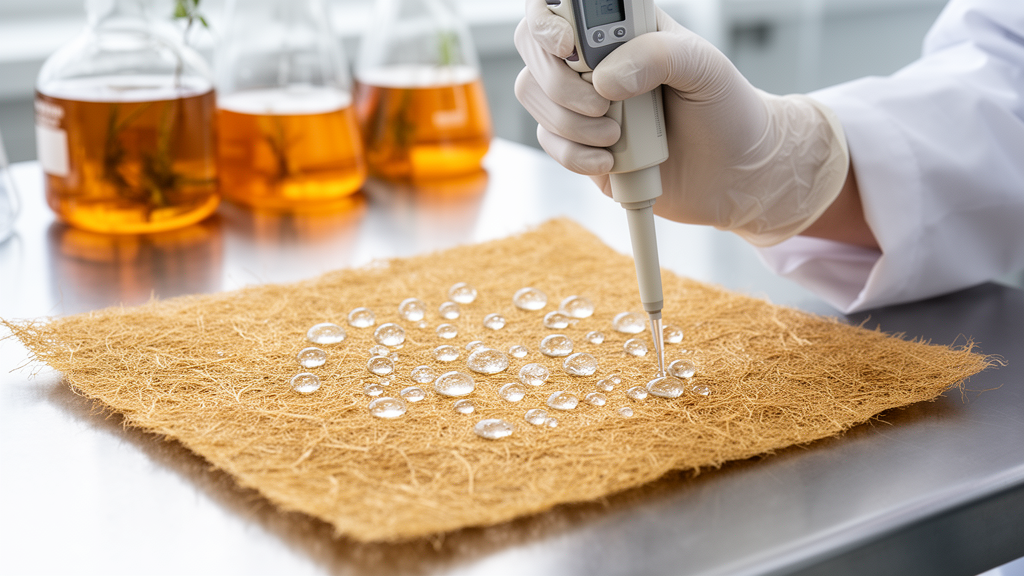
Testing of the SLIP material revealed that water beads up and runs off the surface, demonstrating its effectiveness as a waterproof barrier. The researchers also evaluated the material’s biodegradability by exposing it to wood-degrading fungus. The results showed that the coating can break down into harmless organic matter within an expected time period, a significant advantage over PFAS which do not degrade in the environment. Puneet Dhatt, a first author on the study, noted that lignin and fatty acids have evolved to degrade naturally, suggesting that the replacement material could help avoid the long-term societal costs associated with the accumulation of forever chemicals in ecosystems.
The researchers emphasized that while the current formulation does not replicate every function of PFAS, it represents a substantial step forward, particularly given the widespread use of waterproof coatings in modern manufacturing.
To assess the potential economic and societal benefits of replacing PFAS with SLIP, the WashU team collaborated with researchers at Texas A&M University. The Texas researchers estimated that replacing forever chemicals with SLIP in waterproofing applications could avoid up to $1.1 billion in annual societal damage. This estimate accounts for the global impacts of PFAS on human health and the environment, highlighting the significant financial savings that could be realized by transitioning to biodegradable alternatives.
The study acknowledges that the current SLIP formulation is limited to waterproofing applications and does not yet provide the fireproof or oil-resistant properties that some PFAS products offer. The researchers are currently working to add these attributes to the coating to vastly expand its range of applications. Additionally, the team is focused on scaling up the production process to integrate it with existing biorefinery and paper and pulping industries.
Joshua Yuan, who serves as director of the NSF Carbon Utilization Redesign for Biomanufacturing Energy Research Center at WashU, stated that the study represents an example of learning from nature to design sustainable materials critical to society. The material’s life cycle is similar to that of natural polymers, where components can degrade without causing harm.
Subject of Research: Development of a biodegradable, lignin-based superhydrophobic coating as a PFAS alternative
Article Title: Plant-inspired natural coatings can beat forever chemicals
Article References: Plant-inspired natural coatings can beat forever chemicals. Original publication (Bibliographic details unavailable.)
Image Credits: AI Generated
DOI: Not provided
Keywords: PFAS alternatives, lignin, superhydrophobic coatings, biodegradable materials, bio-inspired engineering, Washington University in St. Louis, Matter journal, sustainable manufacturing, waterproofing, plant waste utilization, environmental remediation, fatty acids, polylactic acid, xylem structure, industrial waste valorization, chemical engineering, toxicology, green chemistry, material science, biorefinery integration
News Source: Denise Maddox. (November 14, 2026). WashU Team Creates Biodegradable Plant-Based Coating to Replace PFAS. Scienmag.