In vitro age-induced terminal browning in plant tissue is characterized by an organized redistribution of cellular resources centered on aromatic amino acid remodeling and specialized catecholamine-clearance routes during cellular senescence, rather than representing a passive metabolic collapse. Investigating this fundamental physiological shift in Decalepis hamiltonii, a team of researchers mapped the transition across distinct developmental stages to uncover how metabolic homeostasis is reorganized throughout the aging process.
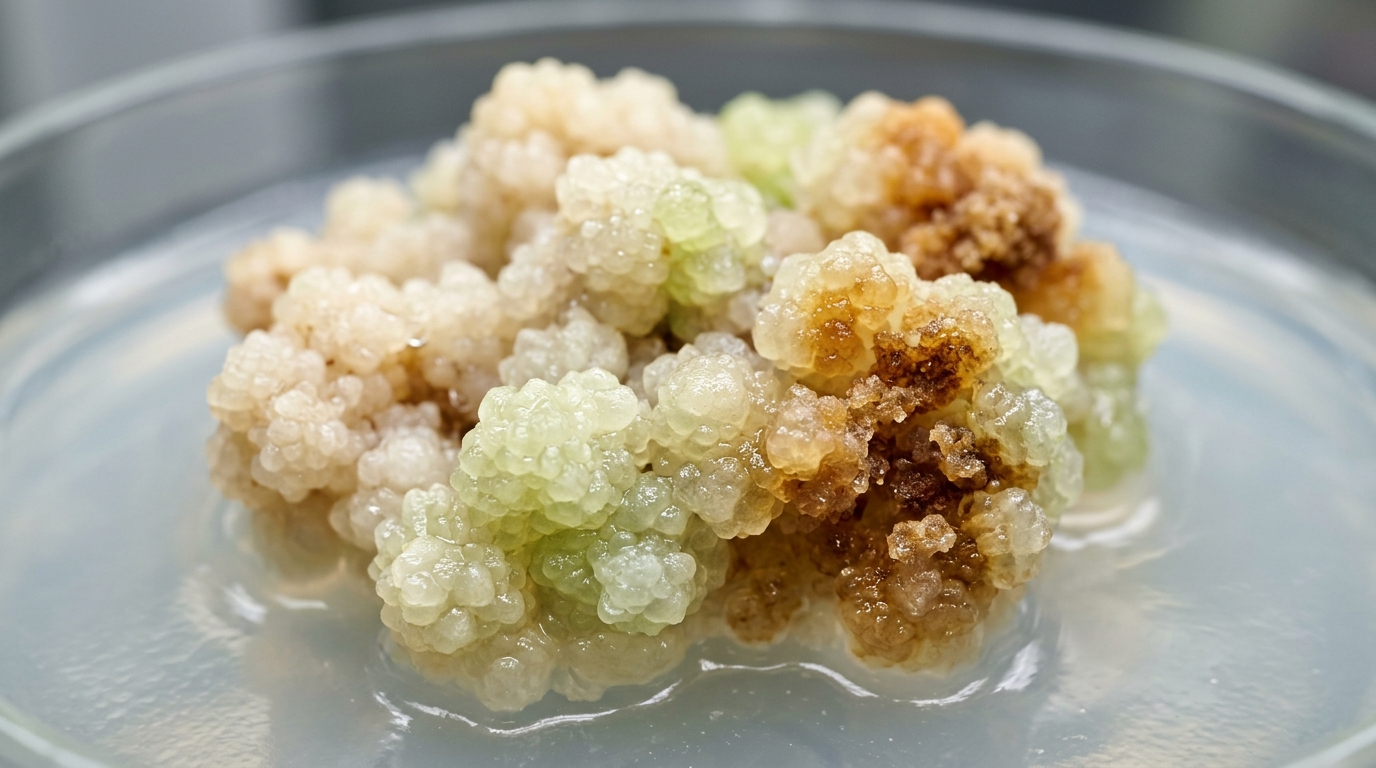
Using Decalepis hamiltonii as a systems-level model organism, the investigators integrated stage-resolved enzyme kinetics, targeted high-performance liquid chromatography, untargeted metabolomics, and co-abundance network analysis. This analytical approach permitted the systematic characterization of tissue moving along an explicit trajectory: beginning with metabolically competent green callus, transitioning into the browning onset stage, and ultimately reaching terminally senescent brown callus.
To decipher the complex molecular relationships across this trajectory, the researchers applied weighted gene co-expression network analysis, resolving distinct stage-associated metabolite modules. The initial stage of metabolically competent green callus was characterized by a specific turquoise module that exhibited strong associations with glutathione and soluble phenolics. The research team identified these module components as consistent with active redox buffering and cellular homeostasis during the green phase.
The intermediate stage marking the onset of browning represented a distinct metabolic reprogramming phase. At this browning onset juncture, the profiles revealed transient alterations in phenolic metabolism alongside an increased representation of stress-associated pathways, specifically including the gamma-aminobutyric acid shunt, indicating targeted metabolic adjustments prior to complete senescence.
Terminal senescence within the brown callus tissue was defined by distinct green and blue metabolite modules rather than a uniform decline in metabolic activity. These brown callus-associated modules were enriched with specific nucleotide catabolites, including hypoxanthine, as well as the lysine-derived compound L-pipecolic acid and the glutathione-related stress metabolite ophthalmic acid.
The study demonstrated that terminal brown callus engages in progressive metabolic redistribution across interconnected metabolic pools, featuring the selective enrichment of tyrosine and tryptophan pathways. This phase accumulated stage-specific aromatic metabolites, specifically 3,4-dihydroxy-L-phenylalanine, homovanillate, and melatonin. Accompanied by a parallel shift from 2-amino-2-methylpropanoate in green callus to 1-aminocyclopropane-1-carboxylate in brown callus, the findings connect this aromatic reorganization to hormone-associated stress responses and establish browning onset as a critical metabolic transition in age-induced callus senescence.
Subject of Research: Stage-resolved metabolic remodeling and aromatic amino acid pathways during callus senescence in Decalepis hamiltonii
Article Title: Stage-resolved profiling unveils specialized aromatic amino acid metabolism during age-induced callus browning in Decalepis hamiltonii
Article References: Singha Mahapatra, A., Poojitha, Eri, R., & Parvatam, G. (2026). Stage-resolved profiling unveils specialized aromatic amino acid metabolism during age-induced callus browning in Decalepis hamiltonii. Plant Cell Reports, 45(12), Article 362. https://doi.org/10.1007/s00299-026-04046-7
Image Credits: AI Generated
DOI: 10.1007/s00299-026-04046-7
Keywords: Decalepis hamiltonii, callus browning, cellular senescence, aromatic amino acid metabolism, catecholamine clearance, untargeted metabolomics, high-performance liquid chromatography, enzyme kinetics, co-abundance network analysis, glutathione, gamma-aminobutyric acid shunt, L-DOPA, melatonin, homovanillate, hypoxanthine, L-pipecolic acid, ophthalmic acid, 1-aminocyclopropane-1-carboxylate
News Source: Drew Townsend. (November 14, 2026). Decalepis hamiltonii Callus Browning Involves Organized Metabolic Redistribution Rather Than Collapse. Scienmag.