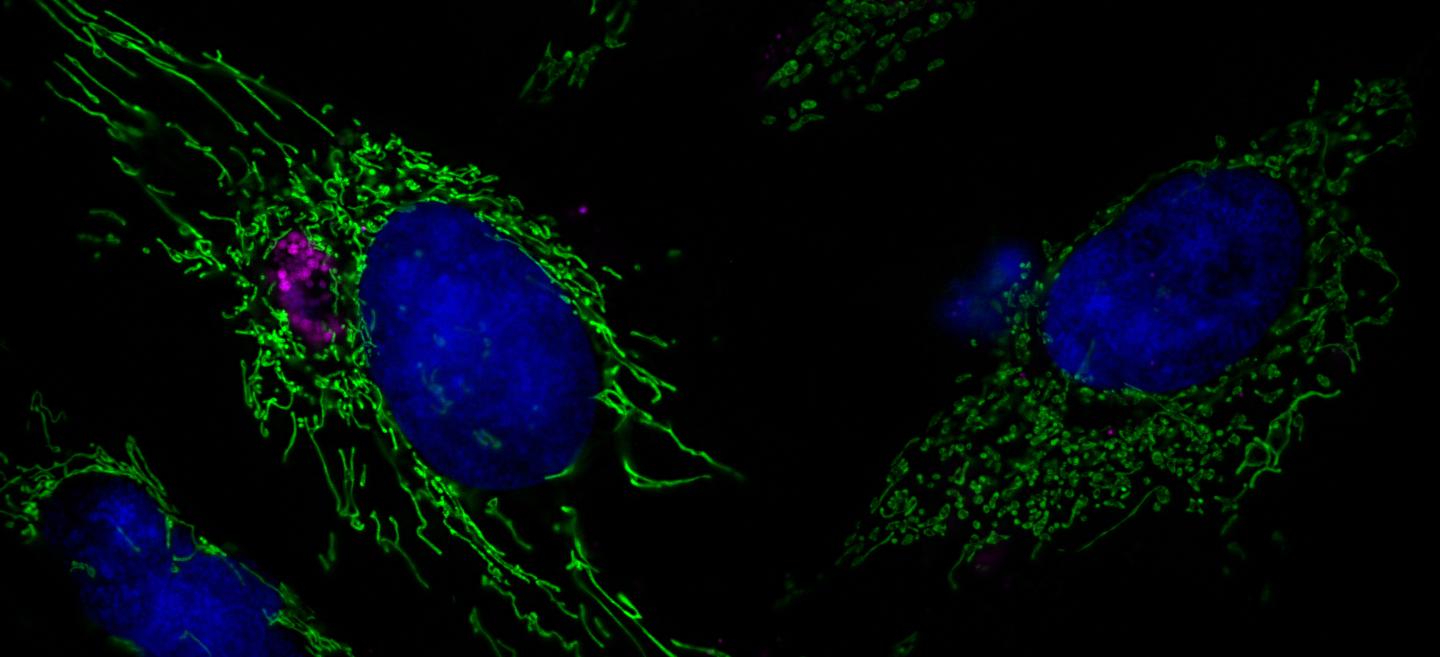
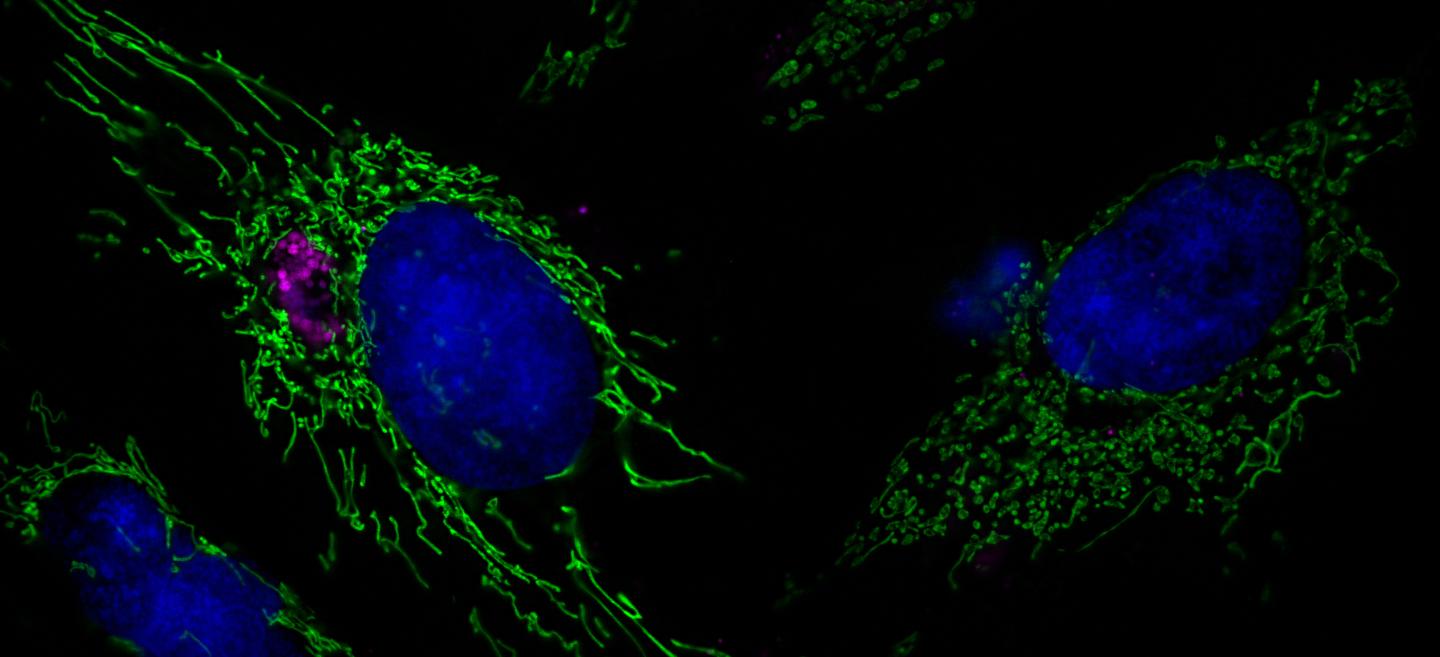
Credit: Suvagata Roy Chowdhury
When Chlamydia trachomatis infects a human cell, it faces a huge challenge: It must prevent the cell from triggering programmed cell death to prevent the bacteria from replicating and spreading throughout the body. Since numerous metabolic processes are either missing or fragmented in the pathogen, it is reliant on the host cell to supply the vital nutrients on a permanent basis.
Research projects worldwide focus on how the bacteria manage to keep the cell alive and working for it. Scientists from the University of Würzburg have now uncovered a new detail of these processes. They identified a mechanism with which Chlamydia trachomatis influences the mitochondria, the cells' power plants, thereby preventing the cells from committing suicide. In the scientific journal Journal of Cell Biology, the scientists present the results of their work.
The role of mitochondria
The study was led by Professor Thomas Rudel, who holds the Chair of Microbiology at the University of Würzburg. Already three years ago, Rudel and his team showed that chlamydiae disable the tumour suppressor protein p53 in infected cells and initiate a process which repairs DNA damages resulting from chlamydia infection. By blocking p53, the bacteria prevent the cell from knocking itself out in the worst case, thereby winning time for replication.
In their new study, the microbiologists took a closer look at the mitochondria. "Mitochondria play a crucial role in energy supply and programmed cell death," Thomas Rudel explains. He sees strong evidence that changes in their architecture and dynamics are closely related to the cells' general metabolic processes.
Focus on small RNA molecules
What impact does a chlamydia infection have on mitochondria? To answer this question, Rudel's team scrutinized another actor in the goings-on inside cells: the so-called miRNAs or microRNAs. These small RNA molecules control vital processes inside cells by regulating complex networks of genes.
High-throughput sequencing allowed Rudel and his team to study in depth how a chlamydia infection impacts the miRNA expression of the infected cell. The most striking finding is a greatly increased production of the miR-30c-5p microRNA. A high concentration of these tiny RNA molecules is beneficial for the bacteria: "They cause the tumour suppressor protein to be downregulated permanently," Thomas Rudel explains.
In return, blocking miR-30c causes the chlamydia trouble, because the cell increases its production of Drp1, a protein that fragments the mitochondria in cells under stress. As its concentration inside cells increases, so does the stress-related mitochondrial division rate while the infected cell's chances of surviving the bacterial attack improve. This is because chlamydial growth is inhibited significantly by the fragmented mitochondria that supply less energy and starve the pathogens.
Chlamydia: Resourceful invaders
Bacteria of the strain Chlamydia trachomatis are responsible for a number of serious diseases in humans. Chlamydia infections are the most frequent sexually transmitted diseases worldwide. Up to ten percent of the population worldwide are estimated to be infected with the bacteria depending on the age group.
Untreated, chlamydia infection can cause fallopian tubes blockage in women which can result in tubal pregnancy or infertility. Newer findings even suggest that chlamydia infections promote ovarian cancer. Men can become infertile after an infection.
Another consequence of chlamydia infection occurs especially in tropical countries: The bacteria infect the eyes and may cause blindness. It is estimated that around 150 million people are affected by the disease. Other strains may trigger pneumonia and are suspected to cause arteriosclerosis and Alzheimer's.
###
Chlamydia preserves the mitochondrial network necessary for replication via microRNA-dependent inhibition of fission. Suvagata Roy Chowdhury, Anastasija Reimer, Malvika Sharan, Vera Kozjak Pavlovic, Ana Eulalio, Bhupesh K. Prusty, Martin Fraunholz, Karthika Karunakaran, and Thomas Rudel The Journal or Cell Biology. https://doi.org/10.1083/jcb.201608063
Media Contact
Prof. Dr. Thomas Rudel
[email protected]
49-931-318-4401
@Uni_WUE
https://www.uni-wuerzburg.de/