A historical literature review published in Volume 17 of Genes & Cancer examines the career and scientific achievements of Francis Peyton Rous, whose early twentieth-century experiments demonstrated that a cancer-causing agent could be transmitted between chickens without transferring intact cells. Led by first author Pratiba Irudayaraj alongside corresponding authors Nawab Ali and Krishnaswamy Kannan, the review synthesizes historical records and modern oncology developments to show how Rous’s findings challenged prevailing medical assumptions and helped lay the groundwork for viral oncology, oncogene discovery, and the understanding of cancer as a genetic disease.
Born in Baltimore, Maryland, in 1879, Rous developed an early interest in natural history before completing his medical degree at Johns Hopkins University in 1905. He subsequently conducted pathology research at the University of Michigan and pursued additional scientific training in Germany, where mentors instilled in him the value of meticulous observation, accurate diagnosis, and rigorous experimentation. In 1909, Rous joined the Rockefeller Institute for Medical Research to investigate cancer at a time when malignancies were widely viewed as disorders originating strictly from abnormal internal cellular processes rather than infectious biological agents.
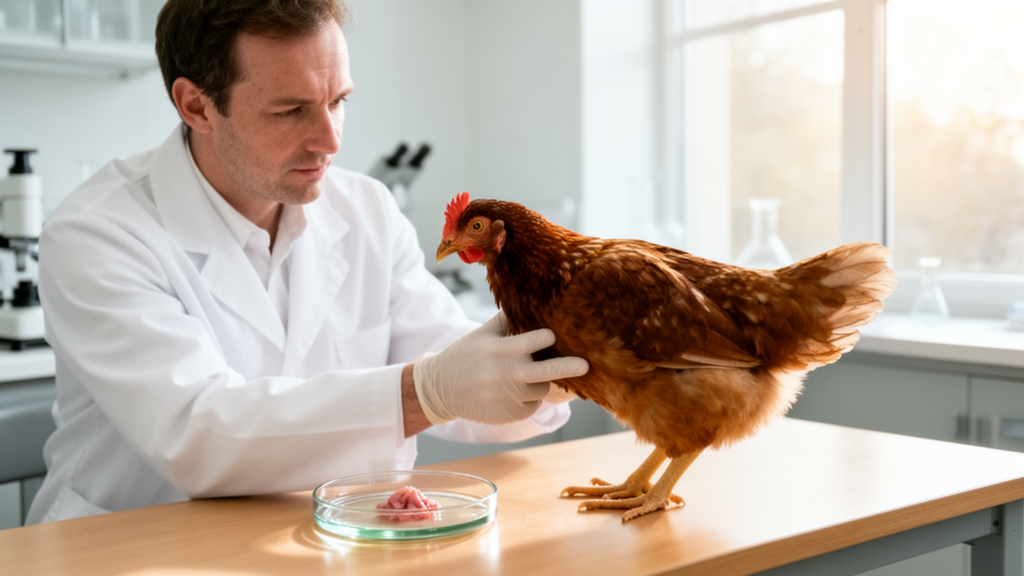
Rous’s landmark investigation commenced in 1909 when a poultry farmer presented him with a Barred Plymouth Rock hen displaying an unusual breast mass, which Rous pathologically identified as a spindle-cell sarcoma originating from connective tissue. Rous initially transplanted the tumor tissue into other chickens, noting that the malignancy grew successfully in genetically related birds but failed to develop in unrelated animals. These early transmission tests underscored the importance of host compatibility in experimental tumor transplantation and prompted Rous to investigate whether intact living cancer cells were strictly required to transmit the disease.
To test whether transmission could occur in the absence of intact cellular material, Rous prepared tumor tissue in solution, separated the fluid, and passed it through a Berkefeld filter designed to retain bacteria and whole cells. When he injected the resulting cell-free filtrate into healthy chickens belonging to a closely related strain, new spindle-cell sarcomas successfully developed. Reported in 1910 and 1911, these experiments demonstrated that a filterable agent could induce malignant tumors without direct cell transplantation, establishing an external biological entity as the cause of neoplastic growth.
Although the filterable agent was later identified as Rous sarcoma virus, an avian retrovirus capable of transforming infected cells into cancer cells, the broader scientific community initially met Rous’s discovery with prolonged skepticism. Contemporary researchers questioned whether findings in chickens had any relevance to human biology, particularly because no human malignancy had yet been linked to an infectious virus. In addition, experimental technologies of the era were insufficient to explain how a filterable agent could cause tumors, though Rous maintained confidence in his findings through meticulous documentation and reproducible protocols.
During the decades in which his cancer transmission research received limited attention, Rous expanded his investigations into other biomedical disciplines. Between 1915 and 1916, working with J. R. Turner, he formulated the Rous-Turner solution, a citrate and sugar preparation that enabled red blood cells to be preserved outside the body for extended periods. This innovation contributed directly to early wartime blood banks and blood storage systems, introducing principles of citrate anticoagulation and glucose-supported erythrocyte preservation that remain fundamental in modern transfusion medicine.
Rous eventually returned to oncology through investigations into rabbit papillomaviruses and chemical carcinogenesis, evaluating how viral infection and chemical exposures interact during tumor development. In 1944, collaborating with William F. Friedewald, Rous helped clarify the operational distinction between tumor initiation and tumor promotion, establishing that carcinogenesis proceeds through multiple biological stages. Beyond his laboratory research, Rous exerted a lasting influence on scientific publishing through his work at the Journal of Experimental Medicine, joining as co-editor in 1921, later serving as editor, and remaining actively involved with the publication until 1970.
In the mid-twentieth century, advances in cell culture and molecular biology clarified the cellular mechanisms underlying Rous sarcoma virus. During the 1950s, Howard Temin and Harry Rubin developed quantitative cell culture assays that allowed researchers to measure virus-induced cellular transformation directly in vitro, shifting tumor virology beyond whole-animal experiments. A further molecular breakthrough arrived in 1970 when Temin and David Baltimore discovered reverse transcriptase, explaining how retroviruses convert their RNA into DNA to integrate into the host genome and allow viral genetic information to persist inside infected cells.
Subsequent genetic investigations identified v-src as the specific transforming oncogene carried by Rous sarcoma virus. Scientists later discovered that v-src corresponds to c-src, a normal cellular proto-oncogene responsible for regulating cellular growth and signaling. Further biochemical research showed that the Src protein functions as a tyrosine kinase enzyme involved in cell growth and survival pathways, demonstrating the core principle that normal regulatory genes can drive malignant transformation when altered, mutated, or improperly regulated.
The review notes that Rous’s initial discoveries in avian sarcoma also informed research into human cancers linked to infectious agents, including human papillomavirus, hepatitis B virus, Epstein-Barr virus, human T-lymphotropic virus type 1, and Kaposi’s sarcoma-associated herpesvirus, which supported preventative vaccines against HPV and HBV. Formal international recognition arrived in 1966, approximately 55 years after his initial experiments, when Rous received the Nobel Prize in Physiology or Medicine at age 87 alongside Charles Huggins. The authors clarify that their article represents a historical and scientific review synthesizing past discoveries rather than presenting newly conducted laboratory experiments.
In analyzing the broader biological implications of Rous’s work, the review contrasts early twentieth-century paradigms with modern molecular oncology. At the start of the twentieth century, cancer was widely presumed to be an exclusively internal disease caused by intrinsic cellular malfunctions rather than external infectious agents. Contemporary oncology, however, recognizes that specific oncogenic viruses can actively drive cancer development through multiple distinct mechanisms. These biological pathways include perturbing intracellular signaling networks, disabling critical tumor-suppressor pathways, and generating environments of chronic tissue inflammation. Although modern clinical applications now include preventive vaccines targeting oncogenic agents such as human papillomavirus and hepatitis B virus, the authors explicitly note that Rous’s early experimental transmissions should be understood as foundational conceptual discoveries rather than direct antecedents of modern clinical treatments. By establishing that an external biological entity could initiate malignant neoplastic growth, Rous provided the conceptual opening that enabled subsequent researchers to uncover these complex molecular interactions.
The published review, titled “The life and legacy of Francis Peyton Rous: The birth of viral oncology,” appeared on October 23, 2026, within Volume 17 of Genes & Cancer under the guidance of academic and industry investigators. Lead author Pratiba Irudayaraj conducted the historical synthesis from the University of Arkansas at Little Rock. Corresponding authors Nawab Ali and Krishnaswamy Kannan carried out their contributions through appointments at the University of Arkansas at Little Rock and Biomolecular Integrations Inc., based in Little Rock, Arkansas, respectively. Within the publication’s formal disclosures, the authors stated that they had no competing conflicts of interest to declare. Their synthesis was designed not to introduce unvalidated laboratory data, but rather to evaluate how archival records and ensuing experimental advances transformed a once-dismissed avian tumor finding into a cornerstone of contemporary genetic oncology.
The approximately 55-year interval between Rous’s initial 1910–1911 reports and his 1966 Nobel Prize in Physiology or Medicine highlights the deep-seated professional resistance his work encountered. For decades, prevailing cancer researchers remained unconvinced that an avian filterable agent had any relevance to human neoplastic disease, especially given the total absence of identified human tumor viruses at the time. Furthermore, the limited laboratory tools of the early twentieth century could neither visualize the viral particle nor elucidate the biochemical mechanism of cellular transformation. Rous nonetheless maintained rigorous faith in his experimental observations, preserving detailed records and relying on reproducible findings. By the time the Nobel Committee honored him in 1966 at the age of 87, Rous sarcoma virus had evolved from an anomalous chicken pathology into an indispensable model system for experimental oncology. Rous shared the 1966 award with Charles Huggins, whose independent research established the hormonal responsiveness of prostate cancer, underscoring how diverse biological perspectives ultimately reshaped clinical cancer concepts.
In addition to his laboratory breakthroughs, Rous exerted an enduring institutional influence on scientific communication through his long association with the Journal of Experimental Medicine. He joined the editorial leadership as a co-editor in 1921 and later stepped into the role of editor, remaining actively engaged with the journal until 1970. Across nearly five decades of editorial service, Rous championed exacting editorial standards, prioritizing experimental rigor, transparent documentation, accurate citation, and lucid scientific writing. His editorial philosophy guided countless investigators in presenting their experimental findings with methodological precision, leaving a permanent imprint on the standards of biomedical publishing.
The authors emphasize that Rous’s career offers lasting lessons in scientific preparedness, intellectual flexibility, meticulous recordkeeping, and perseverance. Rous’s willingness to investigate an unexpected poultry tumor, despite professional skepticism and rudimentary instrumentation, illustrated how careful experimentation can challenge entrenched assumptions. The review concludes that what began with the examination of a single tumor-bearing chicken at the Rockefeller Institute initiated a chain of discoveries that transformed the understanding of cancer biology. Rous’s findings served as the foundation for a collaborative scientific journey involving numerous researchers who unraveled the molecular mechanisms of retroviral replication, oncogenes, and proto-oncogenes. More than a century after his initial experiments, his legacy continues to inform investigations into cancer mechanisms, disease prevention, and molecularly targeted therapies.
Subject of Research: The life, experimental discoveries, and viral oncology legacy of Francis Peyton Rous
Article Title: Francis Peyton Rous: The discovery that laid the foundations of viral oncology
Article References: Francis Peyton Rous: The discovery that laid the foundations of viral oncology. Original publication (Bibliographic details unavailable.)
Image Credits: AI Generated
DOI: Not provided
Keywords: Francis Peyton Rous, viral oncology, Rous sarcoma virus, avian retrovirus, spindle-cell sarcoma, cell-free filtrate, Berkefeld filter, v-src oncogene, c-src proto-oncogene, tyrosine kinase, reverse transcriptase, Howard Temin, David Baltimore, Rous-Turner solution, blood preservation, chemical carcinogenesis, Genes & Cancer, Nobel Prize in Physiology or Medicine
News Source: Nathaniel Bowman. (November 14, 2026). Review Examines How Peyton Rous Discovered Transmissible Sarcoma in Chickens. Scienmag.