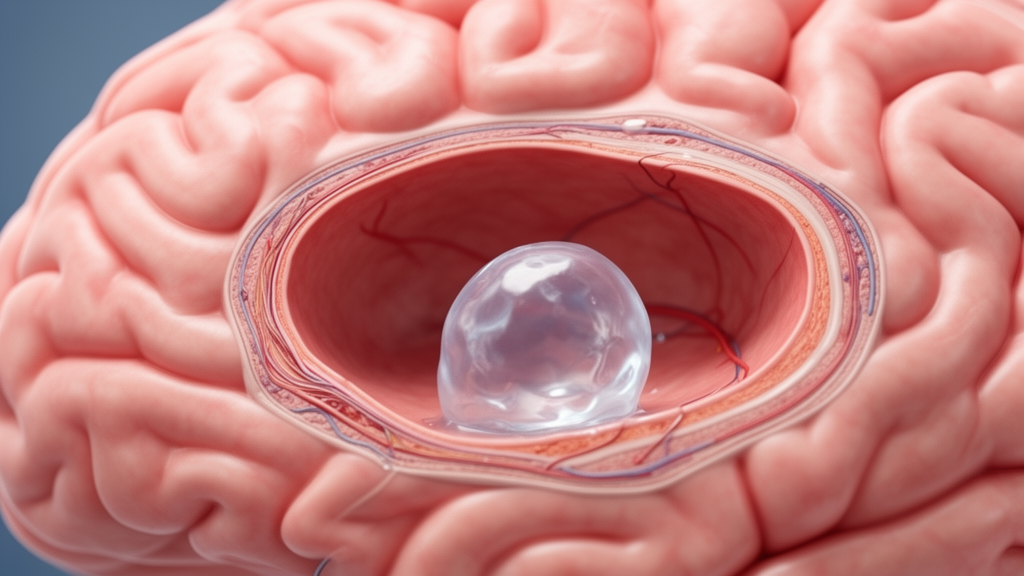
A retrospective case series and literature synthesis published in the Chinese Neurosurgical Journal identifies a rare but clinically significant complication following brain tumor surgery: the formation of space-occupying cysts in the tumor bed. The study, led by Zhiqiang Liu and colleagues, analyzed ten confirmed cases from a single tertiary care center and synthesized data from 106 additional cases reported in Chinese and English literature. The research aims to clarify the clinical characteristics, diagnostic criteria, and management principles for this condition, which is often overlooked in its early stages and can lead to severe neurological consequences if untreated.
The authors define a space-occupying cyst (SOC) as an expansive fluid collection that emerges within 30 days after tumor resection, demonstrating serial radiographic enlargement and compression of surrounding brain structures. This condition is distinct from other postoperative fluid accumulations, such as pseudomeningoceles or post-radiation cysts, and is characterized by a specific pathophysiology involving cerebrospinal fluid dynamics. In the institutional cohort, all ten patients presented with new-onset neurological deterioration within 3 to 9 days post-surgery, with an average onset of 5.3 days. The symptoms included progressive lethargy, headache, and in severe cases, coma, necessitating urgent diagnostic imaging.
The study included 1,026 surgically treated brain tumor patients at the institute between January 2016 and January 2024. The incidence of SOC in this cohort was 0.97%, a figure consistent with the broader literature, which reports an incidence range of 0.04% to 4%. The patients in the case series ranged in age from 30 to 65 years, with an average age of 50.2 years. The cohort included eight females and two males. Tumor pathology revealed that nine of the ten cases were high-grade gliomas, while one was a meningioma. Four of the tumors were recurrent, and six were primary. The location of the tumors was predominantly supratentorial, with four in the bilateral frontal lobes and corpus callosum, three in the right frontal lobe and corpus callosum, one in the left frontal lobe and corpus callosum, and one in the right temporal lobe.
Diagnosis relied on computed tomography (CT) imaging, which revealed spherical, low-density lesions within the surgical cavity. These lesions exhibited mass effect, causing compression of adjacent brain structures, shrinkage of cerebral sulci, and midline shift. The authors emphasize the importance of differentiating SOC from other conditions, such as bacterial abscesses, tumor recurrence, or cysts resulting from the implantation of chemotherapy wafers. Key diagnostic features include the absence of significant enhancement on CT and the presence of surrounding tissue compression without the specific imaging signatures of infection or radiation necrosis.
The pathogenesis of SOC is attributed to several mechanisms, including mechanical obstruction by valve-like structures, osmotic gradients from protein-rich exudates, and dysfunction of meningeal lymphatic drainage. In nine of the ten institutional cases, the tumor resection involved the opening of the lateral ventricle, which is closely associated with cerebrospinal fluid circulation. This suggests that SOC may represent a localized form of hydrocephalus, where fluid enters the surgical cavity but is unable to exit due to trapped cerebrospinal fluid or impaired drainage pathways. The accumulation of hemoglobin degradation products and inflammatory mediators may further drive fluid influx, creating a self-perpetuating cycle of cyst expansion.
Management strategies focused on draining the fluid to alleviate the space-occupying mass effect. In the institutional cohort, four patients underwent placement of an Ommaya reservoir for external drainage, while six patients received direct percutaneous puncture drainage. All patients also received medical management with mannitol and furosemide to lower intracranial pressure and control cerebral edema. Following one week of external drainage, the cystic cavities demonstrated reduction and stabilization. No recurrence was observed after the cessation and removal of drainage, and the medication for dehydration was gradually discontinued. The authors note that this approach obviates the need for permanent shunt implantation, thereby minimizing the risk of post-shunt complications.
The literature synthesis included nine English studies and six Chinese studies, totaling 106 cases. Percutaneous puncture for external drainage was the predominant intervention, performed in 47 cases, representing 44.3% of the total. Other treatments included transcranial cystectomy, cyst fenestration, endoscopic cyst fenestration, and various shunt procedures. Overall, a favorable prognosis was observed in 78.1% of the treated cases in the literature, with four reported deaths. In the institutional cohort, all patients exhibited a favorable prognosis, defined as a Glasgow Outcome Scale score of 4 or higher with resolution of cyst-related symptoms and imaging-confirmed remission of the space-occupying effect.
The study highlights the importance of postoperative monitoring for early detection of SOC. The authors recommend protocolized neurological assessments and the use of non-contrast cranial CT as the primary diagnostic modality when indicated. Delayed intervention may lead to severe neurological sequelae, including fatal outcomes, as documented in published reports. The condition is particularly relevant in patients with supratentorial tumors situated within the cerebrospinal fluid circulation, where the risk of fluid accumulation is higher. The findings suggest that aggressive treatment, including timely drainage and medical management, can lead to durable therapeutic efficacy and favorable long-term outcomes.
Limitations of the study include its retrospective case series design, which introduces potential selection bias, and the small sample size, which constrains statistical power. The heterogeneity in diagnostic criteria and therapeutic protocols across the literature synthesis precluded direct comparative efficacy assessments. Additionally, cyst fluid analysis was not performed, limiting biomolecular characterization of the fluid composition. Despite these limitations, the study provides valuable insights into the clinical profile and management of SOC, a condition that remains underreported and poorly understood in the neurosurgical literature.
The research contributes to the evolving field of postoperative complications in brain tumor surgery, where surgical resection remains a cornerstone of treatment. The incidence and mortality following brain tumor resection remain high, and short-term postoperative complications can significantly increase the risks of mortality and neurological decline. By systematically analyzing the clinical characteristics and principles of managing SOC, the study offers a framework for clinicians to recognize and treat this rare complication. The findings underscore the need for heightened clinical awareness and standardized diagnostic and therapeutic protocols to improve patient outcomes.
The authors propose the standardized term “space-occupying cyst (SOC)” to unify the various nomenclatures used in previous literature, such as “expanding cyst,” “symptomatic fluid collection,” and “tumor bed cysts.” This standardization may facilitate future research and clinical communication regarding this condition. The study also emphasizes the role of cerebrospinal fluid dynamics in the pathogenesis of SOC, suggesting that interventions targeting fluid drainage and circulation may be effective in managing the condition. The favorable outcomes observed in the institutional cohort and the broader literature support the use of external drainage as a primary treatment strategy.
In conclusion, space-occupying cysts in the tumor bed after brain tumor surgery are a clinically significant yet uncommon complication. Despite their relatively low incidence, delayed intervention may lead to severe neurological sequelae, necessitating protocolized neurological assessments and postoperative monitoring. Prognosis remains favorable with prompt therapeutic intervention, particularly when external drainage is combined with medical management. The study highlights the importance of early diagnosis and aggressive treatment to prevent life-threatening outcomes and improve patient recovery. The findings provide a basis for further research into the pathophysiology and optimal management of SOC in the context of brain tumor surgery.
To isolate postoperative space-occupying cysts from other surgical events, the researchers applied strict inclusion criteria to their surgical registry. Patients had to undergo gross total or near-total tumor resection exceeding 90 percent volume reduction, regain consciousness with a Glasgow Coma Scale score of 13 or higher within six hours, and demonstrate an initial postoperative computed tomography scan free of hematoma or mass effect. Subsequent eligibility required neurological decline to a Glasgow Coma Scale score of 12 or lower, or overt intracranial hypertension symptoms including vomiting, visual disturbances, and altered mental status. Crucially, cases had to prove refractory to medical therapy, showing no lasting relief after at least 48 hours of dexamethasone and 20 percent mannitol.
The investigators also excluded confounding etiologies, omitting patients who received chemotherapeutic wafers, cranial radiation within one year, or those experiencing infection, hemorrhage, cerebral infarction, or tumor recurrence. This distinction is critical because historical literature frequently evaluated delayed fluid collections linked to adjuvant therapies. In data from Korinth and colleagues, 52 percent of patients had prior radiotherapy, with cyst onset occurring after six months in 45 percent of cases, averaging 3.6 years. Other published series observed cysts following carmustine wafer implantation in the resection cavity, whereas the present institutional cohort captured acute lesions in radiotherapy-naïve patients.
The review also clarifies distinct diagnostic timelines and biological mechanisms differentiating these collections from other cranial pathologies. Post-radiation cysts develop over an extended timeframe, with literature reporting a mean progression of 7.61 years in brain tumors and 6.5 years following stereotactic radiosurgery for arteriovenous malformations. Furthermore, craniotomy procedures can disrupt meningeal lymphatic vessels, compromising the clearance of inflammatory mediators and increasing vascular permeability. This allows plasma proteins to enter the cavity and elevate osmolality, driving progressive fluid influx. Experimental models also show that thrombin-mediated activation of transforming growth factor-beta 1 induces arachnoid fibrosis, further disrupting cerebrospinal fluid dynamics and sustaining the expanding cyst.
Subject of Research: The management of space-occupying cyst in the tumor bed after brain tumor surgery: a case series integrated with literature synthesis
Article Title: The management of space-occupying cyst in the tumor bed after brain tumor surgery: a case series integrated with literature synthesis
Article References: Liu, Z., Liu, B., Weng, C., & Lin, Z. (2025). The management of space-occupying cyst in the tumor bed after brain tumor surgery: a case series integrated with literature synthesis. Chinese Neurosurgical Journal, 11(1), Article 21. https://doi.org/10.1186/s41016-025-00409-3
Image Credits: AI Generated
DOI: 10.1186/s41016-025-00409-3
Keywords: management, space-occupying, cyst, tumor, brain, surgery, case, series, integrated, literature, synthesis
News Source: Nathaniel Bowman. (November 14, 2026). Early Postoperative Cysts in Brain Tumor Beds Managed Successfully. Scienmag.