The Australian Sunshine Coast’s plant diversity has helped University of Queensland researchers confirm that nurture has the upper hand – at least when it comes to plant microbes.
Australian Centre for Ecogenomics director Professor Phil Hugenholtz said a study of microbial communities necessary for plant development, led by UQ’s Yun Kit Yeoh, could improve crop and plant yields.
“Plants have evolved over 400 million years to provide favourable environments for microbes, which they host all over their bodies, from leaves to roots,” said Professor Hugenholtz, of UQ’s School of Chemistry and Molecular Biosciences.
Previous studies looking at the influence of microbial communities on their plant hosts had focused on model plants and crops, such as legumes and sugarcane, but not across a range of species.
At a symposium in Greece in 2012 I noticed almost all the plant researchers worked on one or, at most, a few plant species, so you’d hear them referring to each other as, he’s a lettuce guy, or she’s a sugarcane person,” he said.
“My group is interested in the relative effects of nature versus nurture on host-associated microbiomes, and you need a good evolutionary cross-section of the host group to see whether microbiota are evolving with their hosts (nature) or are the result of environmental conditions (nurture).
“That kind of analysis was unlikely to happen if researchers weren’t looking across a wide spectrum of plant species.
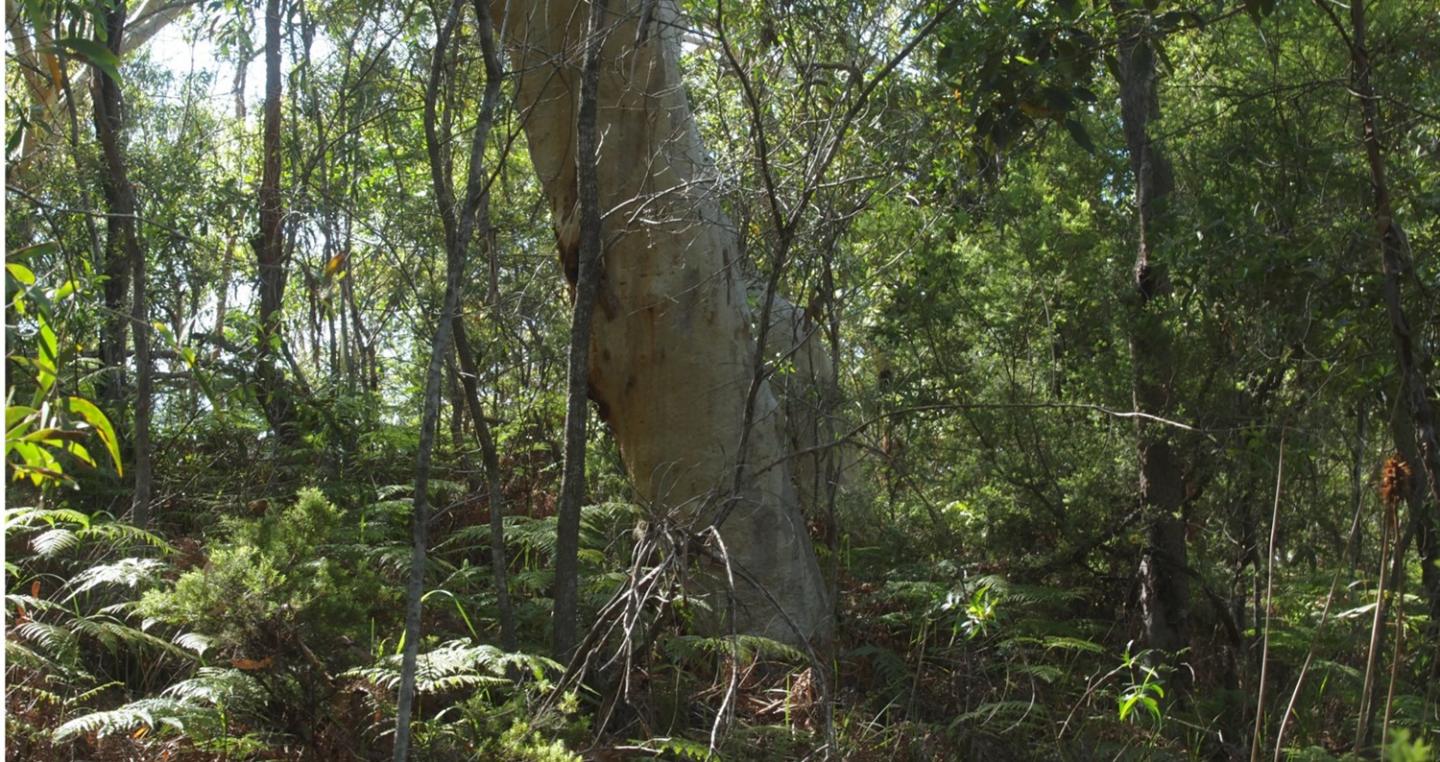
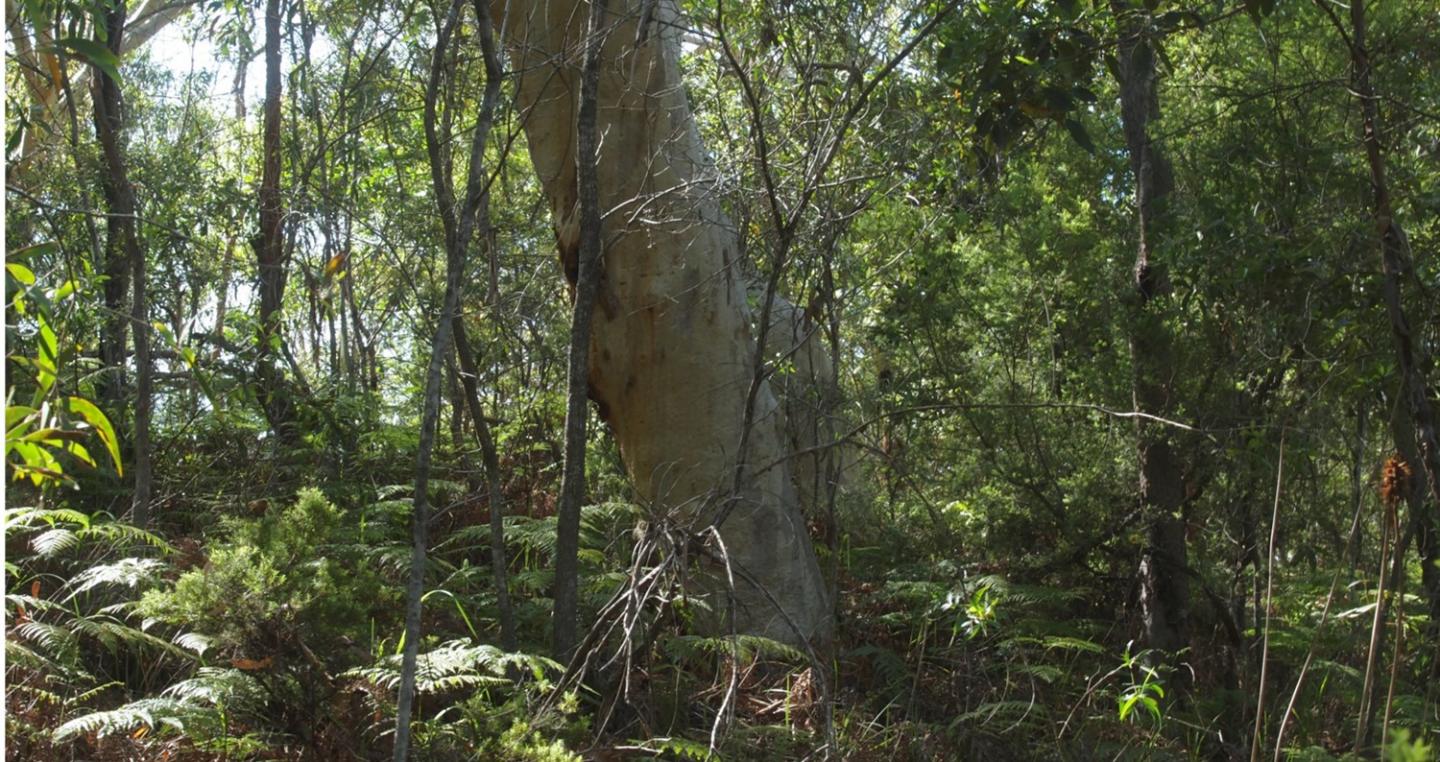
He said School of Agriculture and Food Sciences researcher Professor Susanne Schmidt had suggested that data from the Cooloola dunes from the Great Sandy National Park on Australia’s Sunshine Coast would be ideal to answer this question.
“This comprises a wide range of plant species in close proximity in very different soil environments, allowing the nature versus nurture question to be teased apart.
“It’s also important to note that Australia is one of the few places where you have access to representatives of the entire plant kingdom – you couldn’t have covered the same evolutionary range of plant species in Europe for instance.”
Professor Schmidt said Cooloola was ideally suited with a progressive series of dune systems that had developed over several hundred thousand years within close proximity.
“We collected root and soil samples from non-seed and seed plant lineages – lycopods, ferns, cycads, conifers and flowering plants – that co-occur across dune systems, and surveyed the resident bacterial communities,” she said.
The study found that plant genetics influenced the recruitment of root communities in a manner consistent with their evolution, but this was secondary to the much larger environmental influence.
It also supported the inference that a core root microbiome has evolved with terrestrial plants over their 400 million year history.
Professor Schmidt said one significant difference between plants and animals was plants’ limited ability to vertically transmit microorganisms between generations.
“Plants also have limited mobility and generally remain at a single place their entire lives. As a consequence, microbial communities associated with plants have to be primarily drawn from the environment,” she said.
Similar to recent revelations on the importance of gut microbial communities in animals, there was good evidence that plant growth and vigour depended on favourable microbes.
“Increasingly, farmers want to capitalise on beneficial microbes to support their crops, and science can assist the design of effective crop probiotics to make crops healthier, hardier and more productive, by increasing their resilience to pests, diseases and environmental stresses, and improving access to nutrients,” she said.
“Knowing that all plants harbour a core root microbiome is a step towards understanding the principles of the intricate relationship between microorganisms and plants.
“We now need to find out what roles these root-enriched microorganisms play and how we can harness their potential for ecological agriculture.”
The study, which also involved Dr Paul Dennis, Dr Chanyarat Paungfoo-Lonhienne and Dr Richard Brackin of UQ’s School of Agriculture and Food Sciences, Professor Mark Ragan of UQ’s Institute for Molecular Bioscience, and UQ Science honours graduate and Biodiversity Assessment and Management senior botanist Lui Weber, is published in Nature Communications (DOI 10.1038/s41467-017-00262-8).
###
It was funded primarily by the Queensland Smart State Co-Investment Fund, James S. McDonnell Foundation and Bioplatforms Australia.
Media Contact
Philip Hugenholtz
[email protected]
61-733-653-822
@uq_news
http://www.uq.edu.au
Original Source
https://www.uq.edu.au/news/article/2017/08/plants-love-microbes-%E2%80%93-and-so-do-farmers http://dx.doi.org/10.1038/s41467-017-00262-8