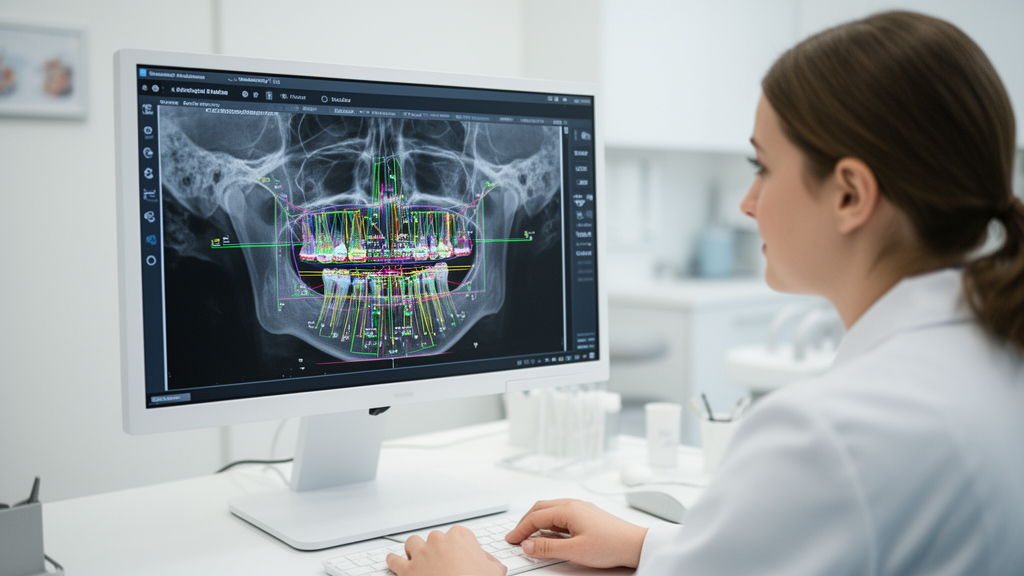
Artificial intelligence models demonstrated high diagnostic accuracy in identifying skeletal Class III malocclusion among children and adolescents, according to a systematic review and exploratory meta-analysis published in Frontiers in Pediatrics. occlusal anomalies represent common clinical concerns in pediatric populations, where conventional diagnostic evaluations frequently prove observer-dependent and demanding of clinical time. The investigation systematically synthesized evidence regarding machine learning and deep learning applications developed to detect and categorize malocclusion in patients aged eighteen years or younger.
The study protocol strictly adhered to the PRISMA 2020 and PRISMA-DTA reporting frameworks to examine automated orthodontic diagnostic systems. Researchers conducted exhaustive literature searches across six electronic databases, targeting comparative investigations that evaluated artificial intelligence algorithms against established clinical and radiographic reference standards. To ensure methodological rigor, two independent reviewers carried out study screening, study selection, data extraction, and quality assessment using the standardized QUADAS-2 tool.
Qualitative synthesis included thirty distinct investigations evaluating varied dimensions of artificial intelligence in pediatric orthodontic assessment. The vast majority of the qualitatively analyzed studies reported individual diagnostic accuracy figures exceeding 80 percent, reflecting substantial performance across algorithmic architectures.
Quantitative synthesis was restricted to a subset of four investigations specifically evaluating the diagnostic performance of artificial intelligence in classifying skeletal Class III malocclusion.
The quantitative pooling revealed a summary sensitivity of 89.2 percent, with a 95 percent confidence interval spanning from 73.9 percent to 96.0 percent. The corresponding pooled specificity reached 90.5 percent, accompanied by a 95 percent confidence interval of 82.2 percent to 95.2 percent. Furthermore, the combined diagnostic odds ratio was calculated at 120.9, with a confidence interval between 23.7 and 616.2, indicating strong discriminative capability for distinguishing skeletal Class III discrepancies from other presentations.
Despite these favorable diagnostic metrics, the analysis identified substantial statistical heterogeneity among the included studies, with I-squared values ranging between 85 percent and 92 percent.
Quality assessments conducted using the QUADAS-2 criteria indicated that most included studies exhibited a low risk of bias across evaluated domains. Nevertheless, the systematic review underscored that available evidence has a limited sample size, significant heterogeneity, and has focused primarily on Class III malocclusion.
The author concluded that while artificial intelligence offers promising diagnostic value for pediatric orthodontic evaluation, current evidence remains preliminary and insufficient to support independent implementation in clinical workflows. Establishing routine clinical implementation will require larger and standardized diagnostic studies.
In detailing the quantitative outcomes for skeletal Class III malocclusion, the review documented a summary area under the curve of 0.75.
The selection process also followed specific screening benchmarks that shaped the final evidence collection. Beyond assessing diagnostic accuracy, the review aimed to determine factors that influence the models.
Subject of Research: Diagnostic accuracy of artificial intelligence models for pediatric malocclusion
Article Title: Artificial intelligence for the diagnosis of malocclusion in children and adolescents: a systematic review of diagnostic accuracy with an exploratory meta-analysis
Article References: Sun, B. (2026). Artificial intelligence for the diagnosis of malocclusion in children and adolescents: a systematic review of diagnostic accuracy with an exploratory meta-analysis. Frontiers in Pediatrics, 14, Article 1942794. https://doi.org/10.3389/fped.2026.1942794
Image Credits: AI Generated
DOI: 10.3389/fped.2026.1942794
Keywords: artificial intelligence, malocclusion, pediatric dentistry, orthodontics, diagnostic accuracy, systematic review, meta-analysis, skeletal Class III, sensitivity, specificity, QUADAS-2, deep learning, machine learning, cervical vertebral maturation, landmark detection, growth prediction, PRISMA-DTA
News Source: Blake Davidson. (November 14, 2026). Artificial Intelligence Shows Diagnostic Accuracy for Pediatric Skeletal Class III Malocclusion. Scienmag.