• HOME
  • NEWS
  • EXPLORE
    • CAREER
      • Companies
      • Jobs
    • EVENTS
    • iGEM
      • News
      • Team
    • PHOTOS
    • VIDEO
    • WIKI
  • BLOG
  • COMMUNITY
    • FACEBOOK
    • INSTAGRAM
    • TWITTER
Saturday, February 7, 2026
BIOENGINEER.ORG
No Result
View All Result
  • Login
  • HOME
  • NEWS
  • EXPLORE
    • CAREER
      • Companies
      • Jobs
        • Lecturer
        • PhD Studentship
        • Postdoc
        • Research Assistant
    • EVENTS
    • iGEM
      • News
      • Team
    • PHOTOS
    • VIDEO
    • WIKI
  • BLOG
  • COMMUNITY
    • FACEBOOK
    • INSTAGRAM
    • TWITTER
  • HOME
  • NEWS
  • EXPLORE
    • CAREER
      • Companies
      • Jobs
        • Lecturer
        • PhD Studentship
        • Postdoc
        • Research Assistant
    • EVENTS
    • iGEM
      • News
      • Team
    • PHOTOS
    • VIDEO
    • WIKI
  • BLOG
  • COMMUNITY
    • FACEBOOK
    • INSTAGRAM
    • TWITTER
No Result
View All Result
Bioengineer.org
No Result
View All Result
Home NEWS Science News Biology

Scientist models Smith-Lemli-Opitz syndrome in adult stem cells

Bioengineer by Bioengineer
January 24, 2018
in Biology, Science News
Reading Time: 2 mins read
0
Share on FacebookShare on TwitterShare on LinkedinShare on RedditShare on Telegram
IMAGE

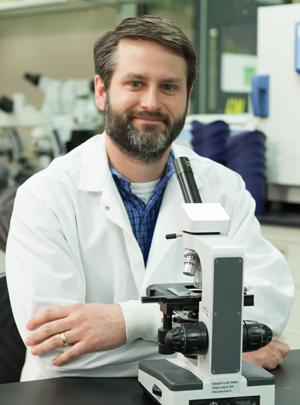
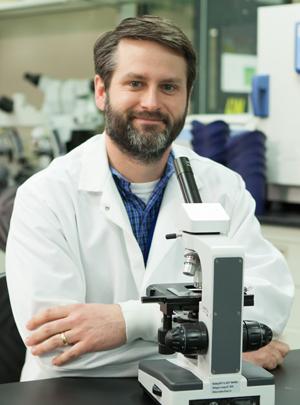
SIOUX FALLS, S.D. – Studies performed by a Sanford Research scientist using an innovative stem-cell model for a fatal developmental disorder is the focus of a recent study published in Nature Medicine. Kevin Francis, Ph.D. uncovered unique cellular defects associated with Smith-Lemli-Opitz syndrome (SLOS) by modeling this disease using induced pluripotent stem cells.

Francis' study is titled "Modeling Smith-Lemli-Opitz syndrome with induced pluripotent stem cells reveals a causal role for Wnt/β-catenin defects in neuronal cholesterol synthesis phenotypes."

SLOS is a rare developmental disorder caused by mutations in the enzyme DHCR7 responsible for the final step in the production of cholesterol. DHCR7 mutations prevent 7-dehydrocholesterol (7DHC) conversion to cholesterol. Impaired cholesterol synthesis underlies a group of human disorders, including SLOS, that are characterized by cognitive impairment, congenital malformations and distinct behavioral phenotypes, including autism. Specific to SLOS, patients experience delayed development and malformations in certain organs like the brain, heart and liver.

Francis and his team used induced pluripotent stem cells, which have the ability to form many types cells, derived from patient skin cells to reveal novel changes in cellular events regulated by cholesterol synthesis, including a set of proteins critical for brain development and function known as the Wnt signaling pathway. Further, Francis noted that 7DHC accumulation, not cholesterol deficiency, was a hallmark of these cells.

Nature Medicine is a biomedical research journal that publishes the latest advances in biomedical research for scientists and physicians.

###

About Sanford Research

Sanford Research is a non-profit research organization and is part of Sanford Health, an integrated health system headquartered in the Dakotas. Sanford Health is one of the largest health systems in the nation with a presence in nine states and three countries. More than $600 million in gifts from Denny Sanford has provided for an expansion of research initiatives in type 1 diabetes, breast cancer and genomics in internal medicine.

With a team of more than 200 researchers, Sanford Research comprises several research centers, including Children's Health Research, Edith Sanford Breast Center, Cancer Biology, Center for Health Outcomes and Prevention and Sanford Sports Science Institute.

Media Contact

Tim Gerszewski
[email protected]
605-366-2432
@sanfordhealth

http://www.sanfordhealth.org
Share12Tweet8Share2ShareShareShare2

Related Posts

Exploring Decision-Making in Dementia Caregivers’ Mobility

February 7, 2026

Succinate Receptor 1 Limits Blood Cell Formation, Leukemia

February 7, 2026

Palmitoylation of Tfr1 Drives Platelet Ferroptosis and Exacerbates Liver Damage in Heat Stroke

February 7, 2026

Oxygen-Enhanced Dual-Section Microneedle Patch Improves Drug Delivery and Boosts Photodynamic and Anti-Inflammatory Treatment for Psoriasis

February 7, 2026
Please login to join discussion

POPULAR NEWS

  • Robotic Ureteral Reconstruction: A Novel Approach

    Robotic Ureteral Reconstruction: A Novel Approach

    82 shares
    Share 33 Tweet 21
  • Digital Privacy: Health Data Control in Incarceration

    63 shares
    Share 25 Tweet 16
  • Study Reveals Lipid Accumulation in ME/CFS Cells

    57 shares
    Share 23 Tweet 14
  • Breakthrough in RNA Research Accelerates Medical Innovations Timeline

    53 shares
    Share 21 Tweet 13

About

We bring you the latest biotechnology news from best research centers and universities around the world. Check our website.

Follow us

Recent News

Exploring Decision-Making in Dementia Caregivers’ Mobility

Succinate Receptor 1 Limits Blood Cell Formation, Leukemia

Palmitoylation of Tfr1 Drives Platelet Ferroptosis and Exacerbates Liver Damage in Heat Stroke

Subscribe to Blog via Email

Enter your email address to subscribe to this blog and receive notifications of new posts by email.

Join 73 other subscribers
  • Contact Us

Bioengineer.org © Copyright 2023 All Rights Reserved.

Welcome Back!

Login to your account below

Forgotten Password?

Retrieve your password

Please enter your username or email address to reset your password.

Log In
No Result
View All Result
  • Homepages
    • Home Page 1
    • Home Page 2
  • News
  • National
  • Business
  • Health
  • Lifestyle
  • Science

Bioengineer.org © Copyright 2023 All Rights Reserved.