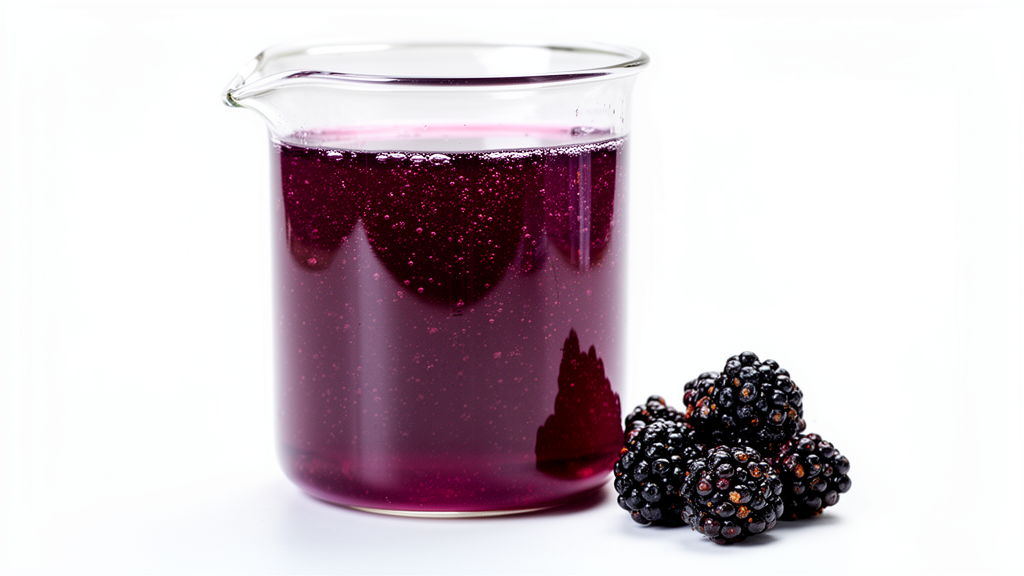
Fermenting black wolfberry (Lycium ruthenicum) juice with a synergistic consortium of three lactic acid bacterial strains and a composite plant substrate substantially enhances beverage quality, boosting total sugars by 45.16 percent, total phenolics by 43.96 percent, and antioxidant radical scavenging by roughly 50 to 60 percent in laboratory tests. Black wolfberry naturally contains proteins, polysaccharides, fatty acids, amino acids, polyphenols, ascorbic acid, and tocopherols, exhibiting antioxidant and anti-inflammatory properties superior to red wolfberry (Lycium barbarum). However, raw black wolfberry juice faces processing hurdles, including low utilization, poor standardization, undesirable astringency, and restricted release of cellular bioactives. To resolve these flavor and extraction barriers, researchers from Weifang University, Weifang Academy of Agricultural Sciences, and Shandong Vocational Animal Science and Veterinary College developed an optimized fermentation protocol pairing selected bacteria with complementary botanical ingredients to enhance sensory acceptance and nutritional functionality.
The initial phase evaluated five individual bacterial cultures—Lactobacillus rhamnosus GG, Lactobacillus delbrueckii subsp. bulgaricus, Limosilactobacillus reuteri, Lacticaseibacillus casei, and Streptococcus thermophilus—alongside five distinct three-strain consortia inoculated at 2.5 percent concentration into sealed anaerobic vessels held at 30 degrees Celsius for 18 hours. Among monocultures, Limosilactobacillus reuteri yielded a sensory score of 84.27, a pH of 5.21, a total sugar content of 111 milligrams per liter, and total acidity of 61.8 milligrams per liter, establishing a predominantly sweet flavor profile. Meanwhile, Lactobacillus rhamnosus GG produced a balanced sweet-and-sour profile scoring 80.57 while achieving the highest single-strain total phenolic content at 93.4 milligrams per liter, supported by high beta-glucosidase activity that liberates phenolic aglycones. In contrast, Streptococcus thermophilus caused rapid acidification, resulting in the lowest pH of 4.49, the highest total acidity at 84.8 milligrams per liter, and a poor sensory score of 45.0 due to harsh sourness.
Because consumer products require balancing palatability with bioactivity, the researchers examined three-strain consortia, finding that pairings containing both Lactobacillus rhamnosus GG and Lactobacillus delbrueckii subsp. bulgaricus consistently preserved an appealing sweet-and-sour profile, scoring above 80 points. Conversely, consortium treatments omitting this pairing experienced weakened sweetness, with sensory scores falling to 68.18 for Lactobacillus delbrueckii subsp. bulgaricus, Limosilactobacillus reuteri, and Lacticaseibacillus casei, and dropping to 64.46 when Limosilactobacillus reuteri, Lacticaseibacillus casei, and Streptococcus thermophilus were combined. Although monoculture Lactobacillus rhamnosus GG achieved higher total phenolics than mixed cultures—partially because certain multi-strain blends degrade complex phenolics—the combination of Lactobacillus rhamnosus GG, Lactobacillus delbrueckii subsp. bulgaricus, and Lacticaseibacillus casei proved superior. This specific consortium generated 51.7 milligrams per liter of total phenolics, significantly exceeding all other mixed cultures, while maintaining a high sensory rating of 81.65 without detrimental effects on color, taste, or texture.
With the starter consortium established, the authors carried out univariate experiments to determine baseline dosage ranges for the compound substrate ingredients. The raw components included dried black wolfberry and silverweed (Potentilla anserina), both harvested from Golmud City in Qinghai Province at an elevation of 2,800 meters, combined with isomalto-oligosaccharide. Testing black wolfberry across 30 to 90 grams demonstrated that increasing berry mass enhanced nutrient density, raising total phenolics from 42.92 to 86.96 milligrams per liter and maximizing sensory scores at 83.27 with 75 grams. Assessments of silverweed across 25 to 45 grams revealed that moderate additions stabilized soluble protein at 173.99 milligrams per liter at 35 grams, whereas exceeding 40 grams caused sediment accumulation and lowered palatability. Evaluating isomalto-oligosaccharide across 4 to 16 grams indicated that an 8-gram addition peaked soluble protein at 334.06 milligrams per liter, while 16 grams maximized phenolics at 72.24 milligrams per liter, although excessive prebiotic levels reduced protein decomposition efficiency.
To identify the optimal formulation, the team employed a three-factor Box–Behnken response surface design while maintaining water at 400 milliliters following preliminary dilution tests. Using sensory preference as the response variable across 15 runs, regression modeling generated a quadratic equation showing high predictive precision, with an R-squared value of 0.946, a model F-value of 9.74, and a non-significant lack of fit. Interaction analysis revealed that the pairing between black wolfberry and isomalto-oligosaccharide exerted the strongest significant effect on flavor harmony, displaying an F-value of 25.57. Numerical optimization identified the ideal formulation as 77.97 grams of black wolfberry, 39.32 grams of silverweed, and 6.37 grams of isomalto-oligosaccharide fermented anaerobically at 30 degrees Celsius for 18 hours with a 7.5 percent inoculum volume of the selected three-strain mixture. Preparing this optimized juice, termed OBW, yielded an empirical sensory score of 87.12, closely matching the model’s theoretical prediction of 86.48.
Physicochemical and functional evaluations of the fermented OBW revealed significant nutritional enhancements over the unfermented control juice. Meanwhile, bacterial glycosyl hydrolase activity promoted the enzymatic cleavage of polysaccharides and prebiotic oligosaccharides, driving a 45.16 percent increase in total sugars and a 43.96 percent increase in total phenolics. This phenolic accumulation directly fortified the beverage’s antioxidant profile. Post-fermentation enzymatic assays demonstrated that superoxide dismutase activity rose by 106.73 percent, while catalase activity increased by 112.39 percent. Similarly, non-enzymatic radical scavenging capacity expanded significantly, with DPPH and ABTS radical scavenging rates improving by 48.58 percent and 59.47 percent, respectively, demonstrating that mixed fermentation effectively unleashes antioxidant potential from complex botanical substrates.
High-throughput 16S ribosomal RNA sequencing of the V3–V4 hypervariable region delineated the community restructuring occurring during fermentation. Alpha diversity analysis indicated that microbial richness declined under acidification, whereas community diversity increased significantly, supported by sequencing coverage exceeding 99 percent. Across all samples, 18 bacterial phyla and 240 genera were identified, dominated by Bacillota and Pseudomonadota, which increased in relative abundance from 72.77 to 75.40 percent and from 18.69 to 23.62 percent, respectively, while Bacteroidota decreased from 8.17 to 0.30 percent. At the genus level, environmental acid stress suppressed Weissella, whose relative abundance dropped from 71.37 to 46.94 percent. Conversely, beneficial food-associated genera flourished: Leuconostoc increased from 0.28 to 18 percent, Lactiplantibacillus rose from 0.49 to 8.57 percent, and Latilactobacillus expanded from undetectable levels to 0.25 percent. Spearman correlation analysis confirmed positive associations among these three expanding genera, alongside strong negative correlations with environmental bacteria such as Klebsiella, Serratia, Pseudomonas, and Acinetobacter, reflecting the inhibitory effects of organic acids and bacteriocins.
Volatile profiling using headspace solid-phase microextraction and gas chromatography–mass spectrometry identified 363 volatile substances, demonstrating substantial flavor reconstruction. Unfermented juice contained 81 unique volatiles, whereas fermented OBW yielded 146 unique volatiles, including 25 lipids, 21 organic acids, 18 oxygen-containing compounds, and 18 benzodiazepines. Odor activity value analysis highlighted key aroma contributors, dominated by fruity esters including ethyl 2-methylpropanoate, ethyl 2-methylbutanoate, hexyl acetate, isobutyl acetate, 3-methyl-1-butyl acetate, and ethyl propionate, alongside aromatic compounds like styrene and 4-ethylphenol. Fermentation also generated 2-octanone, a methyl ketone delivering fruity and creamy notes produced through fatty acid beta-oxidation and decarboxylation. Concurrently, several harsh aldehydes, alcohols, and lipid oxidation byproducts were downregulated. Furthermore, 246 differential volatiles were detected, including 150 upregulated and 96 downregulated compounds.
Non-targeted metabolomic profiling using liquid chromatography-quadrupole time-of-flight mass spectrometry annotated 1,164 non-volatile compounds, predominantly shikimic acids, phenylpropanoids, terpenoids, and fatty acids. Microbial action catalyzed the synthesis of four entirely new metabolites: astragaloside III, nomilinic acid, N-acetylcadaverine, and 9-hydroxy-4-methoxypsoralen. In total, 647 differential metabolites were identified, comprising 396 upregulated and 251 downregulated compounds. Statistical correlation analyses demonstrated synchronized shifts between pentacyclic triterpene acids and linolenic derivatives. Furthermore, Lactiplantibacillus abundance exhibited strong positive correlations with specific hydroxylated and oxo-fatty acids like 9-oxooctadecanoic acid, while showing negative correlations with linolenic acid derivatives and sugars including melibiose, maltose, and trehalose, illustrating active carbohydrate consumption and bacterial lipid metabolism.
Functional pathway annotation against the Kyoto Encyclopedia of Genes and Genomes database revealed that differential non-volatile metabolites were enriched across 77 biochemical pathways, identifying 15 core metabolic routes. Lipid metabolism was the most prominent category, accounting for 23.08 percent of enriched metabolites, with substantial involvement of alpha-linolenic acid cascades. Additionally, 13.19 percent of differential metabolites mapped to ATP-binding cassette transporters, which mediate the cellular transport of terpenoids, while an equivalent 13.19 percent were enriched in amino acid metabolism. Fermentation using the three-strain consortium also significantly altered flavone and flavonol biosynthesis as well as beta-alanine metabolism.
The authors noted several important constraints and scope limitations inherent to this laboratory investigation. Sensory evaluations were conducted with a preliminary panel of twenty undergraduate food science students with a mean age of 21 years from Weifang University; while rigorous for initial optimization, validating consumer acceptance requires larger, demographically diverse tasting groups. Furthermore, the experiments were conducted strictly at laboratory bench scale in 500-milliliter glass bottles, meaning commercialization will require pilot-scale trials, production cost analyses, and detailed evaluations of product storage stability and shelf life. Finally, the observed multi-omics relationships between bacterial abundance, volatile compounds, and functional metabolites remain correlative rather than definitively causal.
Subject of Research: Fermentation and metabolic optimization of black wolfberry juice using mixed lactic acid bacteria
Article Title: Fermentation of black wolfberry juice using a mixed culture and compound substrate: screening of lactic acid bacteria, process optimization, and quality analysis
Article References: Zhu, H., Zhu, R., Gao, W., Yao, Q., Wu, Y., Fan, J., Zhao, Z., & Xiao, F. (2026). Fermentation of black wolfberry juice using a mixed culture and compound substrate: screening of lactic acid bacteria, process optimization, and quality analysis. Frontiers in Microbiology, 17, Article 1962348. https://doi.org/10.3389/fmicb.2026.1962348
Image Credits: AI Generated
DOI: 10.3389/fmicb.2026.1962348
Keywords: black wolfberry, Lycium ruthenicum, lactic acid bacteria, Lactobacillus rhamnosus GG, Lactobacillus delbrueckii subsp. bulgaricus, Lacticaseibacillus casei, Potentilla anserina, isomalto-oligosaccharide, Box-Behnken design, antioxidant activity, phenolic compounds, volatile metabolomics, non-targeted metabolomics, microbiota structure, 16S rRNA sequencing, KEGG pathway enrichment, food fermentation
News Source: Drew Townsend. (November 13, 2026). Mixed Lactic Acid Fermentation Elevates Antioxidants in Black Wolfberry Juice. Scienmag.