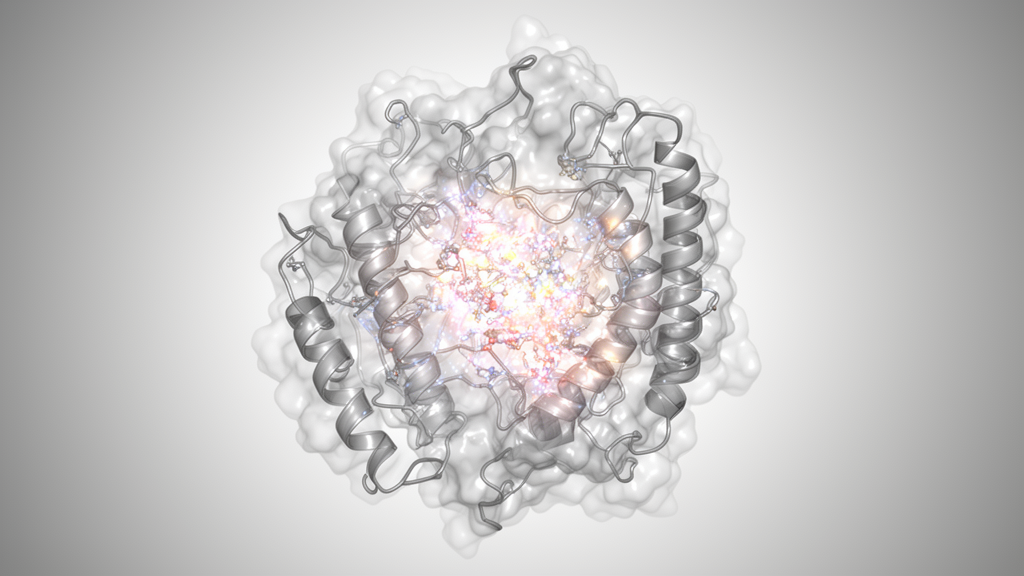
Researchers at the Icahn School of Medicine at Mount Sinai have successfully mapped the complete structure of the AASS enzyme, providing a detailed molecular blueprint that could guide the development of new treatments for glutaric aciduria type 1. This rare genetic disorder is characterized by the accumulation of toxic metabolites, which can lead to irreversible brain damage and severe neurological complications. The study, published in the November 13 online issue of Science Advances, represents a significant step forward in understanding the structural and biochemical mechanisms that regulate this specific enzyme involved in the breakdown of the amino acid lysine.
The investigation identified a region within the AASS protein that regulates its activity, providing structural insights that could help guide drug design. By isolating the complete human enzyme and utilizing high-resolution imaging techniques, the team was able to visualize the enzyme in unprecedented detail.
To achieve this structural mapping, the research team first developed a specialized method to isolate the complete human AASS enzyme from biological samples. They then employed cryo-electron microscopy, a powerful technique that allows scientists to visualize the three-dimensional structures of biological molecules at high resolution.
Complementing the structural imaging, the investigators conducted a series of biochemical experiments to examine how the enzyme functions under various conditions. These experiments included testing the enzyme in the presence of substances known to inhibit or activate its activity.
Further analysis involved computer simulations that revealed how the enzyme’s structure can change over time and how those movements influence its overall activity.
A key finding from the study is the identification of a hinge-like region within the enzyme that plays a crucial role in its regulation. The researchers discovered that seemingly minor structural adjustments in this flexible region can produce substantial changes in the enzyme’s function. This discovery highlights the importance of subtle conformational changes in controlling biological activity and suggests that targeting this specific region could be an effective strategy for developing therapeutic inhibitors.
Michael Lazarus, PhD, an Associate Professor of Pharmacological Sciences and Associate Director of the Mount Sinai Center for Therapeutics Discovery, emphasized the significance of this structural insight. He noted that this is the first detailed picture of the complete AASS enzyme, providing a much clearer understanding of how its different parts work together. Lazarus pointed out that relatively small changes in a flexible region of the protein can have a substantial effect on its activity, offering an important new avenue for exploring potential treatments for glutaric aciduria type 1.
Sander Houten, PhD, a Professor of Genetics and Genomic Sciences at the Icahn School of Medicine, highlighted the broader implications of the study. He stated that the investigation of AASS as a potential drug target has revealed multiple ways to alter the enzyme’s activity. According to Houten, a better understanding of how nature uses these mechanisms to control lysine degradation will help with the development of treatments for the disease.
The findings suggest that understanding this regulatory mechanism could help scientists develop inhibitors that act on AASS more effectively.
Robert J. DeVita, PhD, Professor of Pharmacological Sciences and Director of Medicinal Chemistry in the Marie-Josée and Henry R. Kravis Drug Discovery Institute, added that the new enzyme structural knowledge allows the team to begin exploring how to design molecules that inhibit AASS. DeVita noted that the next step is to assess whether these designed molecules could eventually lead to a viable treatment for the disease.
The researchers explicitly noted that the findings represent an early step toward developing a therapy, rather than a completed treatment or cure for glutaric aciduria type 1. The experiments were conducted in laboratory settings, and the results are based on structural and biochemical analyses of the enzyme. Further research, including studies in animal models and potentially human clinical trials, will be needed to determine whether targeting AASS is safe and effective in a living organism.
The team’s next step is to use the structural map to identify and develop specific molecules that inhibit the enzyme. In addition to advancing research into glutaric aciduria type 1, the findings offer broader insight into how enzymes can be regulated by subtle changes in their structure.
The work was supported by the Eunice Kennedy Shriver National Institute of Child Health and Human Development, and the National Institute of General Medical Sciences of the National Institutes of Health.
Specific backing was provided by the Eunice Kennedy Shriver National Institute of Child Health and Human Development and the National Institute of General Medical Sciences under award numbers R01HD112518, R01HD118270, and R35GM124838.
The Icahn School of Medicine acts as the sole academic partner for seven member hospitals within the Mount Sinai Health System, which together provide clinical care across New York City. These affiliated clinical facilities include The Mount Sinai Hospital, Mount Sinai Brooklyn, Mount Sinai Morningside, Mount Sinai Queens, Mount Sinai South Nassau, Mount Sinai West, and the New York Eye and Ear Infirmary of Mount Sinai.
The research operates within a large biomedical environment that ranks ninth nationwide in National Institutes of Health grant funding. According to metrics from the Association of American Medical Colleges, the school is situated in the ninetieth percentile among United States private medical schools for sponsored programs direct expenditures per principal investigator. More than 6,900 scientists, educators, and clinicians conduct basic and translational studies across multidisciplinary institutes with an emphasis on translational research and therapeutics. Furthermore, the academic enterprise encompasses over 1,200 students in MD, PhD, MD-PhD, and master’s degree curricula, the nation’s largest graduate medical education program with more than 2,700 clinical residents and fellows training throughout the health system, and over 470 postdoctoral research fellows within twelve degree-granting programs in the Graduate School of Biomedical Sciences.
Subject of Research: Structural mapping of the AASS enzyme for potential therapeutic intervention in glutaric aciduria type 1
Article Title: Mapping an enzyme offers clues to treating rare genetic disease
Article References: Mapping an enzyme offers clues to treating rare genetic disease. Original publication (Bibliographic details unavailable.)
Image Credits: AI Generated
DOI: Not provided
Keywords: glutaric aciduria type 1, AASS enzyme, cryo-electron microscopy, lysine degradation, Mount Sinai, Science Advances, metabolic disorder, drug target identification, allosteric regulation, structural biology, neurological complications, enzyme inhibition, human enzyme isolation, biochemical experiments, computer simulations, rare genetic disease, therapeutic development, molecular structure, protein flexibility, NIH funding
News Source: Jason Bradley. (November 13, 2026). Mount Sinai Maps AASS Enzyme Structure for GA1 Therapy. Scienmag.