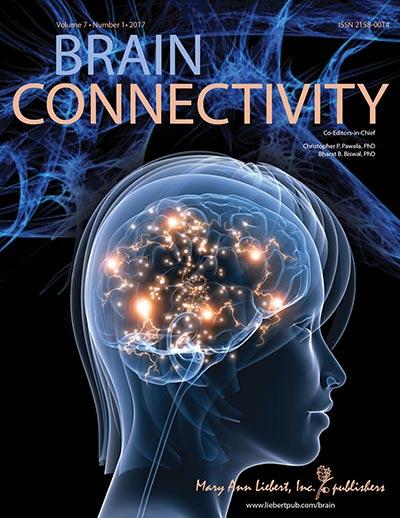
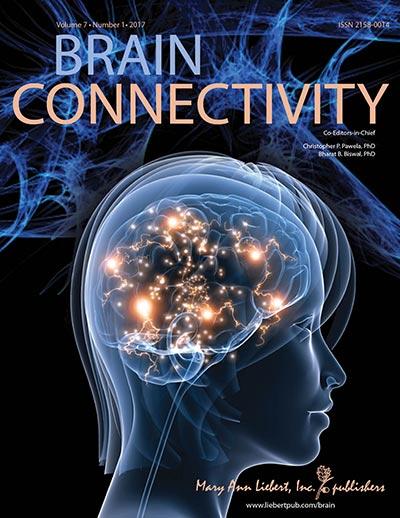
Credit: Mary Ann Liebert, Inc., publishers
New Rochelle, NY, February 8, 2017–A new study examined how brain functional connectivity patterns change over the continuum from wakefulness to being in an anesthesia-induced state of unconsciousness. The results, which demonstrate dynamic changes associated with high and low consciousness in rats, are described in Brain Connectivity, a peer-reviewed journal from Mary Ann Liebert, Inc., publishers. The article is available free on the Brain Connectivity website until March 8, 2017.
In the article entitled "Dynamic Connectivity Patterns in Conscious and Unconscious Brain," authors Yuncong Ma, Christina Hamilton, and Nanyin Zhang, Pennsylvania State University (University Park, PA), show that whole-brain networks contain some relatively stable connectivity patterns that recur from the awake into the anesthetized states. The researchers also identified certain specific patterns that were strongly associated with high and low consciousness states.
"What determines an individual's conscious state is one of the most vexing questions in neuroscience today," says Christopher Pawela, PhD, Co-Editor-in-Chief of Brain Connectivity and Assistant Professor, Medical College of Wisconsin. "These researchers have shown how brain networks change as a function of anesthetic dosage. Their research provides insights on how consciousness and anesthesia levels are linked, which may lead to a better understanding of the conscious and unconscious states."
###
Research reported in this publication was supported by the National Institute of Mental Health under Award Number R01MH098003 and the National Institute of Neurological Diseases and Stroke under Award Number R01NS085200. The content is solely the responsibility of the authors and does not necessarily represent the official views of the National Institutes of Health.
About the Journal
Brain Connectivity is the essential peer-reviewed journal covering groundbreaking findings in the rapidly advancing field of connectivity research at the systems and network levels. Published 10 times per year in print and online, the Journal is under the leadership of Founding and Co-Editors-in-Chief Christopher Pawela, PhD, Assistant Professor, Medical College of Wisconsin, and Bharat Biswal, PhD, Chair of Biomedical Engineering, New Jersey Institute of Technology. It includes original peer-reviewed papers, review articles, point-counterpoint discussions on controversies in the field, and a product/technology review section. To ensure that scientific findings are rapidly disseminated, articles are published Instant Online within 72 hours of acceptance, with fully typeset, fast-track publication within 4 weeks. Tables of content and a sample issue may be viewed on the Brain Connectivity website.
About the Publisher
Mary Ann Liebert, Inc., publishers is a privately held, fully integrated media company known for establishing authoritative medical and biomedical peer-reviewed journals, including Journal of Neurotrauma and Therapeutic Hypothermia and Temperature Management. Its biotechnology trade magazine, GEN (Genetic Engineering & Biotechnology News), was the first in its field and is today the industry's most widely read publication worldwide. A complete list of the firm's 80 journals, newsmagazines, and books is available on the Mary Ann Liebert, Inc., publishers website.
Media Contact
Kathryn Ryan
[email protected]
914-740-2250
@LiebertPub
http://www.liebertpub.com