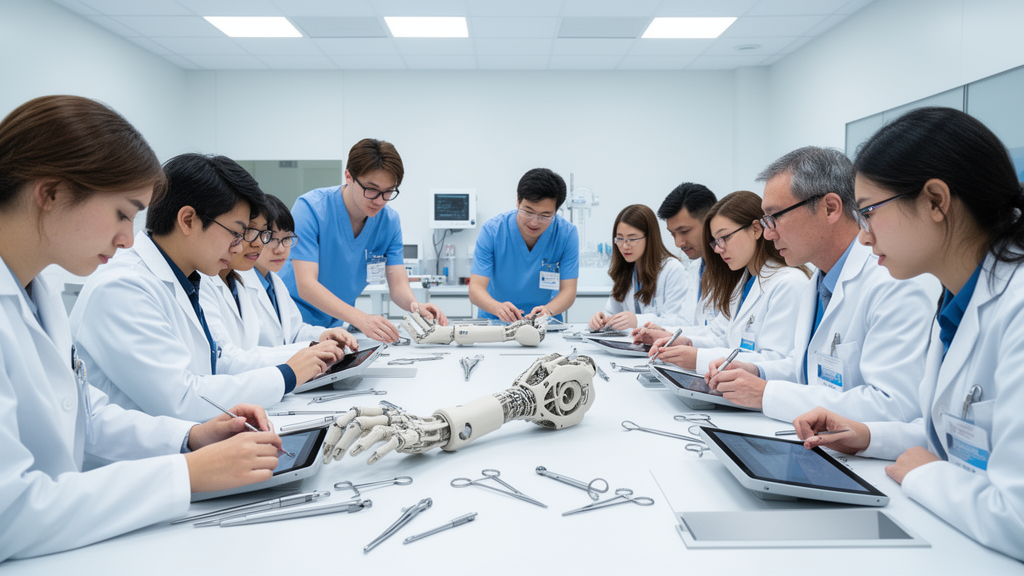
A newly evaluated cross-institutional pedagogical framework designed for intelligent medical engineering programs was associated with positive shifts in basic medical knowledge acquisition and autonomous learning efficiency. The investigation, conducted as action research combined with quasi-experimental pedagogical practice, examined how restructuring foundational medical curricula can address the educational requirements of students entering interdisciplinary healthcare technology fields from engineering backgrounds.
The rapid convergence of artificial intelligence, big data, and engineering technologies with clinical medicine has established the discipline of intelligent medical engineering. This field requires the training of compound professionals equipped with medical literacy, engineering competencies, and innovative thinking. However, foundational coursework such as Introduction to Basic Medicine frequently lacks mature pedagogical paradigms and aligned experimental setups, leaving conventional pure medical instruction misaligned with the learning styles of engineering students.
To address this structural mismatch, researchers designed a full-cycle pedagogical reform framework focused on medical-engineering integration. The curriculum initiative was structured around two core dimensions: the systematic restructuring of interdisciplinary subject matter and the establishment of a closed-loop teaching paradigm. This paradigm linked pre-class preparatory tasks, interactive in-class instructional sessions, and post-class tiered exercises designed to consolidate learning.
The study implemented a diversified assessment model combining formative evaluations throughout the term with summative examinations at the conclusion of the course. To gauge instructional effectiveness, the research team analyzed multiple academic indicators, including course grades, classroom engagement data, formal reliability analyses of survey instruments, and detailed post-course interview feedback gathered from participating students.
Evaluation of the intervention indicated that the cross-institutional model correlated with improved autonomous learning efficiency among engineering students. Participants demonstrated consolidated mastery of foundational medical concepts alongside measurable gains in interdisciplinary cognitive competence, supporting the systematic construction of their medical knowledge architecture.
Despite the observed gains, the empirical investigation documented several distinct operational challenges during implementation. The authors noted that interdisciplinary practical components lacked sufficient depth, execution of differentiated tiered instruction remained suboptimal across varying student skill levels, and certain formative assessment criteria lacked clear operational definition.
The researchers proposed targeted optimization strategies to resolve these instructional shortcomings. The authors concluded that the full-cycle model provides a transferable, empirically tested educational reference for cross-institutional foundational medical training across emerging interdisciplinary disciplines.
Subject of Research: Pedagogical reform of basic medical courses for intelligent medical engineering programs
Article Title: Teaching practice and pedagogical reform of basic medical courses for intelligent medical engineering program under cross-institutional integration
Article References: Yang, W., Xu, F., Yan, Y., Wu, Y., Song, Y., & Cao, B. (2026). Teaching practice and pedagogical reform of basic medical courses for intelligent medical engineering program under cross-institutional integration. BMC Medical Education. https://doi.org/10.1186/s12909-026-10774-x
Image Credits: AI Generated
DOI: 10.1186/s12909-026-10774-x
Keywords: Intelligent Medical Engineering, Medical Education, Pedagogical Reform, Curriculum Development, Cross-Institutional Integration, Basic Medicine, Action Research, Quasi-Experimental Design, Formative Assessment, Interdisciplinary Learning, Instructional Design, Engineering Education, Student Engagement, Autonomous Learning, Summative Evaluation, Medical Knowledge Architecture
News Source: Courtney Benton. (November 13, 2026). Cross-Institutional Medical Education Framework Shows Promise for Engineering Students. Scienmag.