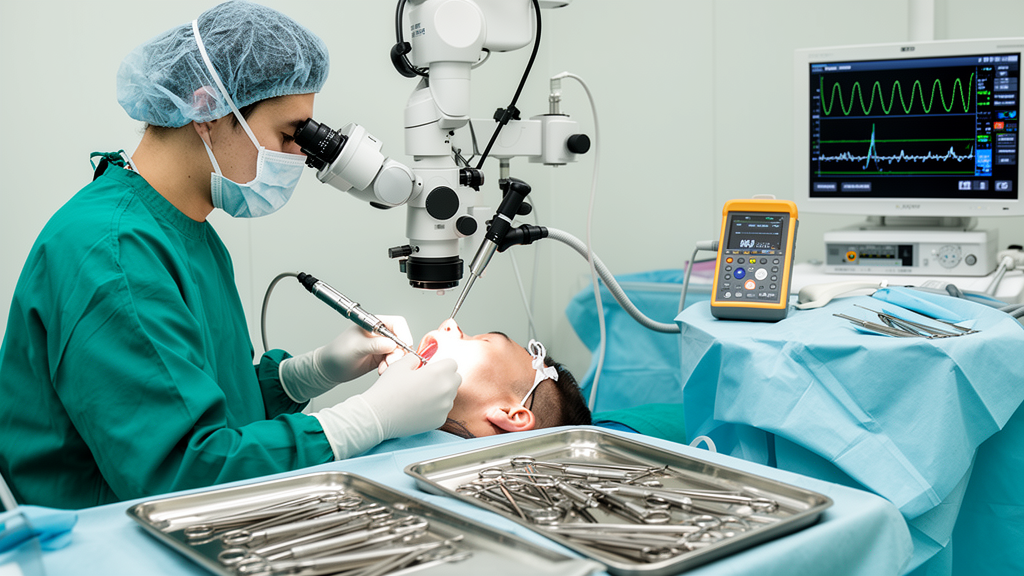
Direct in vivo measurements recorded during seven monitored cochlear implant surgeries demonstrate that acoustic noise generated by surgical drilling can exceed recommended daily noise exposure limits in clinical practice. In a pilot study published in BioMedical Engineering OnLine, researchers directly evaluated bone-conducted sound levels to examine the acoustic exposure experienced by patients undergoing otological procedures. Across the seven monitored operations, the maximum equivalent A-weighted sound pressure level, designated as LAF, was measured between 111 and 126 dB(A)eqSPL.
In addition to the A-weighted equivalent sound pressure levels, the investigation evaluated peak acoustic exposure using C-weighted measurements. The recorded C-weighted peak levels, denoted as LCpeak, reached peak values of up to 140 dB(C)eqSPL during drilling activity. The study identified that the recommended daily noise exposure threshold was exceeded in three out of the seven surgical patients, which the investigators noted points to the potential for drilling-induced temporal shifts in hearing thresholds.
While the auditory impact of drilling-induced noise during ear operations has been a subject of previous discussion, direct measurements of equivalent sound pressure levels in surgical patients had not been reported prior to this study. To address the absence of in vivo clinical data, the researchers introduced a measurement approach based on a calibrated accelerometer to determine equivalent sound pressure levels. The authors describe this accelerometer technique as an easy-to-use method that is potentially applicable within routine clinical workflows.
Based on the observations from the seven monitored cases and the documented exceedances of daily noise limits, the authors recommend implementing standardized noise monitoring as a quality assurance measure during otological operations.
Subject of Research: Direct in vivo measurement of bone-conducted drilling noise during ear surgery
Article Title: Evaluation of bone-conducted sound during ear surgery: an in vivo pilot study
Article References: Gille, K., Fleischer, M., Neudert, M., Zahnert, T., & Bornitz, M. (2026). Evaluation of bone-conducted sound during ear surgery: an in vivo pilot study. BioMedical Engineering OnLine, 25(1), Article 125. https://doi.org/10.1186/s12938-026-01652-0
Image Credits: AI Generated
DOI: 10.1186/s12938-026-01652-0
Keywords: bone-conducted sound, ear surgery, in vivo pilot study, cochlear implant surgery, drilling noise, sound pressure level, equivalent sound pressure level, calibrated accelerometer, A-weighted sound pressure level, LAF, C-weighted peak levels, LCpeak, noise exposure limit, temporal threshold shift, noise monitoring, quality assurance, otological surgery, BioMedical Engineering OnLine
News Source: Denise Maddox. (November 13, 2026). Surgical Ear Drilling Exceeded Daily Noise Exposure Limits in Pilot Study. Scienmag.