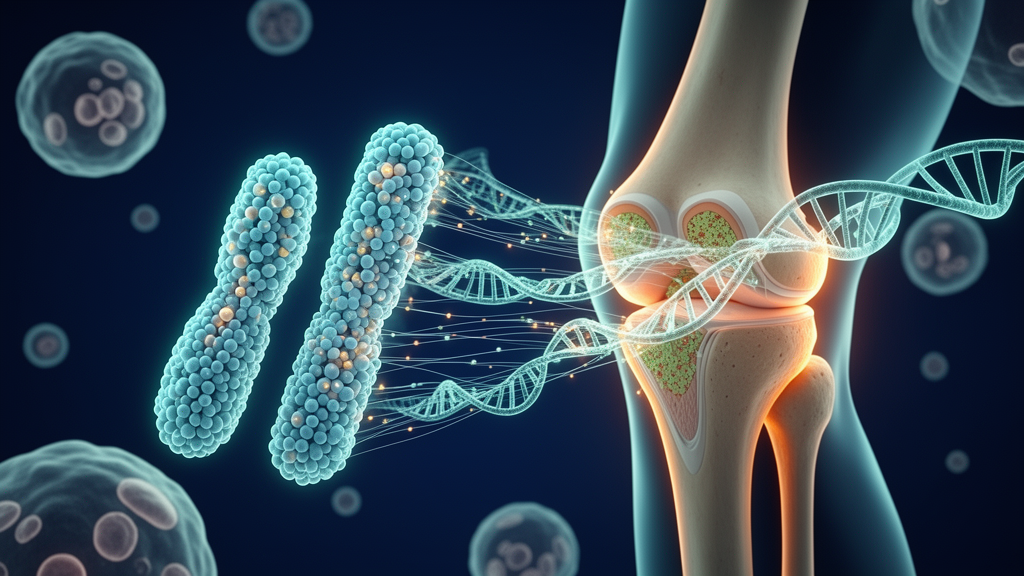
A genomic investigation analyzing expression quantitative trait loci data has evaluated two chromosomal regions linked to osteoarthritis risk, reporting robust locus-level replication for one chromosome 20 region alongside non-replicating findings for a candidate gene on chromosome 16. Researchers evaluated the genetic regions using cis-eQTL Mendelian randomization, summary-data-based Mendelian randomization, and colocalization across multiple clinical phenotypes of osteoarthritis. The findings characterize the chromosome 20 signal as a robust regional association, whereas statistical evidence for the candidate gene MAPK3 failed to replicate in an independent validation cohort.
Osteoarthritis currently has no approved disease-modifying therapies, and standard genome-wide association studies frequently pinpoint broader susceptibility loci without pinpointing the exact causal genes driving disease pathology. To clarify potential causal mechanisms, investigators assessed two specific osteoarthritis-associated genomic regions located on chromosomes 16 and 20. These two targets had been prioritized from an unpublished exploratory transcriptome-wide association screen previously conducted by the study authors, serving as initial candidates for deeper statistical evaluation.
The methodological framework evaluated fourteen genes using whole-blood cis-eQTL summary data from the eQTLGen consortium, which encompassed 31,684 individuals. These expression profiles were analyzed against four distinct clinical osteoarthritis phenotypes compiled by the Genetics of Osteoarthritis consortium, comprising sample sizes ranging between 353,388 and 826,690 participants. The evaluated phenotypic categories included all osteoarthritis cases, combined knee or hip osteoarthritis, knee osteoarthritis alone, and hip osteoarthritis alone.
To rigorously quantify genetic support, the research team implemented a pre-specified three-level evidentiary grading framework based on a false discovery rate threshold of q less than 0.05. Evaluated methodologies integrated cis-eQTL Mendelian randomization, coloc.abf Bayesian colocalization, and summary-data-based Mendelian randomization coupled with heterogeneity in dependent instruments testing. The investigators then tested the lead genetic signals in release 12 of the independent FinnGen cohort, incorporating up to 101,454 osteoarthritis cases to evaluate consistency across identical instrument definitions.
Across an expanded re-run encompassing 15,697 genes, no analyzed gene reached Level 1 evidentiary criteria, although the chromosome 20 region ranked first overall. The UQCC1 and GDF5 locus was instrumented specifically through UQCC1 gene expression because GDF5 lacked an available cis-eQTL in whole-blood datasets. This locus demonstrated a risk-increasing association supported by Level 2 evidence for all osteoarthritis through a single instrument, as well as for combined knee and hip osteoarthritis.
Validation in the independent FinnGen cohort confirmed the locus-level association for the UQCC1 and GDF5 region across all three tested phenotypes, yielding an odds ratio of 1.116 for all osteoarthritis cases alongside a replicated colocalization posterior probability of 0.929. Conversely, evidence for the candidate gene MAPK3 on chromosome 16 reached Level 2 support in the discovery data solely through single-instrument analysis involving variant rs4548895 or through summary-based Mendelian randomization without colocalization backing across the four phenotype categories.
Independent replication in FinnGen did not validate the multi-instrument Mendelian randomization estimate for MAPK3, which yielded an odds ratio of 0.964 with a p-value of 0.12 for all osteoarthritis. Bayesian colocalization in FinnGen favored distinct causal variants with a posterior probability of 0.770, reproducing only the isolated rs4548895 single-variant association. Furthermore, applying a more conservative prior probability reduced colocalization support below the 0.8 threshold in four of six Level 2 cells, indicating that discovery effect sizes were likely influenced by selection effects and confirming that these findings remain strictly hypothesis-generating.
Subject of Research: Cis-eQTL Mendelian randomization and colocalization analysis of osteoarthritis genetic loci
Article Title: Phenotype-resolved cis-eQTL Mendelian randomization and colocalization at two osteoarthritis-associated regions, with partial replication in FinnGen
Article References: Ma, J., Yang, S., & Du, Y. (2026). Phenotype-resolved cis-eQTL Mendelian randomization and colocalization at two osteoarthritis-associated regions, with partial replication in FinnGen. BMC Musculoskeletal Disorders. https://doi.org/10.1186/s12891-026-10737-9
Image Credits: AI Generated
DOI: 10.1186/s12891-026-10737-9
Keywords: Osteoarthritis, Genetics, Mendelian Randomization, Colocalization Analysis, cis-eQTL, UQCC1, GDF5, MAPK3, FinnGen, eQTLGen, Genomics, Chromosome 16, Chromosome 20, Summary-Data-Based Mendelian Randomization, Cartilage Biology, Statistical Genetics
News Source: Ophelia Keating. (November 13, 2026). Mendelian Randomization Study Evaluates Two Chromosomal Loci in Osteoarthritis Risk. Scienmag.