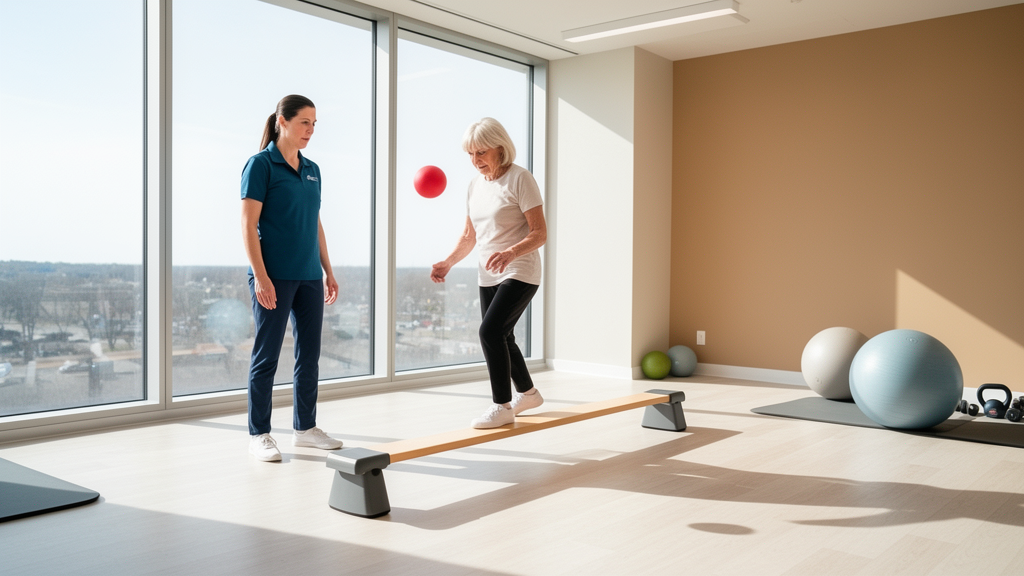
A systematic review and three-level meta-analysis published in BMC Geriatrics indicates that dual-task interventions combining motor activity with cognitive demands produce meaningful overall cognitive benefits in older adults. Conducted by researchers including Ruilong Wang, Hongyun Zheng, and Anzhou Zhu, the investigation evaluated both overall and domain-specific cognitive outcomes across randomized controlled trials. The synthesis demonstrated that dual-task training significantly enhanced overall cognitive performance, while also identifying distinct variations across individual cognitive domains.
Age-related cognitive decline in older adults frequently impairs multiple cognitive areas, including memory, attention, executive control, processing speed, and working memory, which in turn jeopardizes everyday functioning and personal independence. Traditional physical exercise regimens typically target physical capacity alone, but dual-task and cognitive-motor interventions integrate motor exercises with concurrent or integrated cognitive challenges. Because everyday activities continuously require people to coordinate physical movement with simultaneous mental processing, these combined strategies are designed to reflect real-world motor-cognitive demands far more effectively than single-mode exercise.
To establish the overall efficacy of these programs, the researchers conducted comprehensive systematic literature searches across four major electronic databases: PubMed, Web of Science, Embase, and the Cochrane Library. The search protocol focused specifically on randomized controlled trials that investigated concurrent or integrated dual-task and cognitive-motor training regimens in older adult populations. Eligible cognitive outcome measures from the included trials were harmonized across studies and quantitatively synthesized using Hedges’ g as the primary standardized effect size metric.
To address methodological complexity inherent in trials evaluating multiple cognitive assessments, the authors implemented a three-level random-effects meta-analytic model. This statistical framework explicitly accounted for the statistical dependency of multiple effect sizes nested within individual independent trials, preventing artificial inflation of sample sizes or precision. Alongside statistical modeling, the investigators evaluated the methodological quality and risk of bias of the included studies using the Cochrane Risk of Bias 2 (RoB 2) tool, while assessing the overall certainty of the body of evidence through the Grading of Recommendations Assessment, Development, and Evaluation (GRADE) approach.
The quantitative synthesis incorporated 21 eligible publications representing 20 independent randomized controlled trials, contributing a total of 93 distinct effect sizes derived from 1,402 analyzed participants. The weighted mean age of participants across the included trials was approximately 73.4 years. The pooled analysis revealed a statistically significant overall cognitive effect favoring dual-task interventions over control conditions (Hedges’ g = 0.548, 95% confidence interval 0.242 to 0.853, P < 0.001). However, the analysis also demonstrated substantial statistical heterogeneity among the included study results, with an I² value of 70.8 percent.
When evaluating domain-specific outcomes, the researchers observed significant positive cognitive effects across several specific domains. Executive function exhibited the largest effect size among individual domains (Hedges’ g = 0.521), followed by memory (Hedges’ g = 0.405), processing speed (Hedges’ g = 0.387), and global cognition (Hedges’ g = 0.346). In contrast, pooled estimates for working memory and attention were imprecise and did not achieve statistical significance, indicating that cognitive enhancements were not uniformly distributed across all cognitive faculties.
The investigators also performed detailed subgroup analyses to determine whether specific intervention characteristics or participant demographics influenced cognitive outcomes. These analyses evaluated participant population, intervention delivery format, control group type, specific cognitive domain, exploratory intervention subtype, and intervention duration. None of these subgroup comparisons yielded statistically significant differences, demonstrating that no specific intervention format, training duration, or participant subgroup demonstrated clear superiority over the others in the synthesized evidence.
Based on these findings, the authors concluded that dual-task interventions serve as a potentially useful cognitive-motor strategy to support cognitive health in older adults, with the most robust pooled evidence supporting improvements in global cognition, executive function, memory, and processing speed. Nevertheless, the researchers emphasized that evidence regarding attention and working memory remains uncertain. They highlighted the urgent need for future trials to incorporate standardized outcome measures, report cognitive task content explicitly, and adopt trial designs specifically tailored to clarify domain-specific cognitive effects.
Subject of Research: Cognitive effects of dual-task interventions in older adults
Article Title: Domain-specific effects of dual-task interventions on cognitive function in older adults: a systematic review and three-level meta-analysis
Article References: Wang, R., Zheng, H., Zhu, A., Cui, Y., Li, Y., Bao, X., Fang, W., & Ye, X. (2026). Domain-specific effects of dual-task interventions on cognitive function in older adults: a systematic review and three-level meta-analysis. BMC Geriatrics. https://doi.org/10.1186/s12877-026-08621-1
Image Credits: AI Generated
DOI: 10.1186/s12877-026-08621-1
Keywords: dual-task interventions, cognitive-motor training, older adults, cognitive function, systematic review, three-level meta-analysis, executive function, processing speed, memory, global cognition, working memory, attention, randomized controlled trials, Hedges' g, RoB 2, GRADE certainty
News Source: Ophelia Keating. (November 13, 2026). Dual-Task Interventions Improve Cognitive Function in Older Adults, Meta-Analysis Shows. Scienmag.