A microbiology investigation examining poultry whole carcass rinsates cultured on selective and non-selective agar media has demonstrated that widely used isolation plates support the recovery of target Campylobacter species while permitting the persistence of non-target background bacteria. The research, carried out by investigators including Aaron R. Bodie, Elena G. Olson, Dana K. Dittoe, Michael J. Rothrock Jr., and Steven C. Ricke, examined the microbial diversity and taxonomic composition recovered from pooled bacterial colonies grown on different media types following enrichment. By inoculating post-chill poultry rinsates with specific Campylobacter species, the study evaluated whether common selective formulations entirely restrict background flora or whether co-enriching organisms survive the plating process alongside the target pathogens.
Campylobacter represents a primary causative agent of foodborne gastrointestinal inflammation in the United States, where clinical campylobacteriosis can occur following ingestion of doses as low as 800 colony-forming units. The resulting illness can trigger severe secondary health complications, including Guillain-Barré syndrome, irritable bowel syndrome, and reactive arthritis. While transmission occurs through domestic animals, ruminants, and contaminated agricultural water, up to eighty percent of human cases trace back to the consumption and handling of contaminated broiler chicken products. In poultry, Campylobacter colonizes the gastrointestinal tract, persisting into the processing environment where carcass rinsates serve as standard industry surveillance matrices for quality indicators and pathogenic organisms.
Regulatory frameworks specify distinct isolation standards across international jurisdictions, creating differences in laboratory surveillance practices. The United States Department of Agriculture Food Safety and Inspection Service recommends Campy-Cefex agar for monitoring Campylobacter from poultry matrices, whereas the International Organization for Standardization and the United States Food and Drug Administration Bacteriological Analytical Manual suggest modified charcoal-cefoperazone-deoxycholate agar, known as mCCDA. Both media rely on specific chemical and antimicrobial components to suppress competitive background microflora while providing essential nutrients to fastidious Campylobacter species, which require strict microaerophilic atmospheric conditions, extended incubation times, and elevated growth temperatures.
To rigorously compare isolation dynamics, the researchers obtained commercial post-chill whole carcass rinsates from a processing facility in the southeastern United States following standard pathogen monitoring protocols. Bulk rinsate batches were verified free of endogenous Campylobacter using real-time polymerase chain reaction testing on the BAX System alongside confirmatory culture on mCCDA agar. The validated rinsates were then inoculated with reference strains from the American Type Culture Collection: Campylobacter jejuni strain ATCC 700819, Campylobacter coli strain ATCC BAA-1061, and Campylobacter lari strain ATCC BAA-1060. Target inoculation levels ranged across four tenfold dilutions, spanning one through four log units of colony-forming units per milliliter.
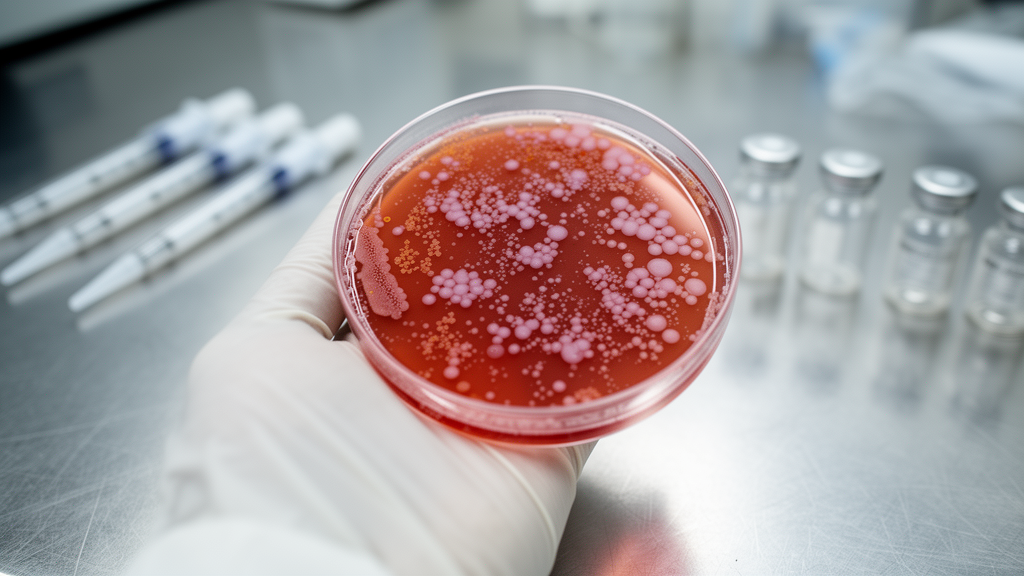
Aliquots were spread-plated in duplicate onto Campy-Cefex, mCCDA, and non-selective Tryptic Soy Agar, known as TSA. Plated cultures underwent 48 hours of microaerophilic incubation at 42 degrees Celsius, after which all visible colonies from duplicate plates across treatments were harvested, pooled, and resuspended in phosphate-buffered saline for downstream community genomics.
Genomic DNA was isolated from seventy-two pooled colony samples using commercial column purification, followed by ethanol precipitation when necessary to achieve required nucleic acid concentrations. To profile the microbial communities present within the cultured pools, the investigators amplified the hypervariable V4 region of the 16S ribosomal RNA gene using dual-index primers. Normalized libraries were sequenced on an Illumina MiSeq benchtop platform running v2 500-cycle reagent chemistries with PhiX control inclusion. Sequence data were processed through the Quantitative Insights into Microbial Ecology 2 bioinformatic pipeline, where reads were denoised using DADA2 and taxonomically assigned against the SILVA reference database at ninety-five percent confidence.
Bioinformatic assessment revealed that both media formulation and the inoculated Campylobacter species significantly influenced the alpha and beta diversity metrics of the recovered bacterial populations. Because statistical evaluations confirmed no significant differences in taxonomic compositions across the four starting inoculation concentrations, concentration tiers were combined for overarching community analyses. Analysis of variance indicated that rinsates inoculated with Campylobacter jejuni exhibited significantly greater microbial evenness and richness, as measured by Pielou’s Evenness and Shannon’s Entropy, compared to rinsates inoculated with Campylobacter coli or Campylobacter lari, which did not differ significantly from one another.
Taxonomic profiling by differential abundance testing using ANCOM revealed distinct ecological patterns across the inoculated species. Campylobacter constituted the predominant genus across all recovered colony pools, but samples inoculated with Campylobacter jejuni maintained a significantly higher abundance of non-Campylobacter taxa, most notably members of the families Lachnospiraceae and Oscillospiraceae. Other genera detected at lower frequencies included Bacteroides, Lactobacillus, Enterococcus, Faecalibacterium, Clostridiaceae, and Escherichia-Shigella. These bacterial groups are typical constituents of the avian gastrointestinal microbiota, suggesting that Campylobacter jejuni may engage in metabolic cross-feeding or community associations that persist through enrichment and plating.
Comparisons between media types showed clear operational distinctions between general and selective formulations, but remarkable equivalence between the two standard selective agars. Tryptic Soy Agar produced communities with significantly higher richness and evenness than either selective medium. On TSA, the genus Staphylococcus predominated, accounting for 97.5 percent of the relative abundance, while Campylobacter represented only five percent of the recovered sequence profile. In contrast, Campy-Cefex and mCCDA yielded 99.00 percent and 99.43 percent Campylobacter sequences, respectively, demonstrating robust suppression of common environmental competitors without significant differences in alpha or beta diversity between the two selective agars.
Despite the high proportion of Campylobacter reads on Campy-Cefex and mCCDA, neither selective medium achieved absolute exclusion of non-target organisms. Both selective plates harbored residual bacterial amplicon sequence variants, including persistent Staphylococcus populations, which represented approximately five percent of the overall taxonomic profile among taxa detected at low abundance. Furthermore, while Campylobacter jejuni and Campylobacter lari grew readily, Campylobacter coli failed to form visible colonies on mCCDA agar despite detectable DNA across all plates, aligning with previous observations of differential antimicrobial susceptibility among specific Campylobacter lineages.
The study highlights practical operational considerations for poultry safety testing programs. Because mCCDA utilizes a chemically defined charcoal base rather than the lysed horse blood required by Campy-Cefex, it avoids substantial reagent expenses and preparation labor while delivering comparable microbial community selectivity for Campylobacter surveillance. However, the presence of viable or amplifiable co-enriching organisms demonstrates that pooled colony appearances on selective plates do not guarantee complete purity. The authors note that understanding these selective thresholds is essential for refining pathogen enumeration methods and interpreting microbial dynamics in processing environments.
Beyond broad media classifications, the distinct chemical formulations of mCCDA and Campy-Cefex illustrate how selective pressures operate during culturing. The mCCDA medium utilizes a base of bacteriological charcoal, casein hydrolysate, sodium deoxycholate, ferrous sulfate, and sodium pyruvate, combining cefoperazone and amphotericin B to inhibit non-target microbial populations. Campy-Cefex relies instead on Brucella agar supplemented with ferrous sulfate, sodium bisulfite, sodium pyruvate, lysed horse blood, cefoperazone, and cycloheximide. Despite these inhibitor profiles, taxonomic tracking detected 5.5 amplicon sequence variants of Staphylococcus on Campy-Cefex and 12 amplicon sequence variants on mCCDA. The survival of these variants demonstrates that local commensal strains can endure antimicrobial regimens, highlighting that plate recovery does not equal absolute biological purification.
The ecological dynamics observed between Campylobacter jejuni and co-isolated anaerobic bacteria reflect metabolic interdependencies documented within the avian digestive tract. Campylobacter species maintain small genomes, which researchers suggest makes them reliant on metabolic cross-feeding with commensal microflora. In the avian gut, Bacteroides species break down non-digestible carbohydrates to generate short-chain fatty acids, carbon dioxide, and molecular hydrogen, providing essential gaseous substrates utilized by Campylobacter jejuni. Similarly, the elevated abundance of Lachnospiraceae and Oscillospiraceae on Campylobacter jejuni culture plates aligns with their shared gastrointestinal niche, where these families ferment peptides and complex polysaccharides. Furthermore, investigators noted that Campylobacter jejuni may serve as an environmental hydrogen sink, potentially stabilizing system homeostasis and facilitating the co-enrichment of associated clostridial organisms during in vitro incubation.
Industrial processing conditions may also shape these divergent community patterns. Processing facility interventions are predominantly benchmarked against Campylobacter jejuni, which could exert selective pressures that leave Campylobacter coli, Campylobacter lari, or competing background flora better adapted to endure chemical sanitation washes. In laboratory culture, the total absence of viable Campylobacter coli colonies on mCCDA plates, despite measurable target DNA, reflects known antimicrobial vulnerabilities. Previous physiological evaluations demonstrate that Campylobacter coli strains frequently exhibit heightened sensitivity to cephalothin and related antimicrobial compounds compared to Campylobacter jejuni, explaining why enriched cells entered a viable but non-culturable state without forming countable surface colonies.
The researchers acknowledged several methodological constraints and highlighted avenues for future poultry microbiome surveillance. The study design omitted an uninoculated negative rinsate control, though parallel comparisons between inoculated bacterial species and media formulations remained methodologically robust. To expand field relevance, the authors recommended future trials evaluating the effects of direct plating versus pre-enrichment protocols, as well as testing media without pre-warming steps to simulate commercial inspection environments. Additionally, inoculating carcass rinsates with combined mixtures of all three Campylobacter species will be necessary to observe competitive microbial interactions, requiring improved analytical tools to distinguish and quantify individual species. Incorporating non-selective media under microaerophilic conditions could further help food safety professionals uncover the true enrichment efficacy of routine surveillance workflows.
Subject of Research: Evaluation of selective and non-selective agar media and microbial community diversity in Campylobacter-inoculated poultry rinsates
Article Title: Assessing microbial differences associated with Campylobacter inoculated poultry rinsates cultured on selective and non-selective plates
Article References: Bodie, A. R., Olson, E. G., Dittoe, D. K., Rothrock, M. J., Jr., & Ricke, S. C. (2025). Assessing microbial differences associated with Campylobacter inoculated poultry rinsates cultured on selective and non-selective plates. Discover Bacteria, 2(1), Article 8. https://doi.org/10.1007/s44351-025-00017-7
Image Credits: AI Generated
DOI: 10.1007/s44351-025-00017-7
Keywords: Campylobacter jejuni, Campylobacter coli, Campylobacter lari, poultry rinsates, microbial ecology, selective media, Campy-Cefex, mCCDA, tryptic soy agar, 16S rRNA sequencing, food safety, microbiome, bacterial isolation, QIIME2, broiler processing, Staphylococcus
News Source: Morgan Morrow. (November 13, 2026). Selective Poultry Rinsate Media Isolate Campylobacter Without Completely Eliminating Background Microbiota. Scienmag.