A research team led by McGill University has developed an experimental biological computer powered by living bacteria, demonstrating that multiplying microorganisms navigating microfluidic networks can resolve complex computational problems while consuming substantially fewer resources than conventional solid-state machines. The experimental study, described in an article published in Nature Microengineering and Nanosystems (Microsystems & Nanoengineering), demonstrates how biological agents can explore vast search spaces simultaneously.
Standard electronic computers test each possible solution sequentially, which can take years or even centuries to deliver results for complex problems. When applied to large combinatorial puzzles, sequential evaluation can require extensive periods, sometimes stretching into years or centuries before arriving at a definitive outcome. In contrast, the biocomputer relies on parallel biological exploration, allowing bacterial populations to test numerous possible routes at the same time.
The computing power of the device expands as the bacteria divide. Modern electronic computers make millions of operations per second using one chip. According to senior author Dan Nicolau, a professor of bioengineering, bacterial multiplication enables roughly one million biological processors to operate concurrently. According to Nicolau, having more chips allows the problem to be resolved faster, even if the number of operations per second is slower for each biological processor.
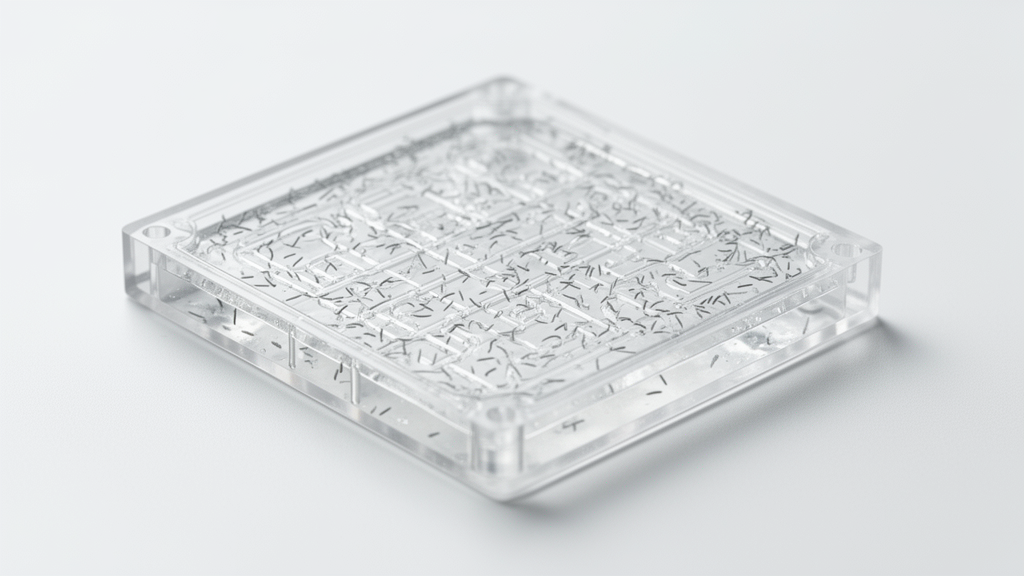
The core computational mechanism translates a classic mathematical problem into a graphical network of tiny, interconnected microfluidic channels. Within this network, each distinct route corresponds to a potential solution, while specialized junctions function as logic gates that represent formal decision points. As rapidly dividing bacteria moved through the channels, they collectively explored many routes at once, testing large numbers of possible solutions in parallel.
To prevent overcrowding, the researchers can adjust the temperature of the computer to control bacterial growth.
Tracking the computation relies on optical observation and automated analytical tools. The researchers observed where the bacteria travelled and used automated image analysis to trace successful routes through the network. By observing which paths are traversed, the researchers determine the specific parameter combinations that satisfy the original mathematical constraints, effectively extracting the verified solution from biological motion.
The scientists emphasized that the biocomputer is not designed to replace classical electronic hardware or emerging quantum computing architectures. Instead, it serves as a specialized, resource-efficient, and cost-effective instrument tailored for specific problem categories that standard electronic systems struggle to process, such as mapping complex protein structures. While existing artificial intelligence systems estimate configurations by analyzing available historical data, Nicolau noted that this biological approach is intended to directly resolve problems rather than infer answers from past records.
The published study represents the culmination of a twenty-year cross-institutional collaboration involving scientists from Canada, Europe, the United Kingdom, and Australia. The project was co-authored by a multi-institutional team, including father and son researchers Dan Nicolau Sr. and Dan Nicolau Jr., alongside primary author Ayyappasamy Sudalaiyadum Perumal and colleagues. Funding support for the investigation was provided by the United States Defense Advanced Research Projects Agency, the Natural Sciences and Engineering Research Council of Canada, the Social Sciences and Humanities Research Council of Canada, the European Union, and an Australian Future Fellowship.
Beyond protein structural analysis, the researchers highlighted several promising future applications for the technology, pointing specifically to encryption, artificial intelligence, and broader challenges in molecular biology. The biocomputer can solve large, complex problems using a small fraction of the memory and resources required by standard computers. Researchers said the biocomputer is faster and less resource-intensive than standard electronic computers and could help solve previously unsolvable problems.
Nicolau explained that the exponential division of bacteria can scale to the size of the problem, representing an entirely new way of computing.
Subject of Research: Bacteria-powered microfluidic biocomputer for parallel problem solving
Article Title: A biocomputer that runs on bacteria
Article References: A biocomputer that runs on bacteria. Original publication (Bibliographic details unavailable.)
Image Credits: AI Generated
DOI: Not provided
Keywords: biocomputer, bacteria, microfluidics, parallel computing, bioengineering, McGill University, Dan Nicolau, computational biology, logic gates, microfluidic networks, biotechnology, solid-state computing, DARPA, protein structure mapping, experimental computing, biological processors
News Source: Reid Dalton. (November 13, 2026). McGill Researchers Build Bacteria Biocomputer to Solve Complex Mathematical Problems. Scienmag.